


Gender
We continue our column “Art in Emigration”; in this new material, we publish an interview with the talented photo-artist and traveler Hanna Ushannka. Read about life crises, the path to photography, and sincerity in our long-read “Not Today, Not Yesterday, Not Tomorrow.”
Hanna Ushannka, photo-artist
— How did you come to photography?
— My interest in photography began back in school, in those days when mobile phones with three-megapixel cameras first started appearing. Back then, it seemed incredible: you press one button and you already see the result, instead of waiting a long month for your parents to go and develop the film. But taking photos on a phone is more about an interest in something new and unknown. Therefore, I consider the starting point to be the moment my mother bought herself a digital camera. I was in 6th or 7th grade then, and I can’t say they trusted me with such things with a light heart, but slowly, starting with objects in the apartment, my sister, and my pet rat, I began to study the world through the eye of the lens.
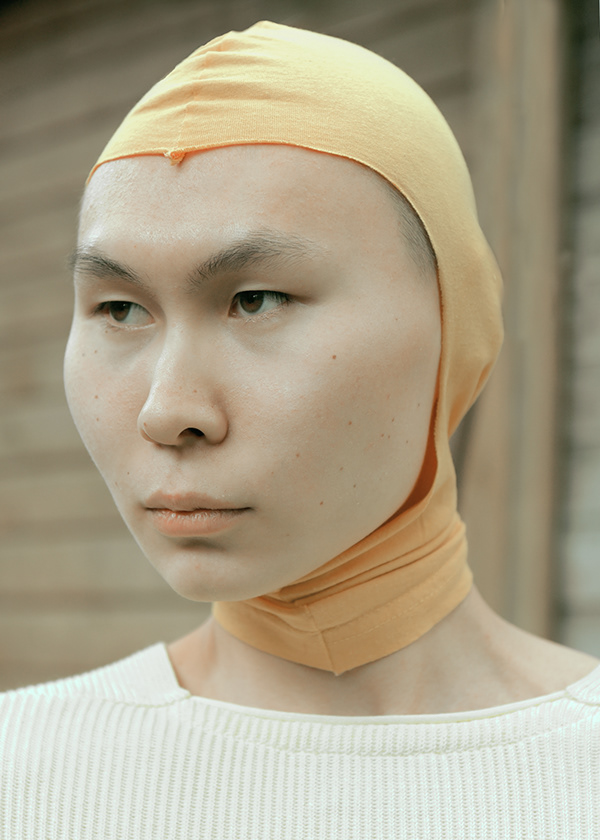
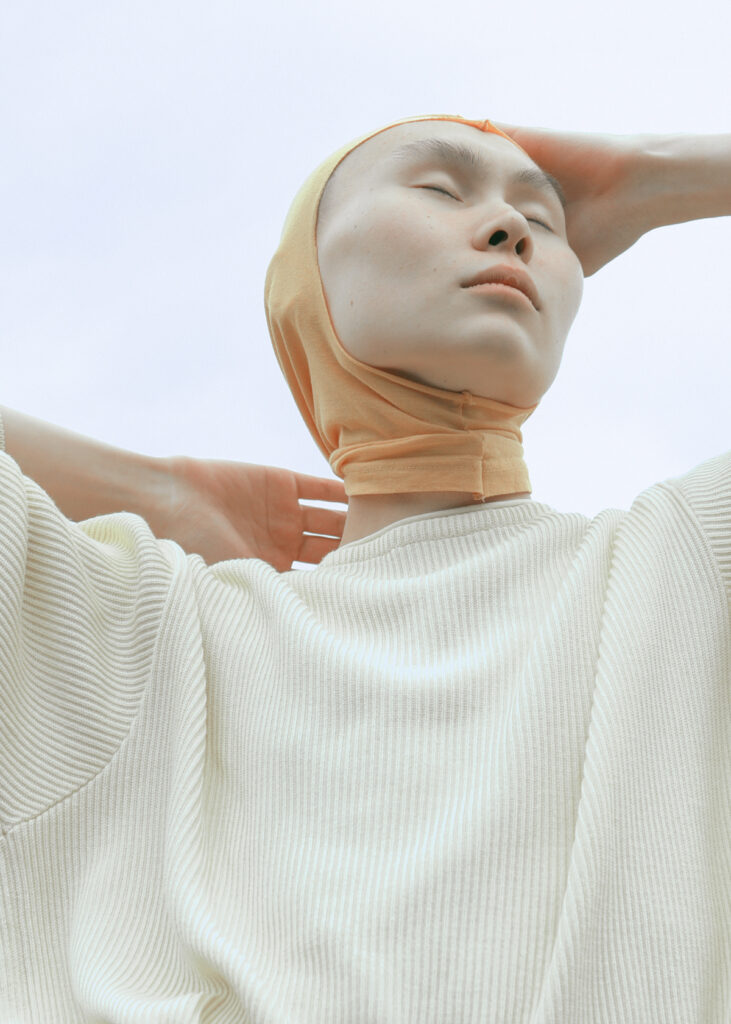
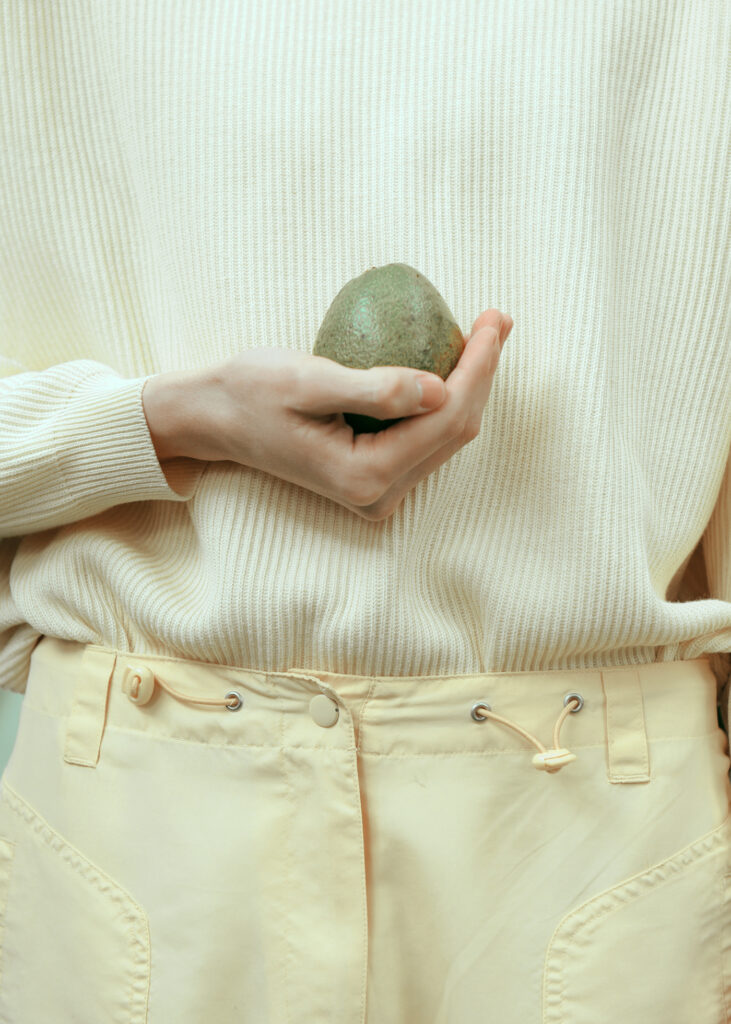
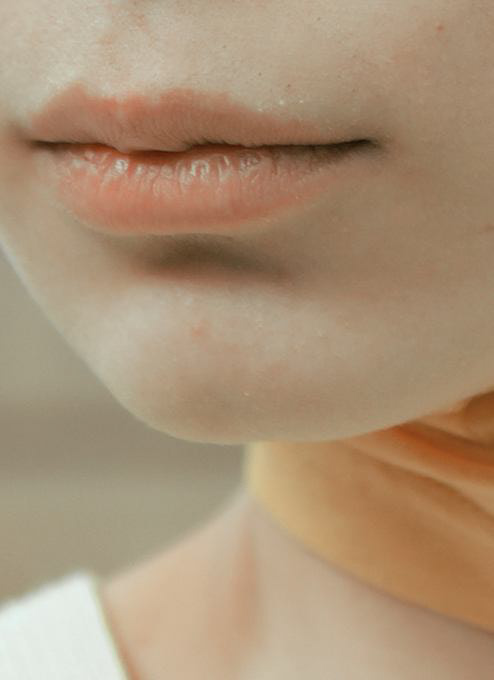
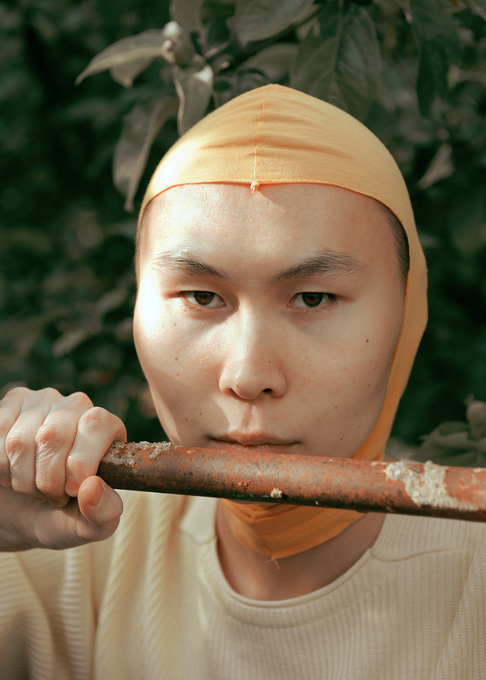
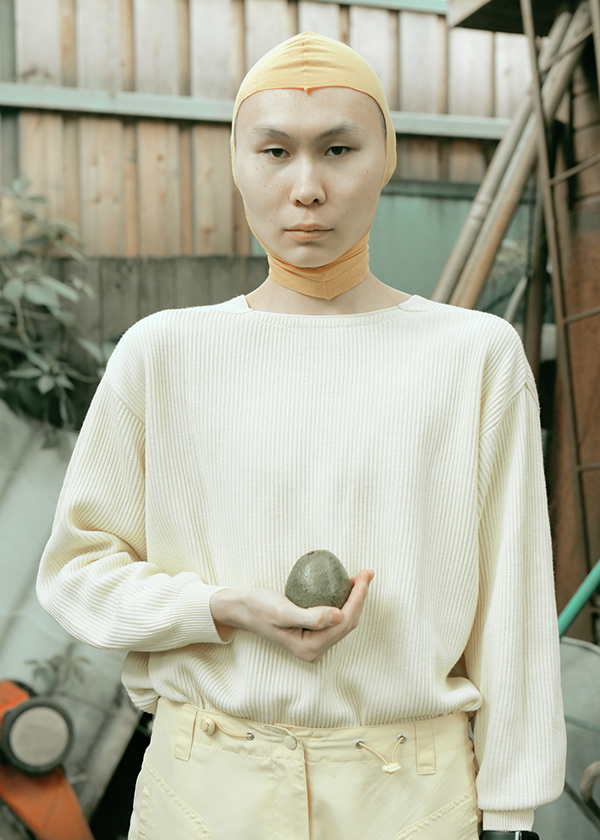
“Avocado,” photo by Hanna Ushannka
Volume, color, shape—it was so different from what I shot on my phone. And what a zoom that camera had! From the sixth floor, I could make out a lady in a hat or a man with a smoking cigarette. But besides the technical component that thrilled me, I began to gain a subtle understanding of the moment that was slipping away, and which I so fiercely tried to catch.
Back then, for some reason, it seemed to me that with the arrival of a camera, it would be possible to preserve a moment forever. It was simply impossible to go for a walk and not take the device with me—I was terrified of missing something. During that period, I shot a lot, and most of the files served as a “time machine” for me, through which I traveled into the past. It took time for my young head to reach that very “click” that would pull me out of the pool of illusions: it’s impossible to “preserve a moment forever”; it will only exist on a picture or in my memory, if, of course, I manage to hold onto it.
Besides documentary shooting, I was always interested in exploring space and its texture, looking at the composition in objects, breaking them down to a state where it becomes unclear what they were originally. On the one hand, I like to record life as it is, and on the other hand—to create a space by composing objects and people together.
So, treading the path of my journey: traveling through different countries, meeting interesting people, implementing small and large projects, recording escaping beauty, 2022 arrives. A war that could not fail to affect everyone, but my turning point and my personal tragedy happened a month earlier, in January—my friend, a kindred spirit, a muse, an infinitely talented person, died. Back then, I had to touch the walls, the floor, myself, to verify the reality of what was happening. Но each time I found myself at a point where it was impossible to accept and realize it.
I have many video recordings and photos preserved with her, and after thinking about it, I decided to start editing a film about her. At the time, I couldn’t have imagined it would be so difficult for me, and even more so—I couldn’t imagine where it would all lead me. Every day I sat in my chair and tried to glue together pieces of what was. Frame by frame, diving deeper and deeper, I lost touch with reality—I had to relive what had already passed every time, keeping in mind that I would never meet this person again. Reality began to delaminate and blur. Any substance has a time interval after which it ceases to act, but here—you don’t know when it will let you go, or if it ever will. I close the program, go outside, look at running children, and feel nothing but deception.
From that time until now, I have been trying to pull myself together and return to photography again, or at least see something “alive” and “real” here.
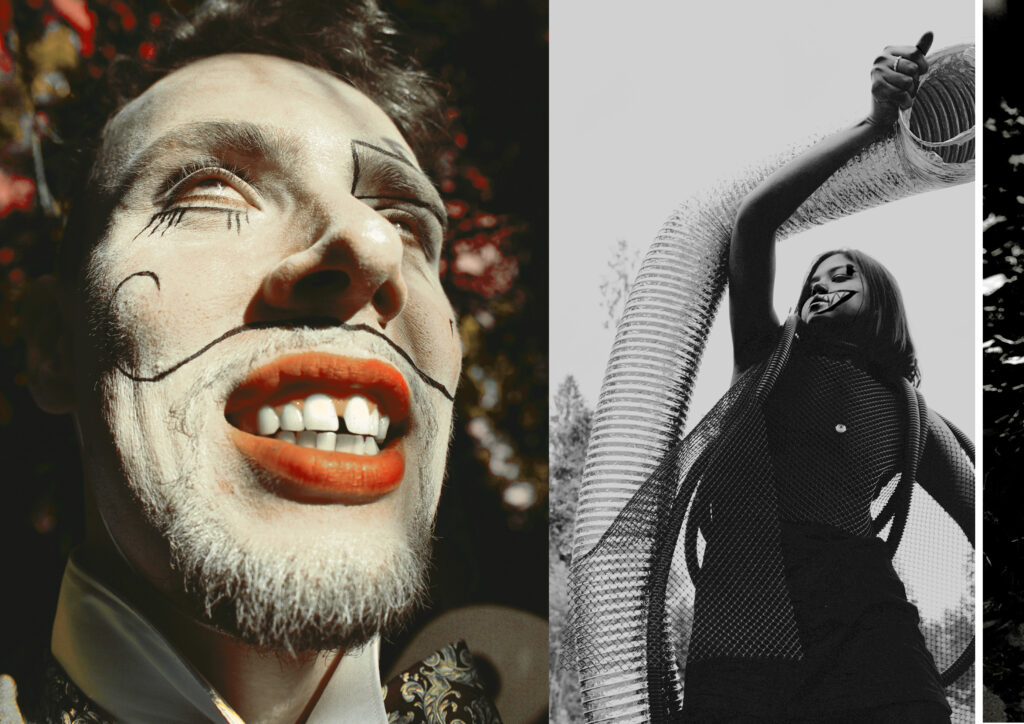

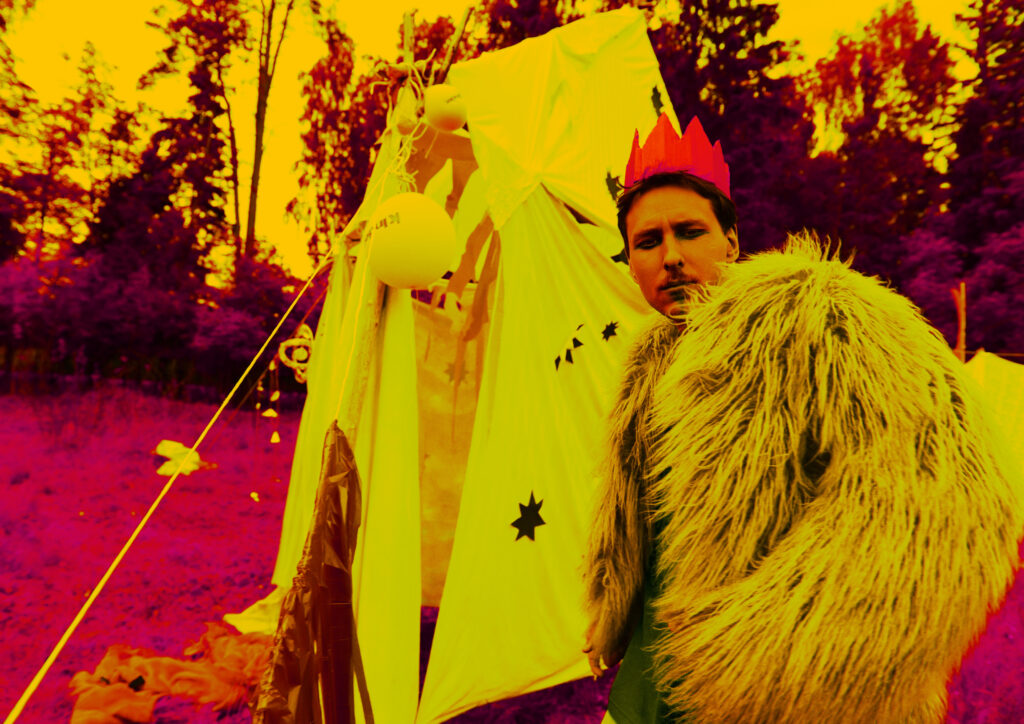
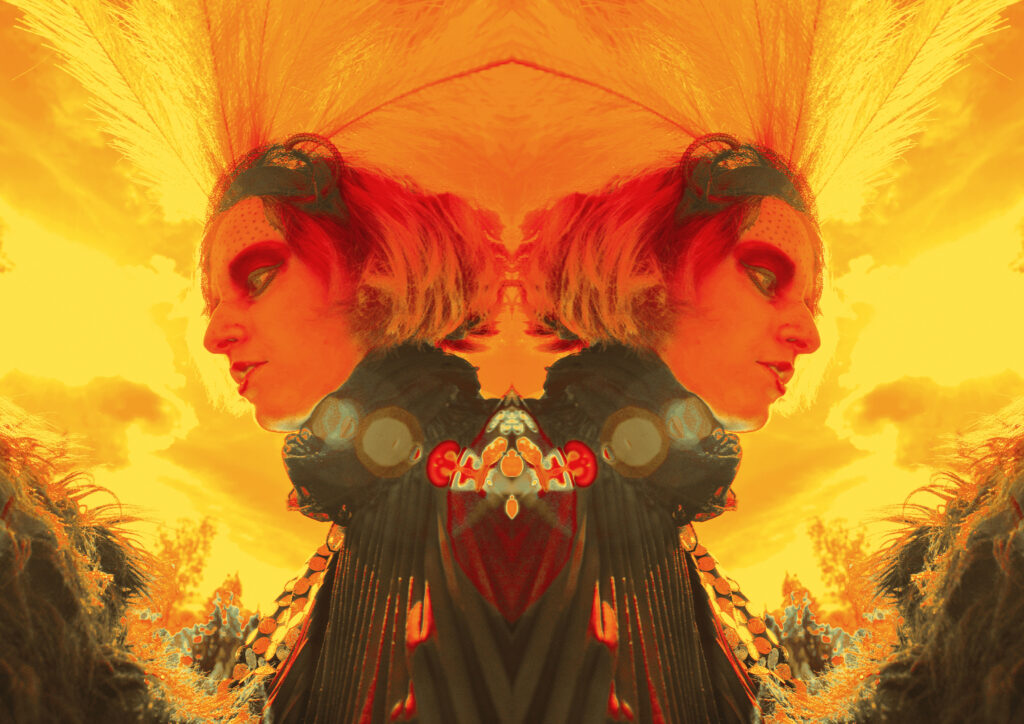
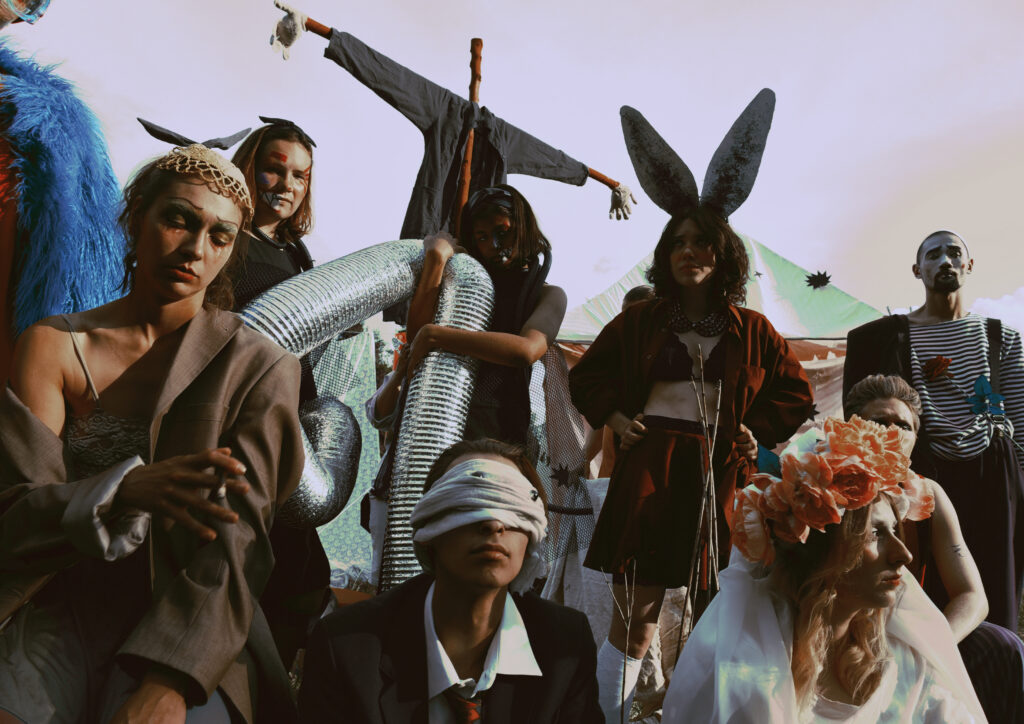
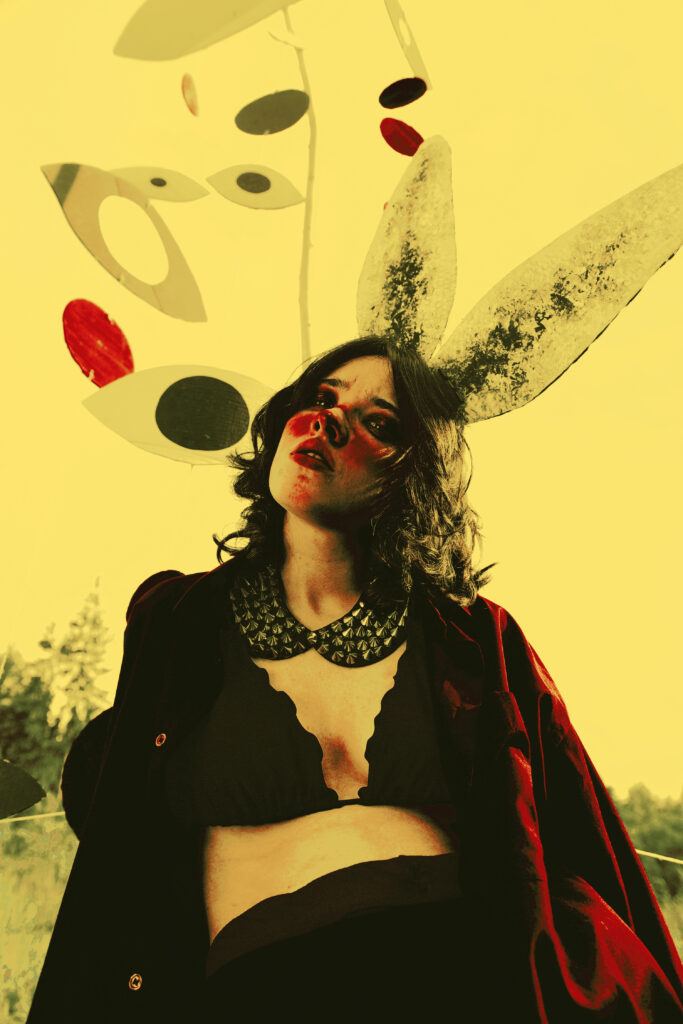
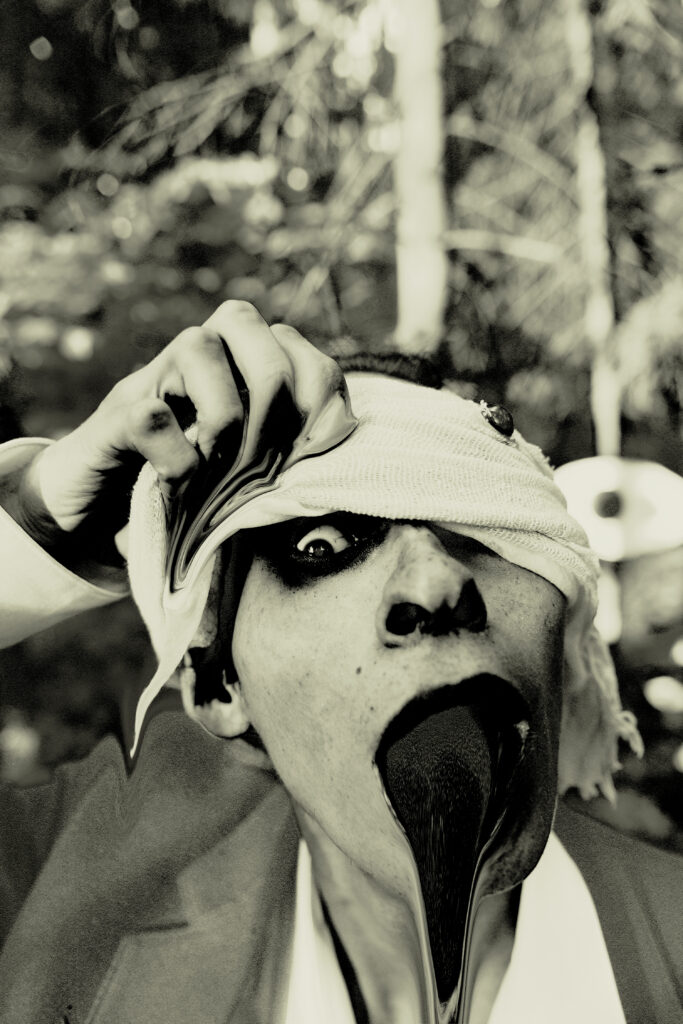
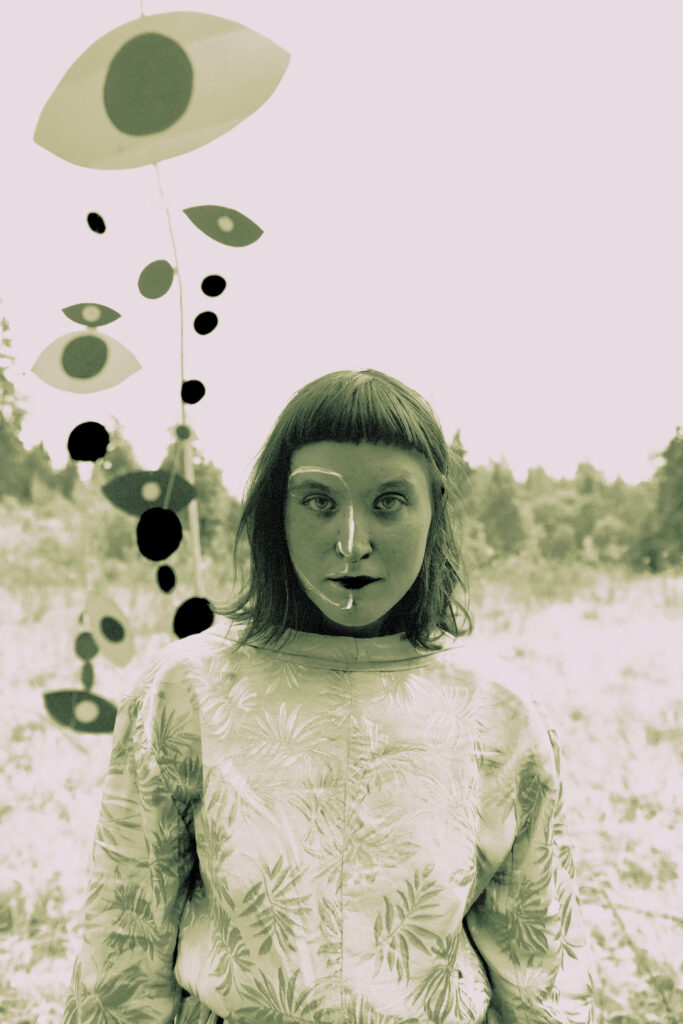
“CiRK,” photo by Hanna Ushannka
— What does it mean to you to be a photographer?
— Generally, I can’t call myself a photographer. After all, I am primarily an artist, and only then do different ways of exploring this world and expressing feelings appear. What is it to be a photographer? Honestly, I don’t know. But if I think about it carefully, what comes to mind is that being a photographer is being able to tell a story.
— How do you choose concepts for your works and what is most important to you in this choice?
— Most often my concepts are connected with some kind of accident. A “click” happens, after which you need to act and not think: “But what if…”. Once I had a shoot that started with me noticing a huge piece of styrofoam in the trash. In an instant, I saw a big hat in it, which had to be created immediately, otherwise—all was lost! And then, on another day, I find a background… And so, gradually, from different parts, a concept is assembled. Perhaps this is something born out of chaos, hence, I think, my love for trash heaps and what is commonly considered garbage. There is even a kind of challenge to oneself in this—can I create something out of this? I adore cardboard—it’s one of the best materials from which you can make anything you want.
What is most important when choosing a concept is, most likely, honesty with oneself and what you want to say. Но sometimes you just want to reproduce what was intended.
— How would you describe your creative process from idea to implementation of a shot?
— I have a shoot from 2022, it’s called “CiRK” (Circus). Inspiration was formed due to my personal tragedy and the tragedy of the world. These were strong feelings about what was happening, observing the circus all around. I wanted to create an arena, a theater, to show the madness and the characters living in it, who, like us, walk in circles and go mad in exactly the same way. In this shoot, there is an important attribute—a cross, the symbolism of which is simple: it definitely already exists, and for everyone it is their own. There were 12 of them, and they were all painted in one color—blue, but only one was red—symbolizing the dead friend. And perhaps, analyzing the question about the concept, one can answer that they are taken because of feelings, but the process… that is also an amazing action.
From the moment of conception to the implementation of the shoot, enough time passes for you to have time to be disappointed in the idea, in yourself, to see how everything begins to crumble, and then—bam! And you are inspired again, feeling an insane belief that it is vital. About 25 people took part in the shoot itself—there were both friends and those who were interested in taking part in this process. And afterwards, when it was all over, we were in a kind of creative intoxication, where everyone shared what they managed to achieve. I think that’s what I like about shoots of this scale, that I manage to organize such a platform, create such an atmosphere in which participants can live out something important and deep for themselves and take away what they managed to get from this experience. And the result is sometimes like a side effect and visual proof that it happened.
— What themes and ideas inspire you?
— Play. Playing with oneself, an image, a space. I like to create conditions where, while being like an “adult,” you can again allow yourself to become whoever you want! To play someone you can’t be in ordinary life. But besides the fun and some kind of high, I am still inspired to a greater extent by death. This theme has been with me for a very long time. It both fascinates, terrifies, and attracts. You seem to think, conceptualize, but you won’t know for sure until you try. The next theme is illusiveness, and along with it, the annoying questions: “What is reality?” and “How to feel it?”. I still don’t know and I’m racking my brains. Sometimes it seems that “here! here it is!”, and then again a fall. Generally, if you look at me not as a creator, but as a person who looks a certain way, it’s unlikely that anyone would suspect a tendency towards severe depression in me. I had attempts (intentions for sure) to turn this all into a more “positive,” “joyful” thinking, but every time it fails—I just don’t believe in this sweetness and “blessing” that is so willingly presented (or sold?) by the world. Of course, here one illusion collides with another—both suffering and joy, in which you can alternately drown, but still, for me, the propaganda of “happiness” imposes oblivion of what I consider one of the most significant events—death. And here, in this cauldron, are my ideas for inspiration.
— What technique and equipment do you prefer to use in your work?
— I can’t call myself someone who understands technology. It took me two years to choose my second camera, as I couldn’t understand—how are they all different? Now I have a Nikon 750d and three lenses: a portrait, a zoom, and a wide-angle. But, since I travel often, with such a set—it’s all very unrealistic (especially if you add brushes, paper, paints there). I tried it a couple of times and couldn’t do it anymore—1.5 kg on the neck or in a backpack (and that’s just the camera and one lens)—is too much. Generally, I really love the iPhone 5s—a pleasant picture, color rendering, and it doesn’t distort the photo as much as the new models. But just recently it broke, and so—I traveled through the whole of Central Asia with it. I also have a Canon d550, also a pleasant camera.
But my knowledge of technology, as well as in programs for processing photos or videos, is minimized. I never deeply studied Adobe Premiere or Photoshop. Somehow it happened that the desire to implement the plan always prevailed over sitting down for a video tutorial and discovering something new for yourself. Although there is an understanding that the world does not stand still and many useful and “smart” buttons are being developed that can subsequently help during work or even discovering something new for yourself. And as for the works themselves, I don’t like a polished picture; I like roughness. It seems more alive that way.
If we talk about paintings, how I paint them, before I start, I choose paper, canvas, cardboard and make a spot on it or look at a dent already created by someone, since in 90% of cases I start painting from seeing silhouettes. In the world there is even such a diagnosis—pareidolia, well, and for me paintings are born (a collection on this topic).
— What do you put into the concept of “art photography”? How do you see the evolution of this direction in the coming years?
— In art photography, there is the opportunity not only to record a moment but also to add something of yourself: create a composition, set the light in a certain way, use a background. Once I was gluing wallpaper for a shoot that I found in an abandoned house; it was from ’72 and painted by hand on a machine! And how can you, meeting such a thing, not be tempted and create something with it! A rather difficult question for me about evolution. I can’t imagine what could be evolutionary in staged photography. I think that one of the breakthroughs could be that it becomes possible to speak out on different topics without traumatic consequences.
— Is photography more about the internal or the external?
— It seems to me that photographs are different. If we take the “CiRK” shoot as an example, it was about the internal. If we talk about its implementation, it’s about the external. And this combination of internal and external creates the photograph. Everything is born from the internal and transitions in the moment of implementation to the external.
— How do social and cultural contexts affect your work? Are there any works you have that are directly related to current social or political events?
— They affect it quite negatively, especially the psyche. To be honest, it has become very difficult to live and try to coexist with all that has happened over the last two years. All my life, as long as I can remember, I had faith in God inside me, and I can’t say it was much easier before—I always had to cope with something—internal, external. But at the same time, in all this, I always had something to lean on. It was something so inexpressible that helped me get up and do things from any state, otherwise—what am I here for? But the core and everything I used to endure my presence here collapsed. Bam—and that’s it. And this happened not because I was “offended” or “disappointed,” but like that, like clicking your fingers or hitting your knee. And in such a state, creating something, without any faith, doesn’t seem possible to me. I generally marvel at all those who, in such times, maintain both faith and strength against the pressure, and inspiration for expression. This once happened to me too, but back in 2019. I edited the music video “LIwE”. These are feelings that I was able to compress to 1:31 minutes. I remember how something burned and itched inside while I was assembling it all piece by piece. Or, in about those same years, I walked around Moscow and pasted painted stickers, leaflets with different phrases, messages. “If at least one person sees this and something clicks, something knocks them out of their usual automatism…” – I thought. There was faith, it was important. And this came not from rational reasoning, but from some impulse and the fact that it could not be left undone.
Now I have no spiritual strength to somehow express everything that has been experienced over the last two years.
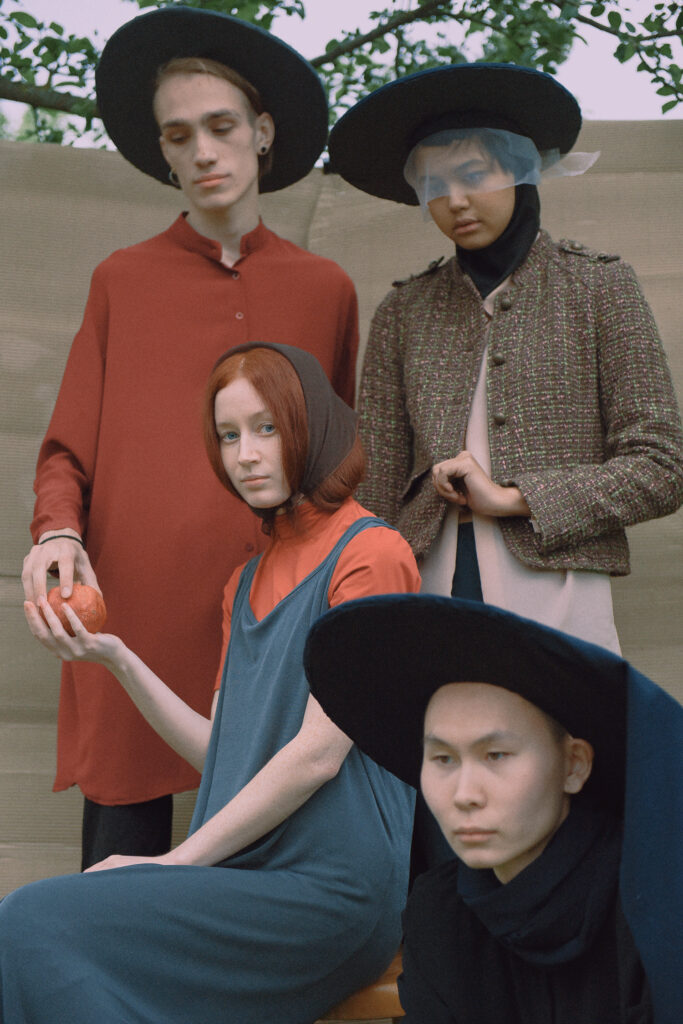
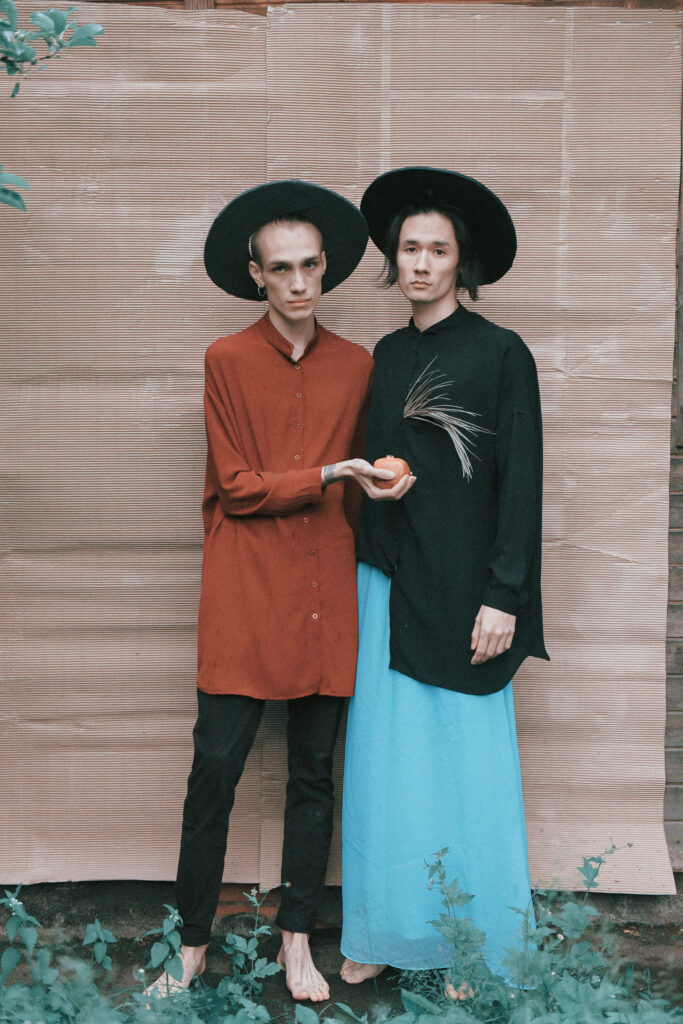
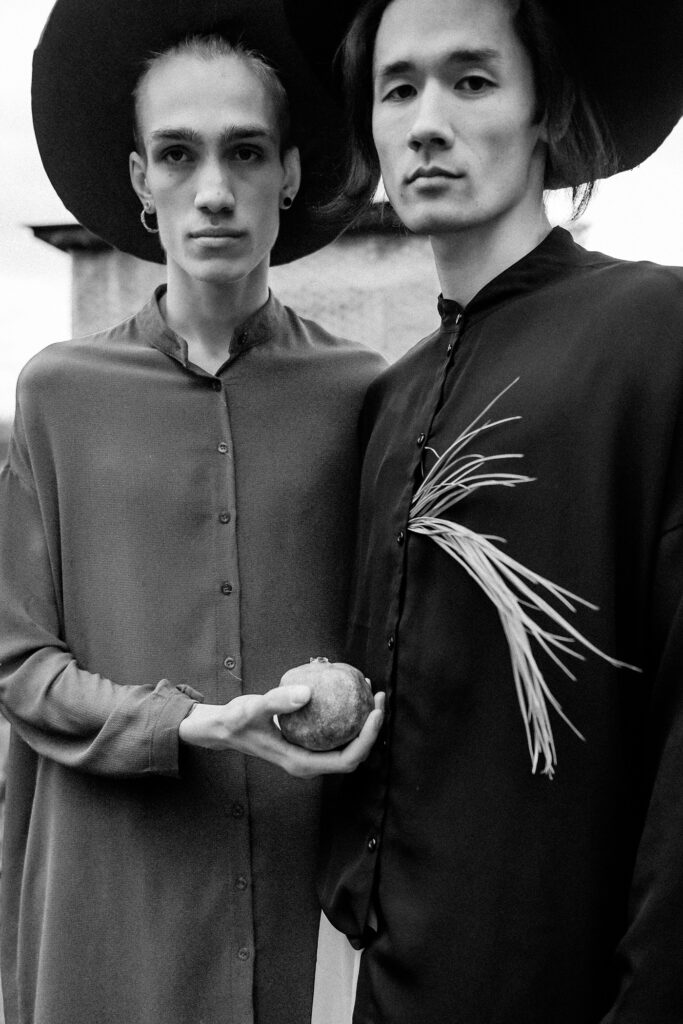
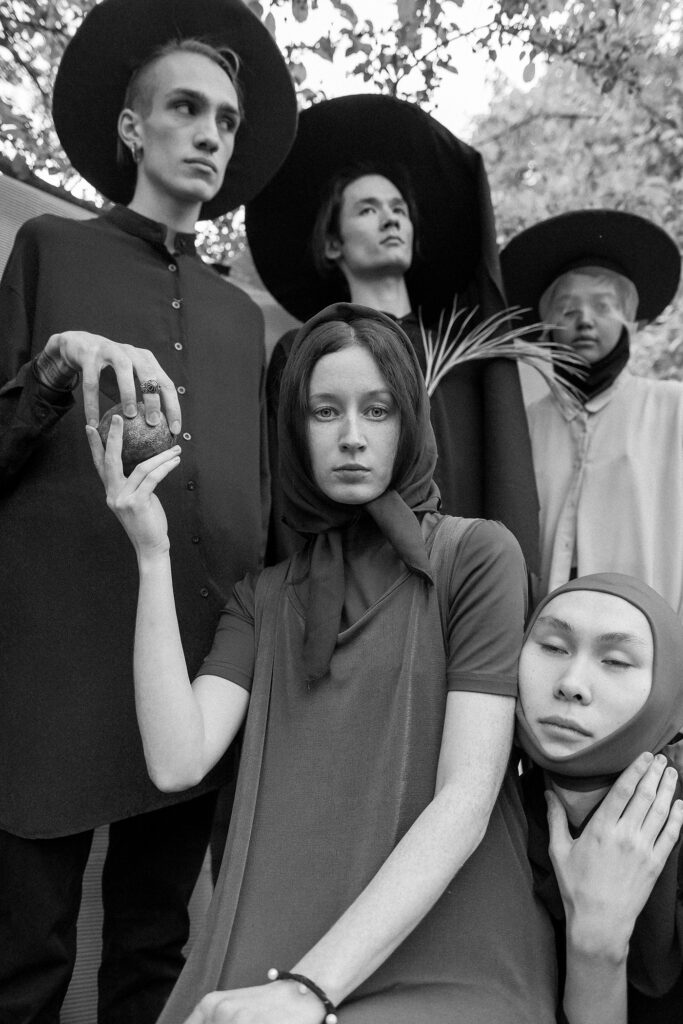

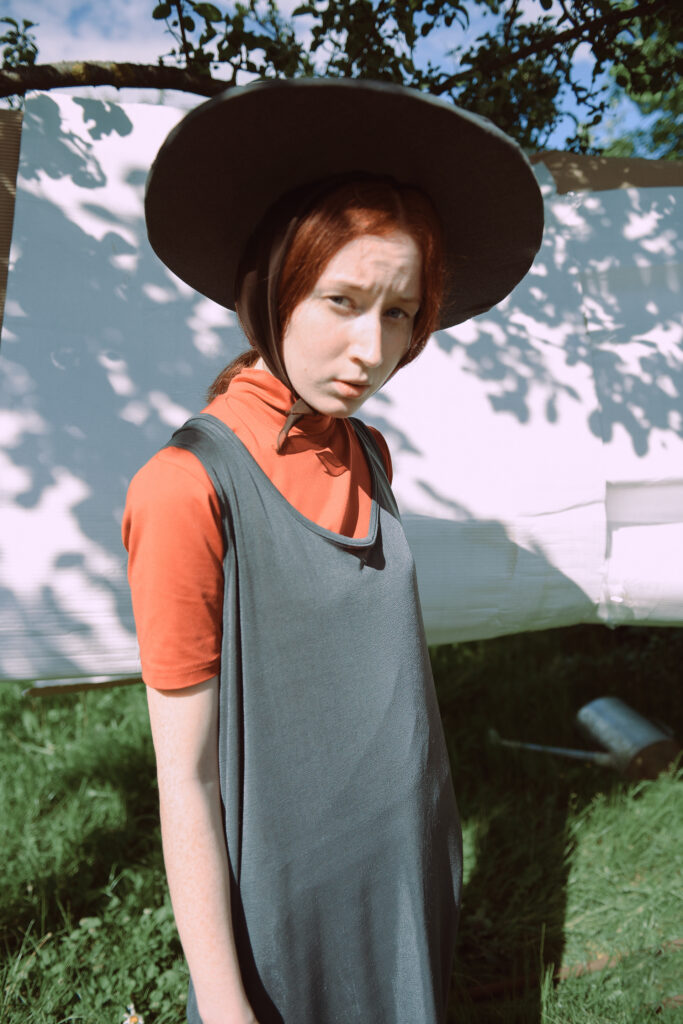
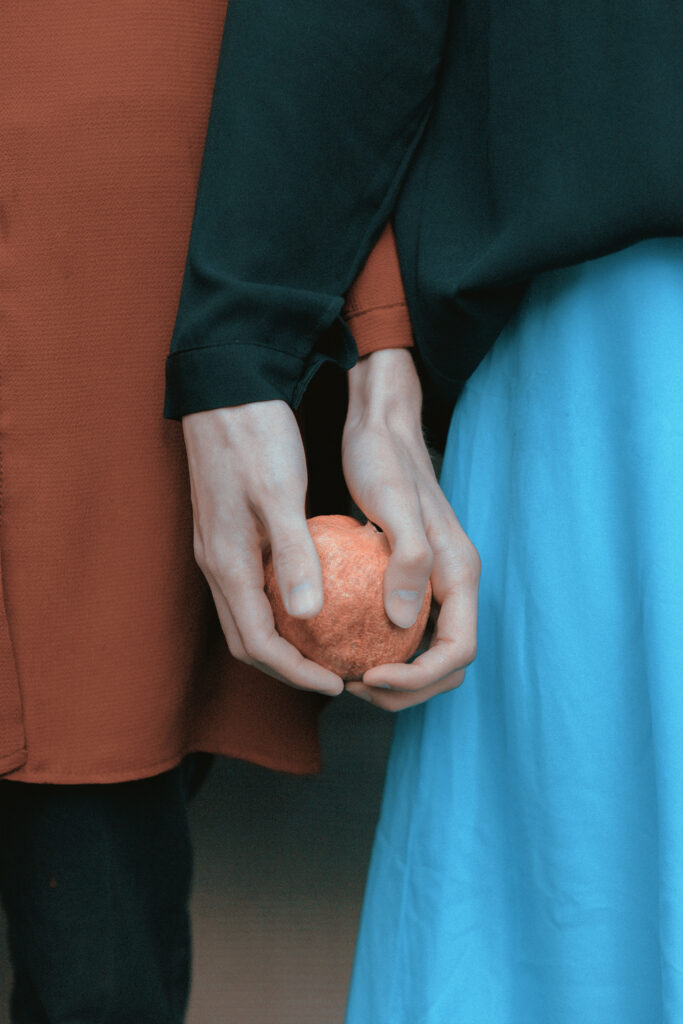
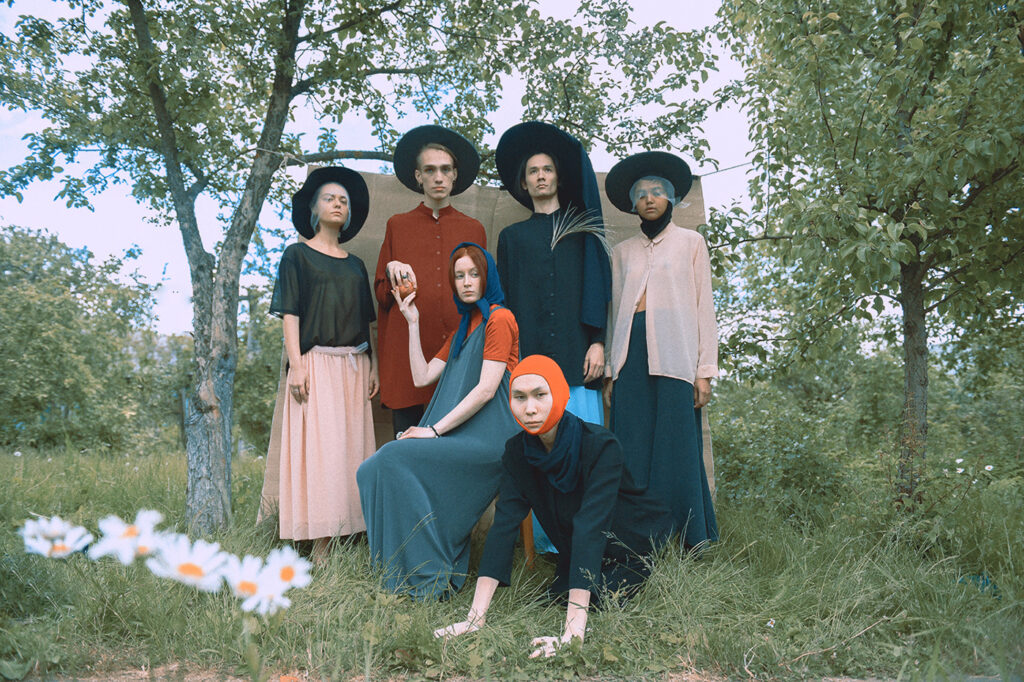
“Crazy Amish,” photo by Hanna Ushannka
— Can you tell us about your recent exhibitions or publications?
— About exhibitions—there are none right now. This question was relevant for me until 2022, when paintings were abundantly written, ideas for shoots were conceived and implemented, when there was that same inspiration for life and faith that something else could still be done. Now, very gradually, I am trying again to rekindle that same light that will illuminate the road.
In 2021, before my spiritual decline, I managed to organize my first exhibition in Moscow. There were paintings that I wrote from 2017 to 2021, and there was also a presentation of a music video that I filmed and directed for the Auktyon composition “Yakorya” (Anchors), where the main character was Vasilisa, the friend who died. Having rewatched this video after her death, intrusive thoughts began to appear that this video seemed to have been fateful. Everything becomes completely different when context appears.
With publications, it’s also not easy. You need to have a lot of resources to look for specific publications, write specific texts in a certain format. For me, everything ends at the stage when I only try to think about it. There is not enough strength to create and manage yourself at the same time; this also requires talent. But by some miracle, people appear on my way who are inspired by what I do, and who are ready to help me with this. So, very slowly, but something is starting to move again.
I don’t know how it was before, but now it’s not enough just to paint or arrange shoots, you also need to be able to present yourself, your work, competently maintain social networks, etc. But this all distances you so much from what you do and what is truly important. Sometimes you just want to delete Instagram, so as not to play this game. It is very clear to me that it can be used in different ways, and it is already an integral part of the modern world, thanks to which you can meet people close in spirit, but the way it distorts the picture—that makes it painful. You paint a picture a meter by a meter, and you get a picture the size of a phone screen.
In 2018, traveling through Georgia, I insanely wanted to stay there for a while, but there was no money or work. Then my acquaintances tossed an idea—you can sit on the street, draw postcards and sell them. It was so incredible, so different: different people came up to me, looked at them, bought them and shared what impression my work made on them. I saw real and live emotions, not an automatic “like” set in Instagram. This was one of the happiest periods in my life.
I generally have some difficulties in socialization—I can get stuck on a task for several days, forgetting that I haven’t been outside for several days, and as for some city parties, exhibitions, concerts—with them it’s even harder. There was a period when I attended some events, thinking that “well, you have to socialize somehow and meet someone,” but afterwards, more often than not, there was emptiness inside or melancholy from the fact that I’m empty in this. “I’d love to listen to Letov right now and his eternal spring in a solitary cell…”. Perhaps I have some distorted idea about such events or I went to the wrong place, but there is a feeling that such meetings are aimed at showing oneself and finding “useful” acquaintances. Although I haven’t been to such parties for so long that maybe something has already changed.
— What influence do you think your works have on viewers?
— To be honest, I have no idea. I noticed that when I meet people in person who are familiar with my work, they speak very inspiringly about what I do. But it’s interesting that rarely anyone writes about it in the internet space. As if not everyone can share it. I know for sure a few people who are inspired by what I do. For some, my work pushes them to implement their own projects.
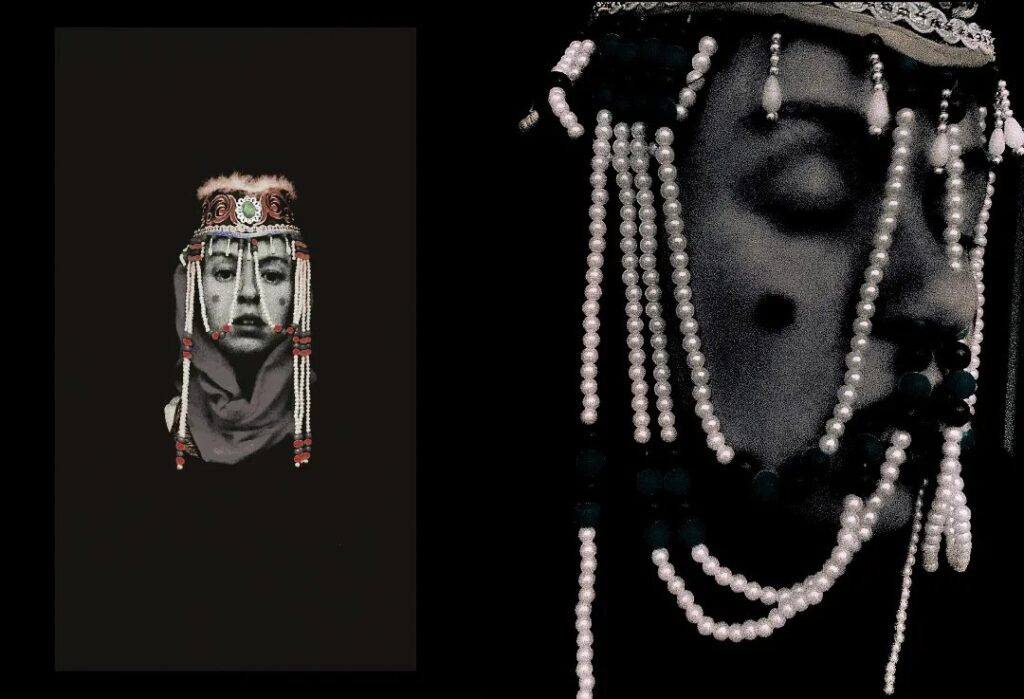
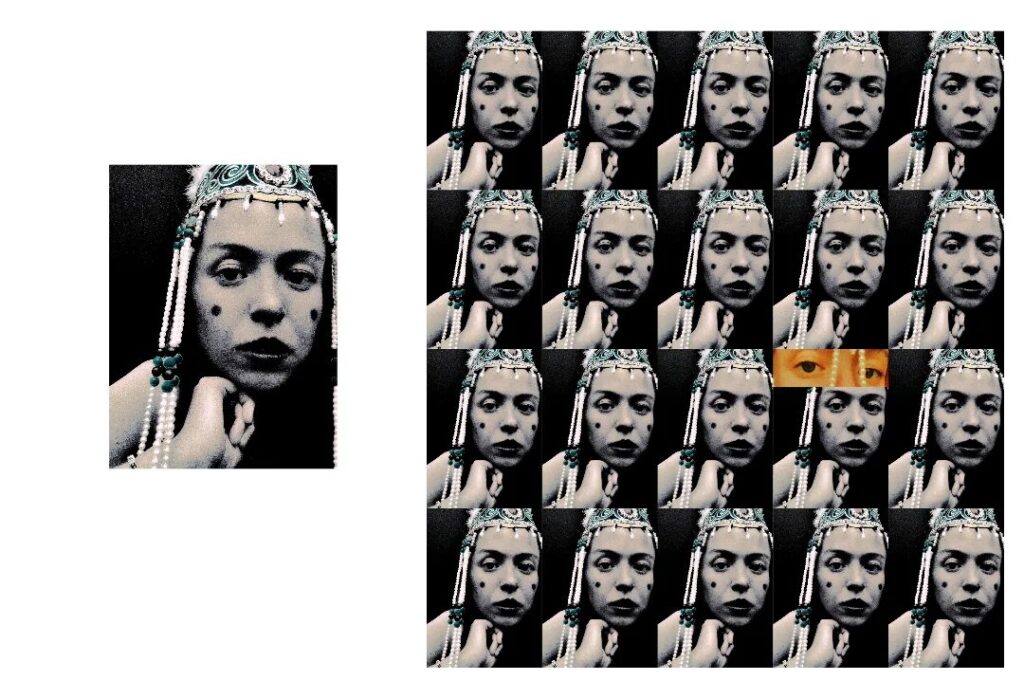

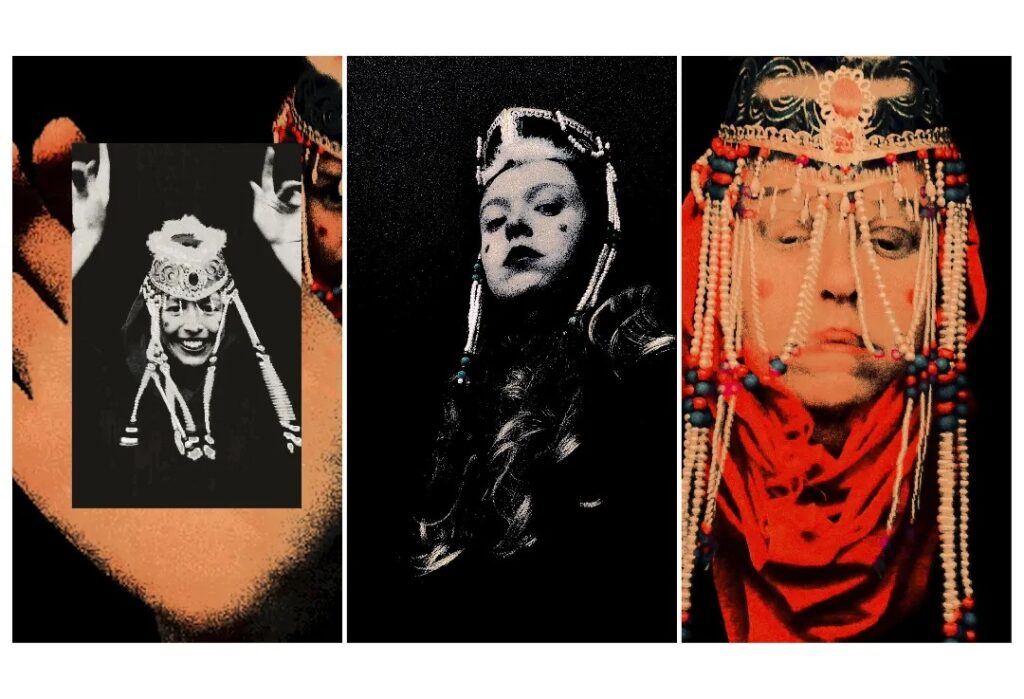


“Inner Mongolia,” photo by Hanna Ushannka
— What are you working on now and what are your plans for the future?
— Well here, guys, you can just pour some tea and continue to develop the branch about how everything around is bleak and so depressing. On the one hand, like Lyonya Fedorov, in the song “It’s scary to die, I don’t want to,” on the other hand, I want this all to end. I quite often lose touch with the understanding that I am a human being. And here, probably, the most honest answer will be that I am working on starting to work.
Looking back, you can see how much has changed and continues to transform, and at the same time it becomes clear that the feelings with which I used to start work no longer exist. That I have to rediscover myself for myself and feel out new boundaries. This is not easy, but I try to perceive it as another trial—to do it in spite of everything and out of emptiness. I see how familiar schemes stop working. Before, for example, I had muses, real muses! From whom I was inspired, where we drowned together in our co-creation, and now—someone left the country, touch was lost with someone, and someone passed away. And to wait, like alms from above, for someone to appear in my life with whom I would continue the joint path of creation, seemed too fabulous and unrealistic. And then I started experimenting with myself. And even during wanderings around the world, you always have yourself with you, whom you can transform and create something with.
The only thing that is inconvenient is to immerse yourself in certain states and at the same time film yourself, keeping the composition of the frame in mind. So, last winter I had Yatyut’, a spirit that was gathered in parts—something was brought from Olkhon Island, and something was acquired in the mountains of Leh. She appeared only once, I haven’t seen her since. YATYUT’. fairy tale.
Plans for the future are to gain strength and continue the search, trying at the same time to create, and not fall apart and think that I just believed someone that I am an artist. That suddenly my path is to pour people coffee and say “hello” and “goodbye,” and not all of this.
— Do you have a dream or a goal you’d like to reach in photography?
— Probably not such a thing. But if I rephrase the question slightly: “what would I like to achieve?”, I would answer: it would be good to organize my life so that I don’t have to think about and look for other ways of income besides all the skills I have. Be it photo, video filming, editing or painting, or constructing installations.