


Gender
This month, we have dedicated our column to “Art in Emigration.” The series of articles opens with Rina Trohi—a photographer from Polesie who has been living and creating in Georgia for two years. Read about physicality, the commercialization of the female body, and the thrill of shooting with a point-and-shoot camera in the new article by “Not Today, Not Yesterday, Not Tomorrow.”
Rina Trohi, photographer
— Hi! Tell us a little about yourself: what do you do and how did you get into photography?
— Hi, I’m 35. I’m into my second year of living in Sakartvelo. Usually, I engage in activism on TikTok and try to take photos. Sometimes I have enough resources to make one song a year with a friend, and I upcycle things for the soul. I’ve been approaching photography for a long time. As a kid, I really loved pressing the shutter on an old camera. In university, I tried shooting with an old FED and ZENIT. Но old cameras used to bring me to tears when, after developing, the film would often turn out blank. After university, in the middle of a photo boom, I decided I wanted to shoot portraits. I begged my parents for a camera. Back then, it was an unaffordable purchase for the family. But they believed in me, bought a Nikon D90 DSLR and a portrait lens. We didn’t last long with it. I shot for a bit and got tired of digital. It was heavy, had a bunch of buttons; but I realized I liked shooting friends and girlfriends at home. Then point-and-shoot cameras (compacts) became trendy, and without a second thought, I bought my baby—the stylish and simple Kodak Cameo, which I still shoot with to this day. At first, I tried shooting the city and parties with it, but the human subject won out anyway. I used to be embarrassed to call myself a photographer who uses a point-and-shoot. I more than once heard from Slava at the photo center on Bedy: “I’m amazed how you shoot such stories on this sht.” In the world of photo snobbery, I’m a bug. But now, a proud one.
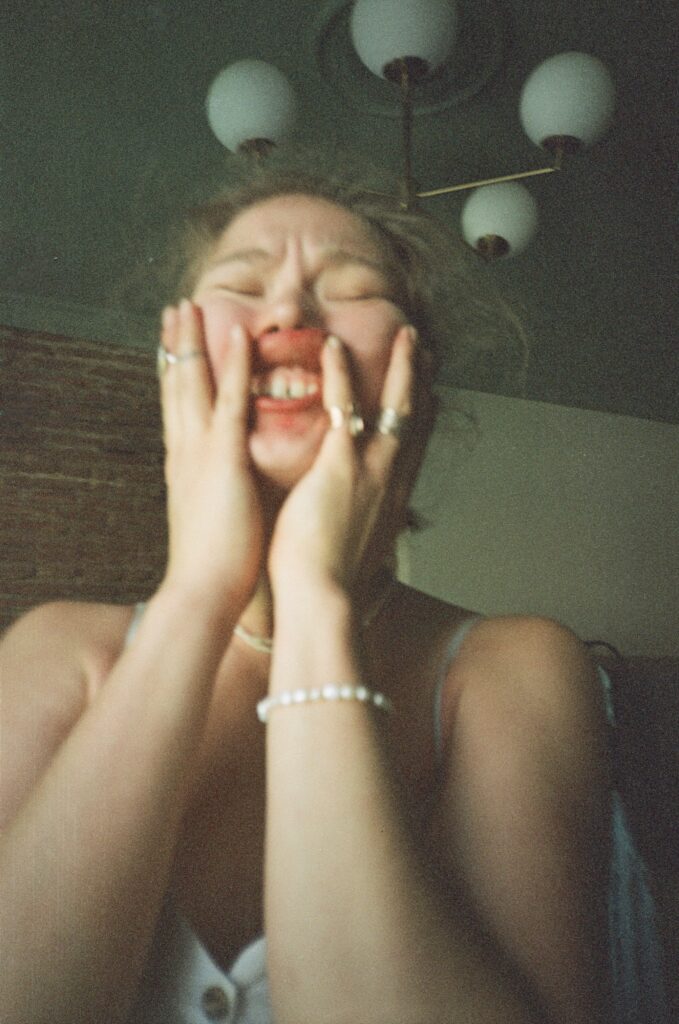
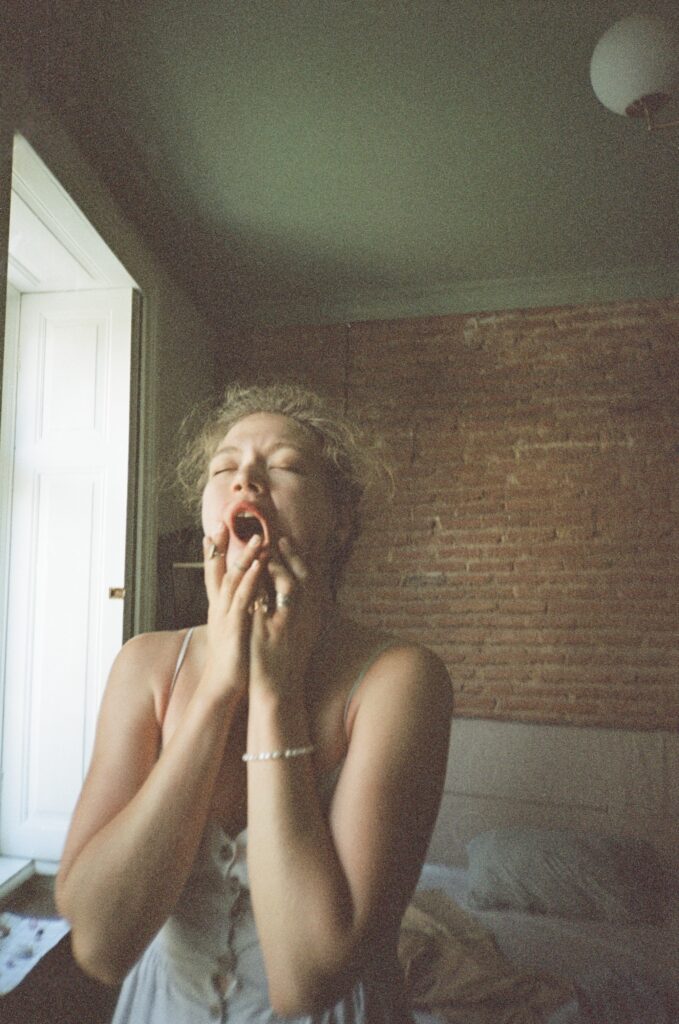
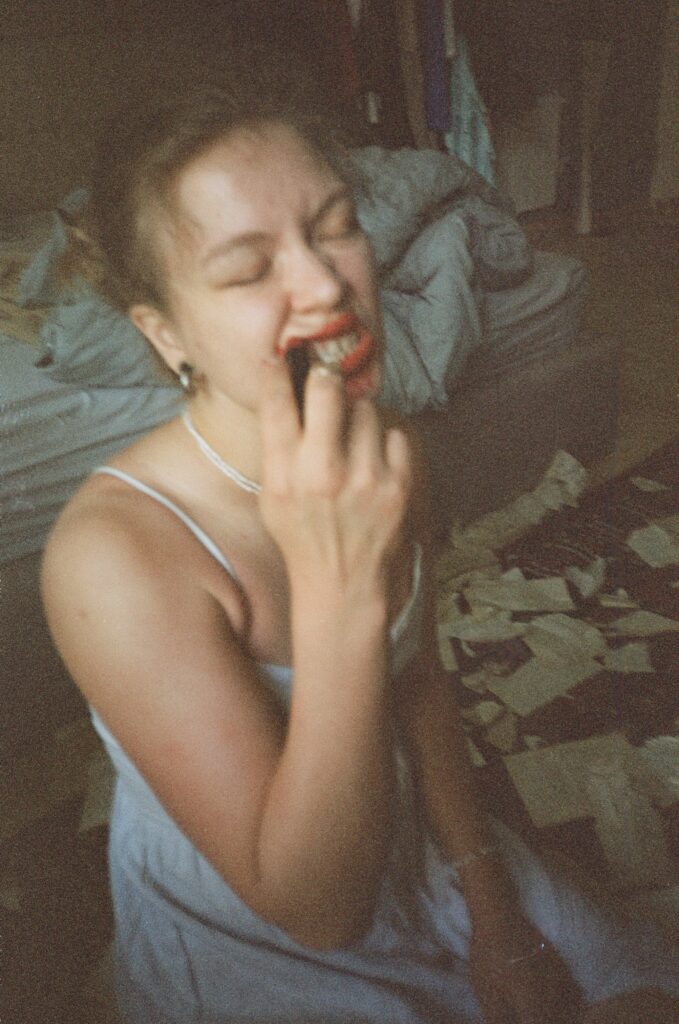
Photos from the personal archive of Rina Trohi
— What or who inspired you to take up photography?
— I think it all started with that old camera from my childhood. And I also feel like I see beauty and want to record it as best I can. I’m also definitely inspired by insecurities—mine first and foremost—and the realization of how many of them everyone has. And, of course, my ego. I do like it when people look at me and my work, react to it, and if they show respect—I’m over the moon.
— Which direction in photography did you choose for yourself and why?
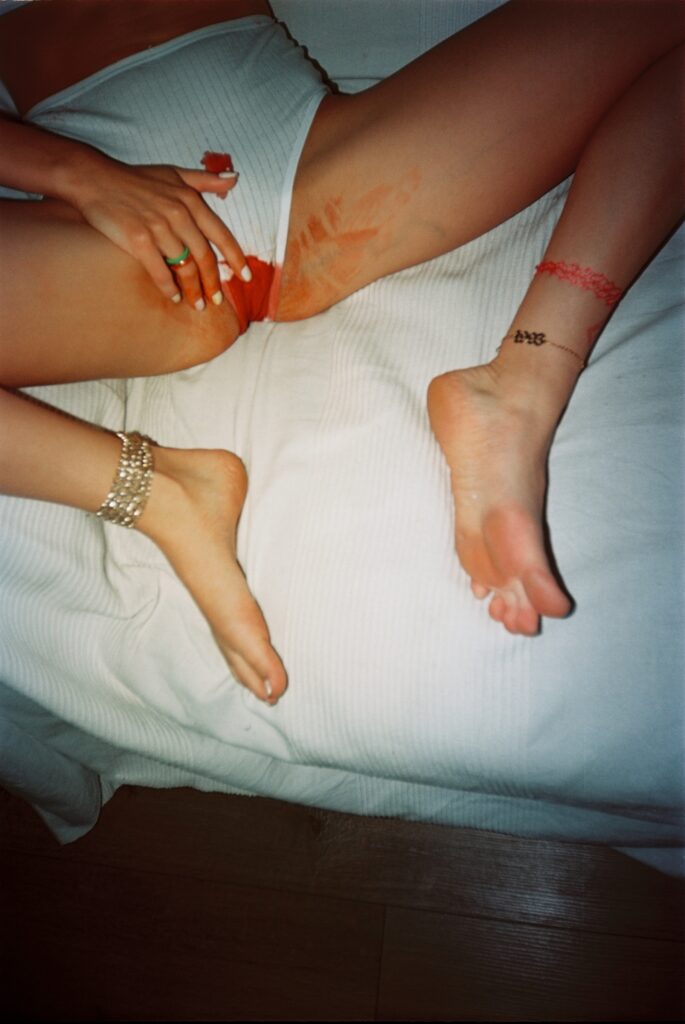
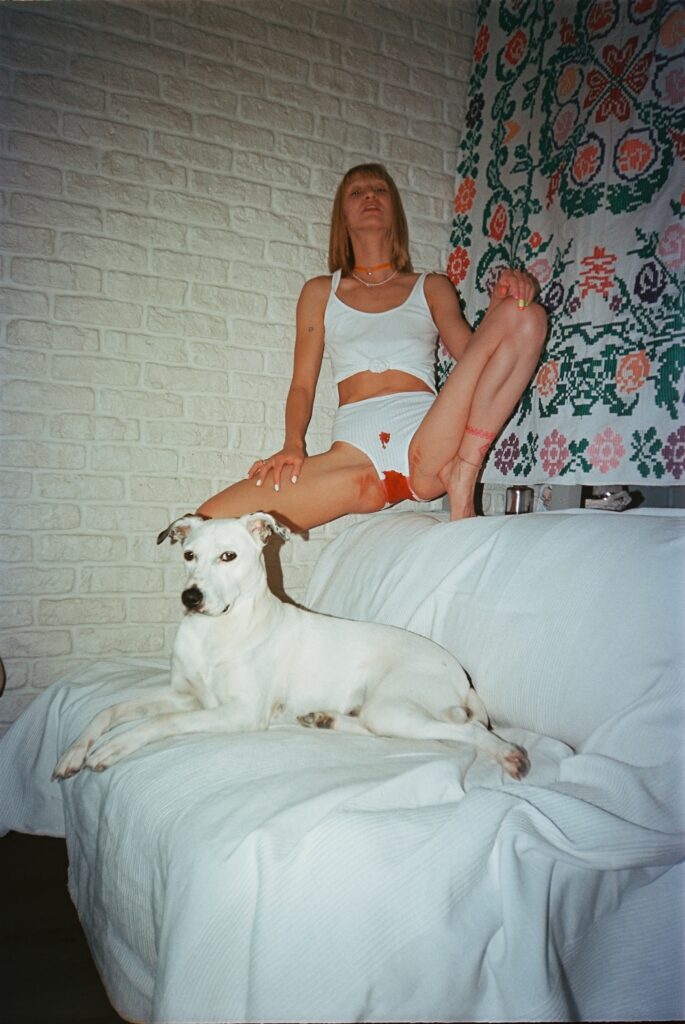
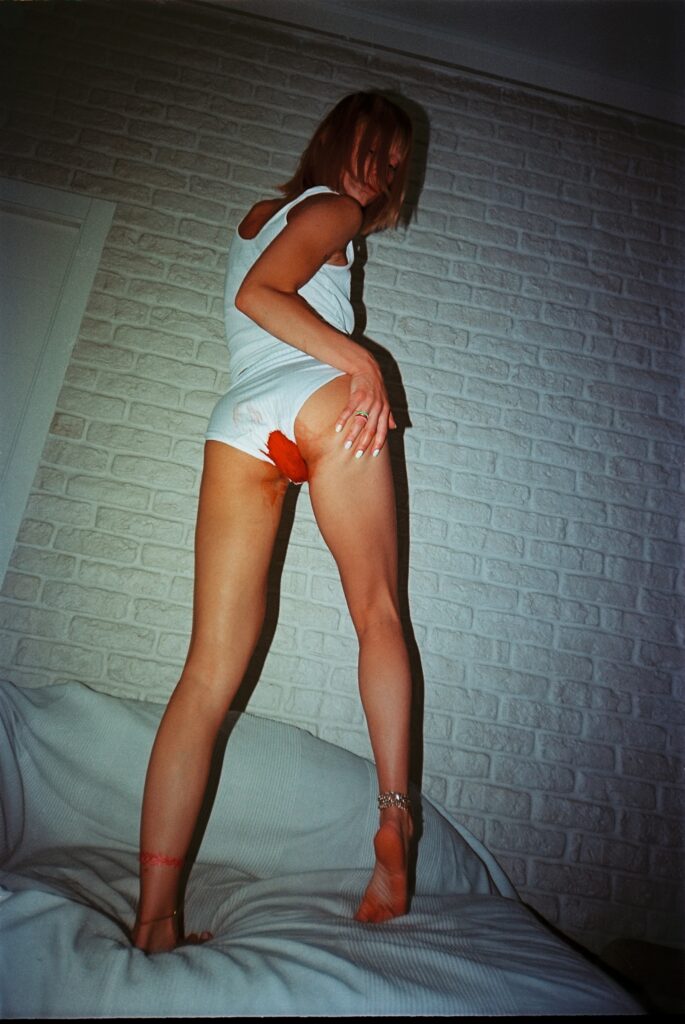
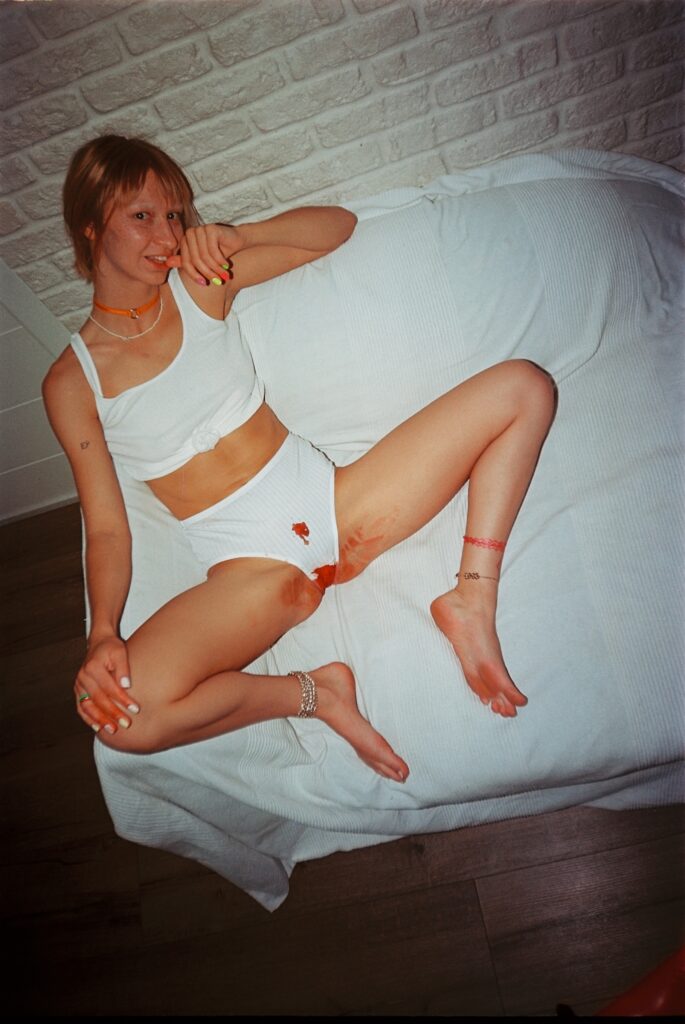
— It turns out I chose “nu” (nude). But those two letters are too silly to describe all the charm. I primarily shoot girls and women, their physicality, unique beauty, and sexuality. My studio is most often the home of the person I’m shooting. At some point, it started to annoy me that so many wonderful people walk around slouched like dogs. Since I’m one of them—here is my photography. There is a lot of revelation and frankness in it, deliberately relaxed poses. I love other people’s folds (skin folds) and I want “others” to start communicating with them too. It pisses me off that our generation and everyone before us didn’t get a whiff of sex-ed. And that the commercial ideal of beauty rules the minds of wonderful people so much that some don’t even look at themselves naked in the mirror.
— Which of your projects or photos became the most significant for you and why?
— It’s hard to pick just one. Either I’m over-sentimental, or every roll of film and every heroine gives me a big story—almost always. If you click on any carousel in the gallery, I’ll tell you something important. If we judge significance by society’s reaction, then the most powerful one so far was for the photo project about menstruation, which we shot with the brave and beautiful Iva Sativa. There, in the comments, both hearts and “asses” were exploding, and I realized how much support I have and that I can handle negative reactions too.
— What place does physicality occupy in your work?
— First or second. Because I’ve started thinking more often about sexuality, its uniqueness, or its absence. I have long treated the naked body not as an object of sexualization, but as a tool to fight it, as strange as that may sound. I’ve heard more than once that there’s too much protest in my work, that it supposedly prevents me from relaxing and enjoying myself. But I protest, Your Honor! Here are my diverse, beautiful, brave, and naked women (and occasionally men)—I’m giving you beauty and visual literacy so you’ll finally leave us alone and let us walk around calmly without bras. In the TV show “Ted Lasso,” I heard a phrase that describes what drives me well: “I want women to stop being sexualized and simultaneously judged for their sexuality.” I’m kind of tired of protesting myself, but I haven’t exhausted it yet.
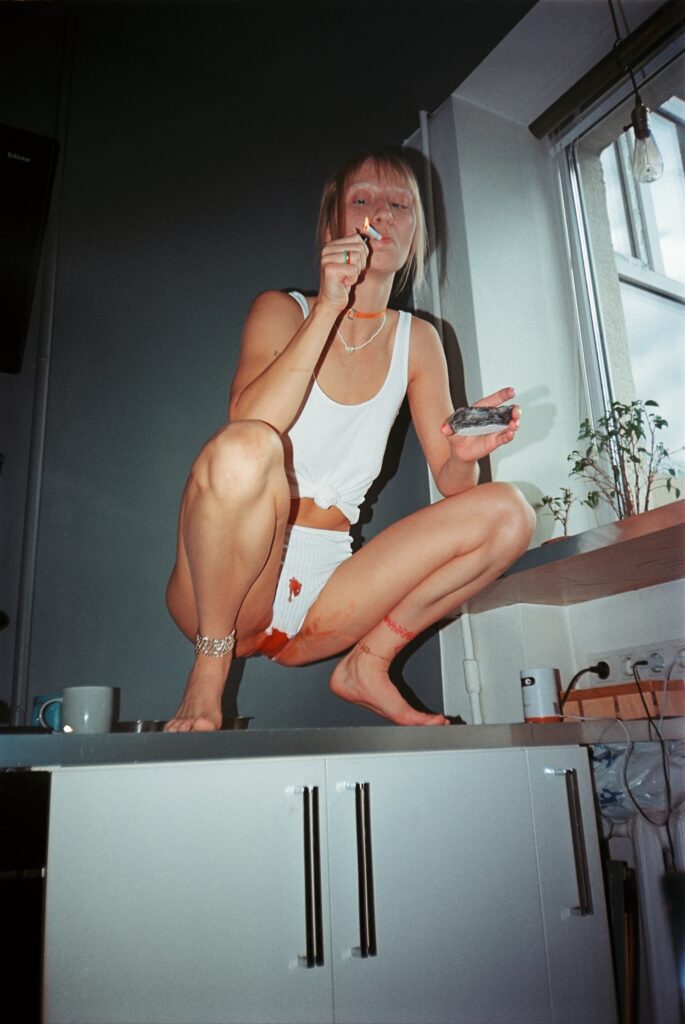
Photos from the personal archive of Rina Trohi
— You mentioned that censorship in photography irritates you. What did you mean?
— When you don’t have money for a gallery or you haven’t learned how to apply for projects and residencies like me yet, you only have social networks to show your work and create a dialogue with the viewer. You can make a website or publish on Instagram. I haven’t figured out why I need a website yet. But maybe I’ll change my mind. For now—Instagram. I’m in its shadow ban because it has deleted my posts a bunch of times, saying I’m offending someone with the body or the sexual nature of the content. Or it’s suggesting I delete a number of posts to get out of it, which I won’t do on principle. Because what the fck? Get this: accounts called “boobsandbutts”—I’m not kidding—which literally show boobs and butts covered in oil, don’t offend hundreds of thousands of followers at all. But as soon as your images have a hint of “something to think about”—goodbye creator, here are your 2,000 friends, your very best ones. It’s such hypocrisy from these stinking algorithms. Or the fact that you have to code the word “sex” if you want to talk about the thing without which none of us would exist. But it’s interesting: when I started shooting and publishing provocative stuff, I wanted to shock with the body, to push it aggressively right in people’s faces, like: “here, take that, and what are you going to do? Just chill out and give us freedom.” It seems I was saying that to myself. Now I actually want to cover the chests of all my girls; I no longer want to gift this beauty entirely to those who directly prefer ignorance.
— How do you think commercialization has influenced the objectification of the female body? And is it possible to resist this?
— It influenced it, and harshly for everyone. I think the dead end is already behind us. But business built on polished sexuality isn’t going anywhere. Neither are girls who adjust themselves to look like a perfect commercial product. I spent more than one nerve cell fuming: “Why do you need those lips? Why those lashes? Our naturalness is so beautiful.” And then I caught myself thinking: am I any better than a person who says “Why do you need those 5 kg?” If we want people to stop bothering us with beauty canons, we should stop bothering the “Insta-models” too. Everyone gets a lot of sh*t for their appearance: both conventionally attractive beauties and unique beauties. But it’s important that everyone can be honest with themselves: why am I choosing this body, or why am I comfortable not accepting it as it is. I have a case where a girl wanted a shoot with me. It was her first shoot like this (it often happens with me, by the way). She’s so beautiful—a Gauguin muse—but self-conscious and quite “at odds” with her non-athletic body. After a while, I asked if our shoot gave her any new thoughts or feelings. And she replied: “Yes, you helped a lot. I clearly realized that I’m not comfortable in this body, and I want and can change it.” Hahaha. At first, I thought I lost that round, like she didn’t love herself the way I loved her in the frame. Now she goes to the gym, regularly takes selfies, because she started looking at and seeing herself. That’s cool. My point is that a sexual commercialized image feels natural for some. But if you’re bursting at the seams trying to approximate it just to please everyone and be accepted into that elite group, then I’m calling the beauty police. In general, you can influence it, and I do it as best I can. And, as in all matters, we start with ourselves.
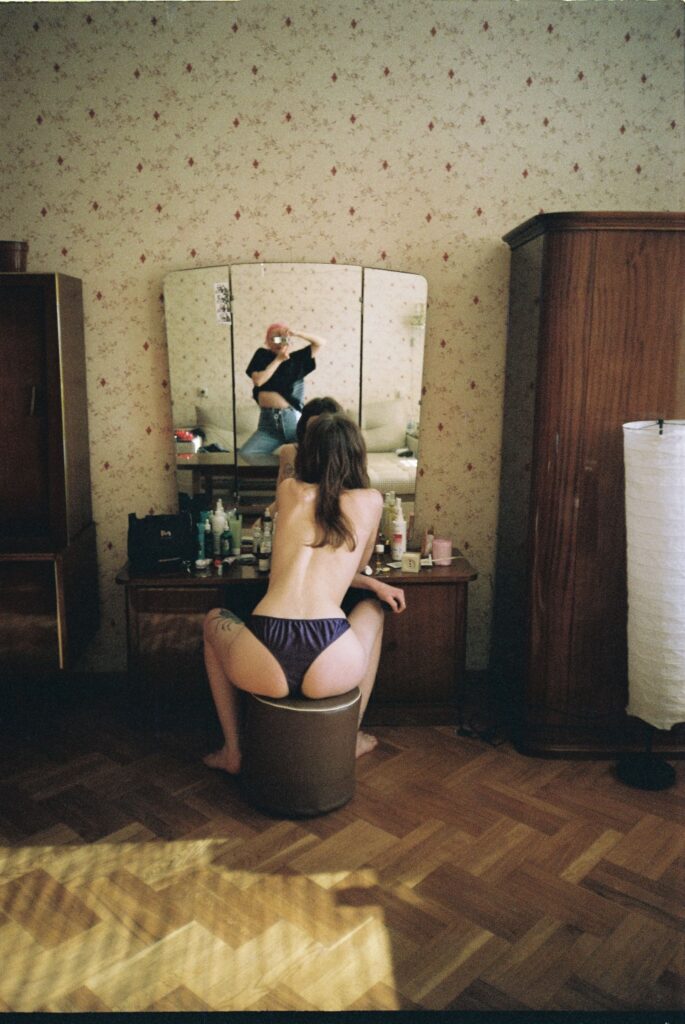
Photos from the personal archive of Rina Trohi
— In your opinion, where is the line between art and erotica as an element of consumption?
— A friend once said that when he looks at my photos, he gets a “cultural boner.” The word “cultural” reassured me. Out of naivety, I didn’t immediately realize that not only connoisseurs of beauty look at my photos, but also just an aroused crowd. At first, it was unpleasant to think about it from that side. But now I understand that it’s logical. Basic needs aren’t going anywhere. But if not us and my women, who will give ourselves and the world this sex-ed? Because I have the feeling that good things are taught by good people to good people, and those who haven’t found out where the good stuff is handed out remain in the dark. Obviously, everyone should strive for the best version of themselves. Но many need help. Maybe I helped someone throw away a stone and pick up a digging stick to figure out their own values. The line is as follows, in my understanding. If you look at a woman and how she looks and presents herself in the frame and it causes only arousal and sexual desire—that’s erotica. If you look at her and you have other thoughts, like: “man, she’s so relaxed, what is she trying to say with this,” “wow, that’s brave,” “what a line,” “oh, a belly like mine,” “she looks like…” etc., then that’s moving toward art.
— What difficulties have you faced in your career as a photographer?
— The main difficulty is that I don’t have a career at all. I wanted so much to be the queen of the underground that it seems my dream came true. But if I push aside the curtains of pessimism, the first place goes to imposter syndrome, with which I’m still at loggerheads. And I know for sure I’m not alone in this. It’s in my nature to doubt and weigh things. I can spend time and energy thinking about why there are so few reactions to this series. Is it because they don’t feel it, or because I’m feeling it poorly, and why is this even important to me? There were times when I could give up for six months because it seemed like nobody, including myself, needed it. Now times are tough, and I thank the heavens that I can just do this.
— What projects are you working on now?
— I just can’t sit down and make myself a portfolio. This is the project I need most, but procrastination, lack of experience, work, and life keep delaying it. As for photos: I want to shoot a light series, without manifestos, with masculine heterosexual guys or a guy (as much as I have strength for) in dresses, titled “What, are you a girl?” to smile at gender stereotypes.
— How do you approach choosing models for your projects?
— There are two types of collaboration with me. Any person pays me $150 for a shoot (as of today), and we work together, taking into account all the subtleties of the person’s soul. The second type is when I want to do something from my head. Then the person must agree to everything, including publication. In that case, I pay for the process myself. Most often, I find such people in my circle and the Insta-world.
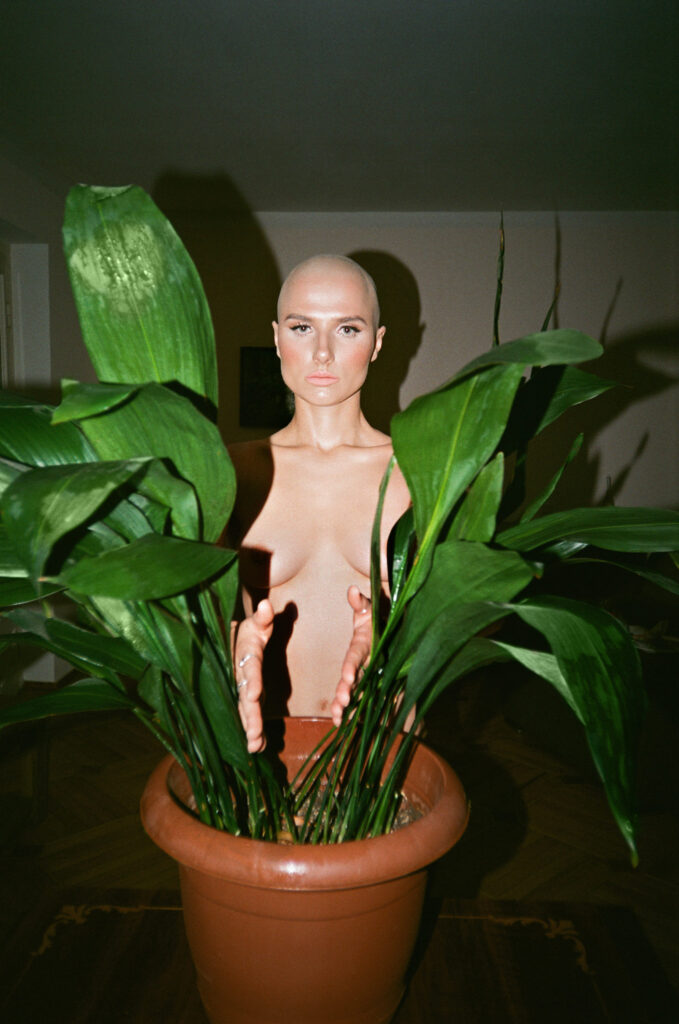


Photos from the personal archive of Rina Trohi
— What new technologies or trends in photography interest you?
— I’m not interested in trends and technologies in photography at all. Some things reach me, of course. But I’m a simple person. There’s a point-and-shoot camera, there’s me, there are people, and we’re doing well together for now. Sometimes I wonder if I’ve driven myself into a comfort zone with this compact camera. Maybe if I shot those smooth photos and processed them afterward, I’d be famous and trendy. As my friend, a professional retoucher, says: “Good processing raises the check.” But I still can’t hear her; I keep asking people to look at my grainy point-and-shoot shots without processing. I haven’t found a clear answer. It seems I’m not interested in shooting any other way.
— You are a proponent of analog cameras, but how do you feel about using social networks instead of galleries to promote your work?
— I’ve already told you about Insta. And I’m a so-so promoter. That should have been included in the list of difficulties. I don’t like selling myself. It’s very hard for me. So I shoot and publish and that’s it. I’m thinking about Patreon. I feel like my simple shots have an aesthetic and charm, and most importantly, stories. But I haven’t studied the platform yet; I don’t know what the censorship is like there. But I really want my niche creativity to bring in income, from views, for example. Or from views without censorship.
— Any last words for the readers?
— The struggle for the freedom of photography has shown me how unfree I am myself. That my ideal is not universal and that I am naive. That I’m a bit of a discriminator. That we are all different and a true understanding of these simple words is enough to make the world better. That not everyone is ready to see everything and that my attitude toward many things can change. But it’s definitely better to do something than not, and to love this work. And the body.