


Emigration
Our third destination is Nepal, an extraordinarily beautiful country with a rich spiritual world. But how are things regarding drug laws—is everything just as beautiful there?
What are the conditions for women in a female prison in the Himalayas? Which drugs are most common on the streets of Nepal, and do prisoners have rights? Olga (name changed — Ed.), a Belarusian woman serving her sentence in a Himalayan prison, shares her story with Nottoday.
Olga is a Belarusian emigrant in captivity.
— Is drug trafficking a serious problem in the Himalayas? Who usually transports and sells drugs?
— I can’t speak for the entire Himalayas, but in Nepal itself, the drug problem is very widespread. Both Nepalis and foreigners are involved in sales. The difference is that Nepalis operate within the country, while foreigners either bring drugs in or try to take them out. The substances themselves also differ. Nepalis “work” with heroin, marijuana, and pharmaceutical drugs, while foreigners mainly deal with cocaine and marijuana. Foreigners receive the longest sentences for cocaine distribution, as it is considered the most expensive and dangerous drug in Nepal.
— What are the sentences for smuggling, possession, and distribution of substances in the Himalayas?
— For marijuana, you can get up to 2 years; for heroin, 8–10 years; for cocaine, 15 to 25 years, plus a fine of a couple of thousand dollars.
— What is the most popular and accessible drug, besides marijuana (which, in my view and hopefully the view of most people in the world, is not a drug)?
— In Nepal, marijuana is still illegal and considered a drug, though there are rumors they plan to legalize it. However, there are certain people in Nepal who can smoke it openly without consequence—Sadhus, respected yogis. For them, smoking marijuana is a path to enlightenment, and they are considered legal “bud-carriers.”
— Generally, I associate the Himalayas and Nepal with spiritual places, so the fact that there are prisons there causes a bit of dissonance, even if it’s obvious they must exist. What else in the Himalayas contradicts the image of a spiritual place? Is there a sharp division between wealthy and low-income people? How is it expressed? Are there casinos, brothels—in short, are all the “benefits of civilization” present?
— The Himalayas are the mountainous part of Nepal, where the population isn’t as dense as in the capital, for example. There is little infrastructure here; the main trade is mountaineering gear, Chinese consumer goods, and food. There are a few small restaurants and hotels. People here live poorly and primitively.
I don’t think you can find brothels here, but in the capital, prostitution is developed, and transsexuals have also been noticed.
— Let’s talk about the prison. What are the conditions surrounding you? Are there specific rules inside the prison?
— My conditions are good, considering I am in prison. I haven’t been to other prisons, of course, but it seems to me that these are among the most reasonable Asian prisons.
To start with, we have no strict regime: we wake up and go to sleep when we want, eat at any time, and are generally left to our own devices all day.
There are no police inside the territory—we live as a female collective of 7 people (it’s a very small prison). We live in a house that has 3 rooms. Each room houses 2–3 women. I share a room with one roommate.
We have the opportunity to cook for ourselves; there is a gas stove. I don’t really like Nepali food, so I prefer to cook for myself. We “order” groceries from the market.
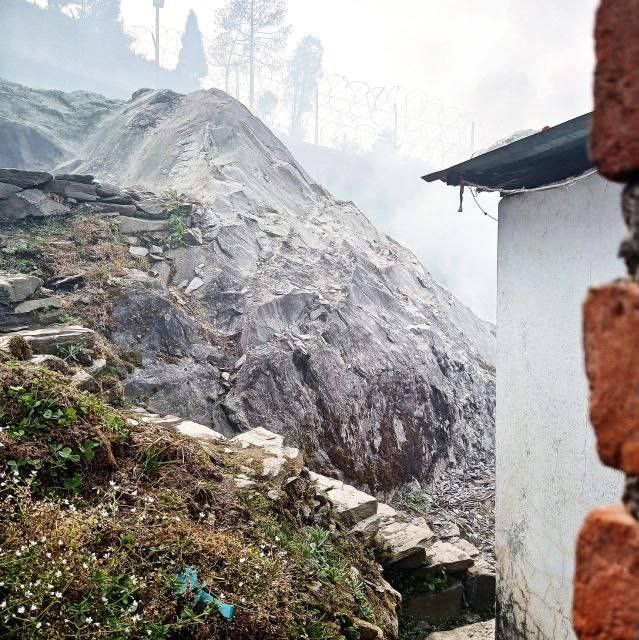
On the grounds, there is a kitchen, a toilet, and a shower. The terrain is mostly mountainous, so there isn’t much space to walk around.
The rules are standard: no fighting, no escape attempts, no trying to bring in alcohol or drugs. But even those things can be done if one is determined enough.
In the evening, we have a roll call—and that’s it.
— How do you spend your day?
— My day starts at 10–11 AM: I drink coffee, eat breakfast, and do basic self-care. There isn’t much to do here, so I either read, watch something, or study languages. So far, I have learned Nepali and English.
I also have homemade dumbbells that I use for exercises.
— You are in a women’s prison; how do the guards treat you? Are all the female necessities covered for the inmates?
— The guards treat us well. There have been no inappropriate suggestions or incidents; everyone is very friendly and kind, and they often come to “chat” with the prisoners.
The prison administration tries to meet our needs as much as possible—they distribute female hygiene products for free, and there are two nearby hospitals we can go to.
What I personally miss is someone who could cut our hair (because no one here knows how) and hot water. But maybe I’m asking for too much while in prison 🙂
— Who are the other inmates with you? What are they serving time for, and what is the most common charge?
— As I mentioned, there are only 7 of us. One woman is in for human trafficking, two for involuntary manslaughter, one for organized crime and group murder, and three of us for drugs. I am the only foreigner here.
Since I initially served time in the capital, where there were about 500 people in that prison, people there are in for everything: murder (including very brutal cases where women dismembered men), theft, bank defaults, bigamy, hacking, and fraud.
Foreigners are mostly in for drug trafficking, illegal gold trade, expired visas, and human trafficking.
— How is the attitude toward emigrants? Where are you from, what language do you speak, and does this affect your stay? Are there many other emigrants among the convicts, and if so, from which countries?
— Listen, yes, your origin and skin color affect how you are treated.
If you are fair-skinned, you’ll be treated well—they will essentially “kiss your ass” because they think if you are from a “white person’s country,” you automatically have a lot of money. They think that if they make a white friend, that person will spend all their money on them.
I noticed a very poor attitude toward Africans. In their language, they even have a word equivalent to the “n-word.” They laugh at and discuss their appearance, as they have never seen busts or buttocks of that scale before.
There are many foreigners in Nepali prisons: Africans (the largest group), Thais, Filipinos, Latinos, Indians, Pakistanis, and Malaysians.
There are very few Europeans and Americans.

— Are there female gangs in the colony? Or divisions based on religious, national minorities, or sexual orientation? Do conflicts happen often?
— We don’t have gangs. Of course, women divide into interest groups: foreigners with foreigners, and higher-caste Nepalis also stick together.
We had tomboys, and the Nepali women flocked to them like flies to honey—so there is no discrimination or pressure there. Everyone in prison usually knows if someone is dating someone else, and they like to joke about it, but in a kind way.
However, discrimination against foreigners was definitely felt. In the capital’s prison, there was a hierarchy—i.e., an inmate “kicks back” a few thousand dollars to the prison warden and gains the right to a personal landline phone, permission to go outside, their own private room, and authority. She becomes the “head” of the women’s prison, and everyone obeys her. Usually, these leaders change every year.
In my second-to-last year, the leader was a wonderful woman; she sincerely liked foreigners and tried to help us in every way, organizing separate holidays and events for us.
We often had concerts in the men’s prison, and we could go there—she made sure that any foreigners who wanted to attend were put on the list. A golden woman.
Then she was replaced by someone everyone hated. she openly showed her dislike for foreigners. At that point, I started thinking about transferring to another prison because she banned all packages and visits for foreigners.
She even put a girl from Ukraine in solitary confinement for a fight that the girl wasn’t even involved in—she was trying to break it up. There were even witnesses who saw that the girl didn’t hit anyone, but the leader didn’t care.
The girl stayed in solitary for a week and couldn’t even take a shower.
— If you have money, does it affect your stay? And what can you get for yourself if you have it while in custody?
— It’s very difficult here without money. In the capital’s prison, you can’t even get decent water without money. There is water, of course, but from a tanker truck—meaning you absolutely have to boil it before drinking.
In reality, there is a lot of politics in prison, and everything revolves around money. Consequently, if you have it, you immediately rise higher in social circles; people try to befriend you and serve you.
Also, those with money can hire workers—to wash dishes, carry water, or wash clothes. Mostly, Nepalis work for foreigners.
There were also many small shops inside the prison, and they even opened a beauty salon. There was a shop for vegetables, fruits, cigarettes, chocolate, cookies, grains, porridge, jams, nuts, etc.
There was also a small tea house where they made tea and coffee and baked roti and other Nepali food.
— Is there such a concept as “people with low social status”? If so, how are they treated? Or is this phenomenon a relic of post-Soviet states?
— People with low social status here are the mentally ill individuals who live as a separate group. To give you an idea, it’s a total disaster: they don’t wash themselves; they are taken as a group once a week to be helped with bathing. They have lice in their hair and resort to begging. Some are very aggressive. For example, if you don’t give them a cigarette, they might throw a stone at you.
— Is there forced labor in the prison? If so, what do you do? How does the Himalayan state profit from you? For example, in one country I won’t name, prisoners make wooden furniture and parts for a socially-oriented IKEA.
— Let me put it this way: foreigners are not allowed to work, though we would be happy to. Nepali women take on roles: some are responsible for the phone, some guard the gates, some are in charge of cleaning, others work as sellers. They get time off their sentence for this. This is not permitted for foreigners.

— And the final question: do lawyers have influence on the prison system? Can one achieve a case review or protect their rights if they are violated? What percentage of cases are reviewed in favor of the prisoner? Is there a way out of these often difficult situations?
— Lawyers here are a very tricky subject; it’s hard to find a competent one. Also, the prices for foreigners and Nepalis for the exact same service are completely different.
For example, if a Nepali woman and I are in the same case and hire the same lawyer, the price for her will be $1,000, and for me, it will be $4,000.
My personal lawyer did not prove himself well. He “sugarcoated” things, saying I could get 7 years and that he would handle everything, even though the code states the minimum punishment for my crime is 15 years. So how exactly could I get 7 years?
There was another moment—he persistently asked if I would appeal to the High Court. Later, I hired a different lawyer who told me that my window for appeal had expired long ago. So where exactly was he planning to appeal?
The parents of a girl from Malaysia hired 30 (!) lawyers, but she was still sentenced to 17 years.
My personal opinion is that everything here works through connections. Connections and money. If you have acquaintances in high positions and a lot of money, you can get out of any situation.
Currently, Olga continues to serve her sentence in the Himalayan prison, but this did not stop her from giving this interview.