


Emigration
America — distant and alluring, close to us through music and cinema, yet remaining remote in its culture. In the new column “American Dream”, “Not Today, Not Yesterday, Not Tomorrow” spoke with Sasha and Chad.
Sasha is a ceramicist from Belarus who emigrated with her child from her home country to Georgia, and then, together with Chad, to the USA. In the first part of the interview, we talked about how difficult it was to move to another continent, the differences between the nature of Georgia and America, and the dark sides of capitalism.
Sasha and Chad, an immigrant and a local
— This is your second emigration; the first was from Belarus to Georgia. What was the main motivation for your move from Georgia to the USA?
Sasha: It wasn’t exactly like we had a choice. I couldn’t return to Belarus to renew my passport, which was expiring. Georgia does not grant asylum to Belarusians; doing so would be an admission that people in Belarus can be imprisoned for political reasons. Recently, there was a case where human rights activist Raman Kisliak was denied asylum after waiting for a very long time.
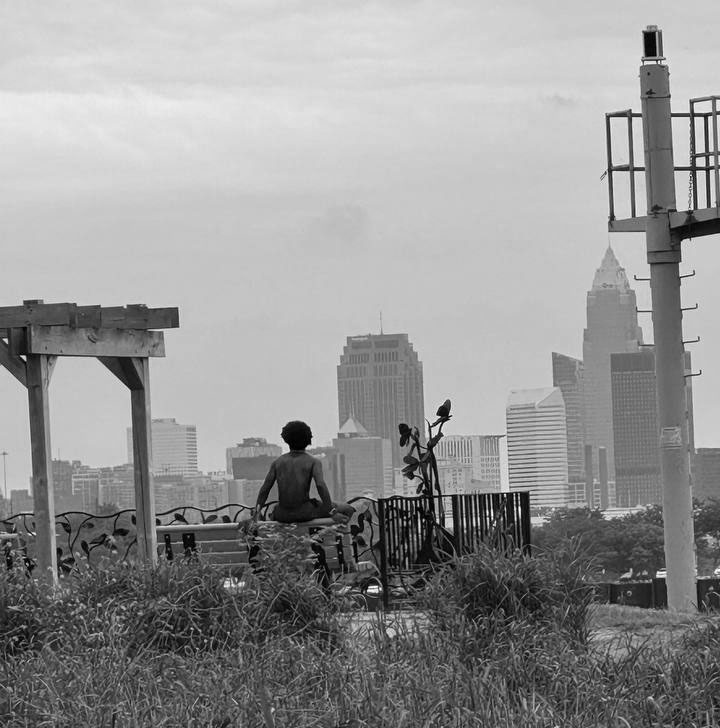
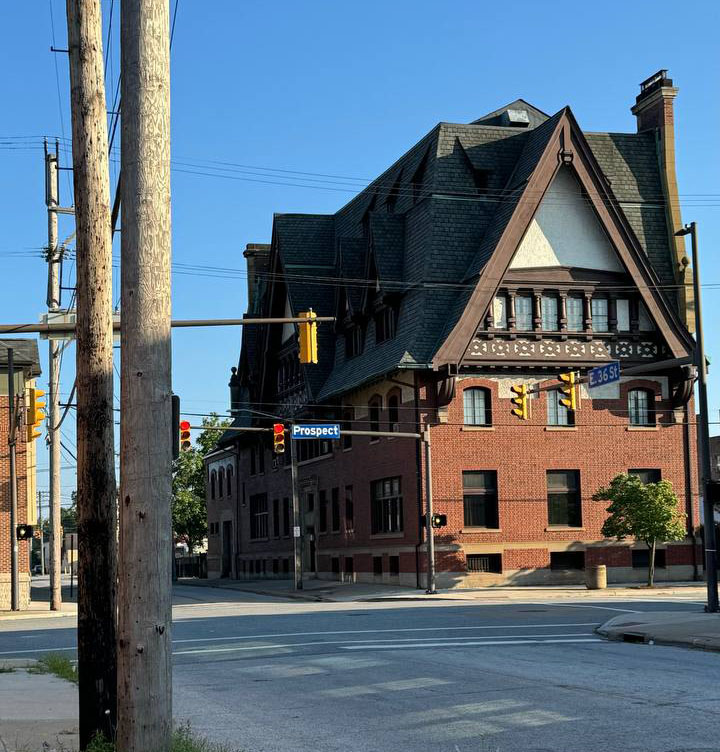
Photos from Sasha and Chad’s personal archive
We didn’t want to emigrate to a place where we would both be immigrants. It is very difficult and incredibly expensive, especially with small children, of whom we have two. I can’t imagine how we would both be able to work and pay for a nanny and school just to work — it sounds like a nightmare. Plus, I do ceramics; it’s not a remote job or just simple employment. Building a studio and a client base requires a huge amount of time and money, and I didn’t want to invest those resources in a “buffer” country.
Therefore, the States, Chad’s home, were chosen. His parents are here and can help. Here I can build a workshop and not worry about having to move again in a couple of years. Here he is a local and knows how to call an electrician or where to buy sewing thread, so we don’t have to spend time solving those basic issues.
— How did the emigration process go? What difficulties or unexpected moments did you encounter on your way?
Sasha: We had a very difficult and nervous emigration. We intended to do everything the long legal way, waiting for years while staying in Georgia, but the law Lukashenko issued last year accelerated the matter, even though we hadn’t planned it that way initially. It gave us the opportunity to apply for an expedited spousal visa for political reasons. The first time we were rejected, we filed an appeal. Meanwhile, my son and I received one-time short-term Lithuanian visas “just in case.” The “just in case” happened, and we had to leave for Lithuania urgently because we could have been stuck in Georgia for a long time if the appeal didn’t work, as the court date could have been set later than our last chance to leave. We spent two months in Lithuania; there, they confirmed the expedited visa was approved, and we received the documents. All of this against the backdrop of the birth of our second child. It was quite stressful.
As for the emigration itself — there were worries about finances, adaptation, and socialization, but in those cases, at least you know that everything depends on you, not on the government or office workers.
— How did you take Sasha’s decision to move to the USA? Did you have any fears or expectations?
Chad: Sasha answered the first part of this question very well. It was a process of elimination, and in the end, the USA remained the only option after all our reflections. Are there fears about moving to America? I have none. You can leave me in any forest in this country, as long as it’s east of the Rockies, and I’ll find my way home without a penny in my pocket. This is my native land in the sense that it is the most natural to me. “Native,” “natural,” “natal,” “prenatal” — all these words come from the same Latin root. I was here even before birth (prenatal).
I am not afraid of America or Americans as such, though I am afraid of capitalists — how they manage to move forward, steal resources, dominate our landscapes and politics, take our money, and then use it against us.
They plunder our non-capitalist institutions and then tell us how they don’t work. Capitalism is a dark workshop, a dark workshop of the mind, before it manifests in sweatshops and other mechanisms of enslavement. So in the sense that capitalism still has a good reputation with more than 50% of the US population, it is truly frightening and saddening.

Photo from Sasha and Chad’s personal archive
— Have you been to Belarus? You definitely lived in Georgia. What could you tell us about Georgia?
Chad: It’s a long story, but I had been considering the possibility of immigrating to Belarus for more than ten years. I first visited Belarus in 2011.
I liked the people and the unique Belarusian combination of the human and the natural: the trips between the apartment and the dacha, the clean rivers you can swim in. As an American, I sympathized with people’s dislike for big empires.
But there was no easy path for an American to immigrate to Belarus. I would have had to teach English and go through a long process of obtaining temporary residence permits and work permits, and I hate teaching English. After 2020, immigration to Belarus became impossible for political reasons.
When Sasha and I began to consider the idea of immigrating to the USA, the idea came naturally, without any “red flags.” I understand that from a financial perspective, the USA is full of risks. Just delaying payments a little can start burying you in late fees. When debt starts to grow, you can feel truly unstable and mentally unwell. But my father sold his business and was ready to help, and I’m dealing with Sasha, who is insanely passionate about her craft — ceramics.
Beyond the convenience of the USA being my home country, Northeast Ohio is full of nature untouched by man. I firmly believe that people with leftist views need to occasionally wrench their thoughts out of the human world and reflect on forms of social life entirely unrelated to humans. Otherwise, the heart becomes dark and empty.
Coming from the forests of Northeast Ohio, I knew I could support our mental health by using trips into nature to ward off the ugliness of human politics.
The nature of Georgia was impressive, but always disappointing. At a mineral and geological level, Georgian nature is unsurpassed, just magnificent, but for us, it was uninhabitable, impassable, and unfriendly. It seems it was hostile not only to us, because we really didn’t observe a great variety of animals there. In the USA, there are weasels, groundhogs, raccoons, foxes, coyotes, 50 species of birds that come and go throughout the year, opossums, deer, frogs, toads, snakes, spiders, bats — life is everywhere. In Georgia, it was difficult for us to find wildlife despite the abundance of vegetation to feed on. Perhaps it’s because of the harsh mountain landscape, perhaps because of pollution, overhunting, or some serious human intervention. I’m not sure, but I’m glad I’m surrounded by relatively thriving ecosystems here in Northeast Ohio.
Don’t get me wrong, environmental destruction is happening here too, and we will do everything in our power to help stop it, but here there are almost countless natural forms of life to care for and protect, and I love that.
— How have your lives changed since the move? What was the most difficult thing about adapting to a new country?
Chad: On one hand, psychologically, it has become much easier for us. Waiting in bureaucratic systems when Sasha’s legal status was in question wore out our nerves. We managed, but we never want to return to that situation. Now, from a legal standpoint, no one can touch Sasha, even if Trump comes to power again. We are a bit stuck, as Sasha won’t be able to leave the USA until she becomes a citizen, but to hell with it, better that than being “undocumented” in a foreign country with unknown but certainly difficult political conditions, like in Georgia.
As for adaptation, I prepared Sasha well for this mission in advance. I essentially had to tell her she was diving into a certain kind of hell. American suburbs are like this: Christian consumers pumped with sad passions; they go to church on Sundays to pray for their souls because they know they are in the middle of a ruthless forest ecosystem, and all they have are corporate pesticides and insurance companies; plus food coming from outside this ecosystem and money to pay for it.
Their ecosystems don’t care about them. Their ecosystems destroy their big suburban houses and lawns every day, threatening them, and they go to church to pray. Bringing Sasha here required explaining to her what she was going to face.
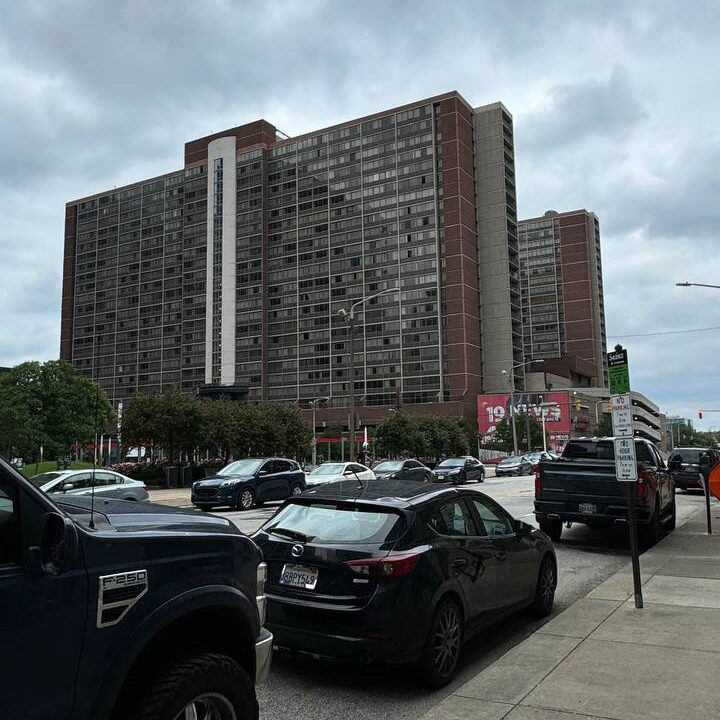
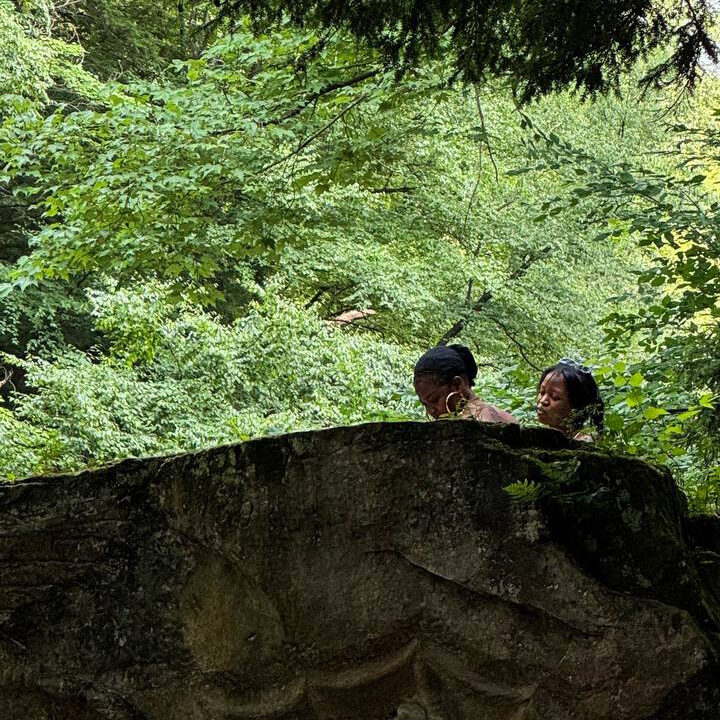
Photo from Sasha and Chad’s personal archive
— What aspects of your life do you try to preserve and pass on in your new life in America?
Sasha: Well, we immediately ordered a huge WRW (White-Red-White) flag and hung it on the house 🙂 At home, we have photos of Belarus and clippings from American newspapers about the protests. Chad was already collecting them back in 2020. Otherwise, I don’t even know; our family isn’t like a typical American one or a typical post-Soviet one. We just live, take and use what we like, and ignore or forget what doesn’t suit us.
— What were your first impressions of life in the USA? What surprised or pleased you?
Sasha: I really like everything here. Especially that the climate and terrain in Ohio, where we live, are very similar to Belarus. After Georgia, this is particularly valuable. The nature here is incredible, “pristine,” as they say. Behind our house, there is a river, and it’s just a forest from Strugatsky’s “Snail on the Slope.” Scary and enchanting. I like many things. You can’t list them all, but mainly I was surprised that everything “works.” Starting from traffic rules and the school system.
What caused mixed feelings was that they try to sell you everything here, and absolutely everyone buys into it. Everyone has a hundred and fifty different openers for different types of jars, different shovels for different soil, special cloths for different types of stains — because you can’t wipe the whole table with just one.
We were standing in a home goods store once, and an elderly woman in front of us was buying huge, multicolored plush balls. The clerk asked what they were for. She replied she didn’t know yet, but she would definitely come up with something. If they are for sale, it means they are needed for something.