


Activism
Our team at “Not Today, Not Yesterday, Not Tomorrow” continues the conversation with Sasha and Chad. In the second part of the interview from the “American Dream” column, Sasha and Chad share their attitude toward the “American Dream,” reflect on whether America is still a bastion of democracy, and discuss how to avoid being trapped within American culture.
Sasha and Chad, an immigrant and a local
— There is a Belarusian diaspora in the USA. Do you communicate with them after moving?
Sasha: To be honest, I don’t communicate with anyone at all. I don’t know if there is a community as such, but there are definitely chats on Telegram and Facebook like “Belarusians in the USA.” I looked to see if there was anyone from the Cleveland area, but then I thought it was strange to make acquaintances solely based on nationality, so I abandoned the idea.
Photos from Sasha and Chad’s personal archive
— What, in your opinion, is the biggest difference between American and Belarusian cultures?
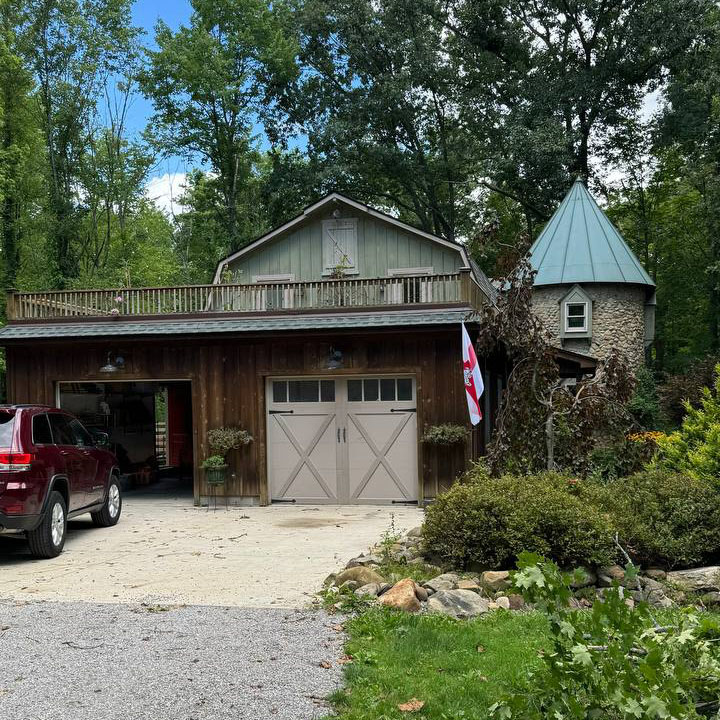
Chad: I think my main goal is to show her various places and ways to avoid American culture, to show her spaces and methods through which she can preserve her native culture and way of life so they remain alive and thriving.
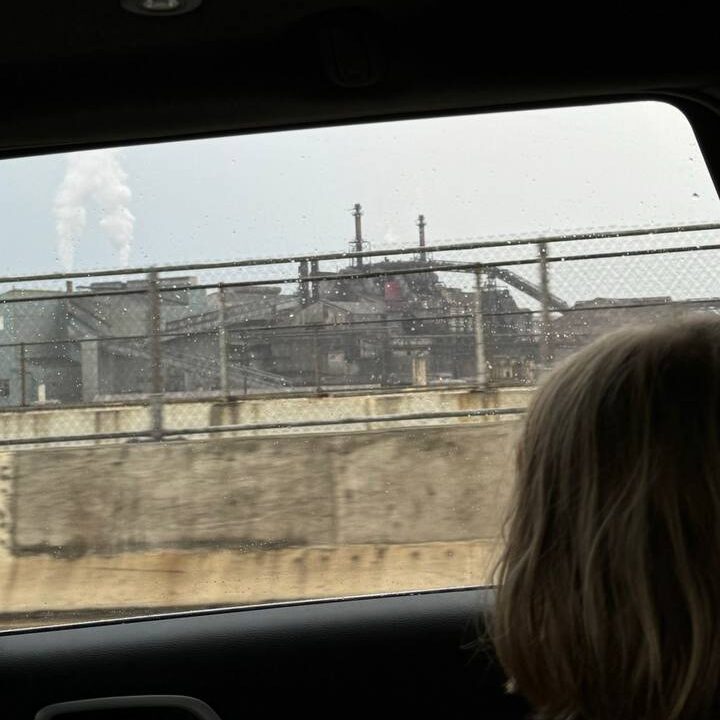
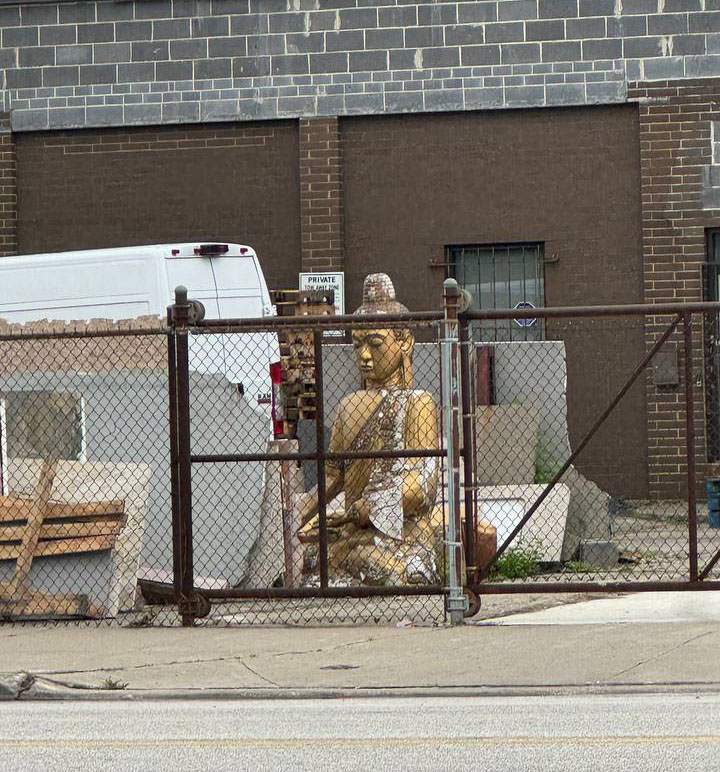
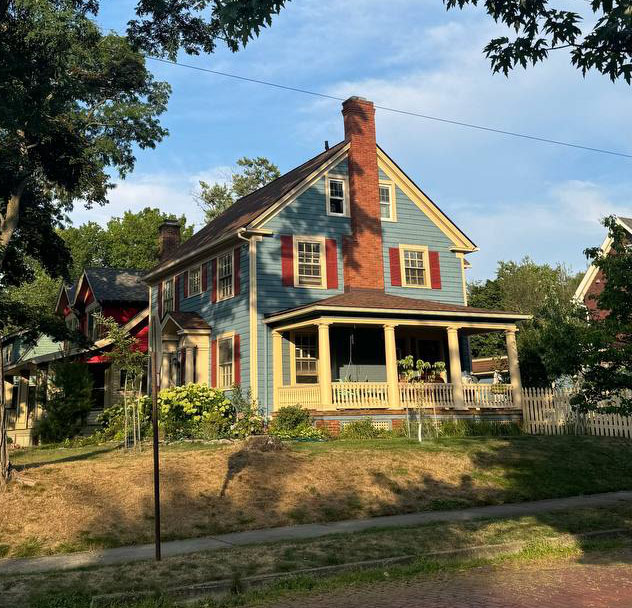
My secondary goal is to show her the good or, at least, the amusing aspects of American cultures. It is important to be able to notice the different cultures within America. I take Sasha and the kids to the Black neighborhoods where I used to live, as well as to the heartland where Trump is supported. I show them everything so they can see these differences. The more cultural differences you notice, the less you will feel locked within “American culture.”
There are huge differences between American and Belarusian cultures. The most obvious difference is how poor people treat their territory, whether rented or owned, in Belarus and America respectively. The poorest Belarusians take care of their territory and show creativity in every corner of their home, both inside and out, regardless of how old or worn out things are.
In contrast, the poorest Americans seem to give up and stop creatively using and maintaining their spaces; capitalism has consumed them. They look like waste produced by the capitalist system, and their dwellings look the same way.
This is a great paradox: what does capitalism look like without money? Look at the poorest, debt-ridden Americans, whether white or Black, and you will see that capitalists with money are a terrifying sight, but perhaps even more terrifying are capitalists without money. I will leave the rest of my thoughts on Belarusian culture for another conversation because I love it very much, and it is difficult for me to explain all of it in contrast to American cultures.
— Belarus is still a dictatorship, while a “right-wing” wave is currently popular in America. What is this connected to? After all, America positions itself as a bastion of democracy?
Chad: What interests me in this question is how to best formulate the answer.
As an American anarchist, I am very tired of hearing the phrase “America is still a democracy.”
Firstly, Americans have been abandoning the democratic institutions they once created at the neighborhood and workplace levels, at least since the Reagan era, and perhaps even earlier. The true democratic core of the average American has vanished because they no longer rely on it and do not use it daily at work or in their neighborhoods.
I grew up in a suburban neighborhood called “Lake in the Woods Trail.” There is a development committee there which, as far as I know, is structured democratically, but no one comes to vote, and it functions anyway without informing anyone where to go to complain, vote, or otherwise participate.
Now in cities, there are neighborhoods organized anarchically, and they have the potential for real cultural growth. Bernie Sanders’ campaign showed how undemocratic workplaces are in America. Although some progress has been made in this area, and America has more progressive democratic workplaces compared to the rest of the world, the right-wing wave we see now is a manifestation of the death of democracy in the everyday lives of people in this country.
— It is no secret that capitalism rules in the USA. How did you perceive capitalism while living in Belarus, and how has your perception changed after moving to the USA?
Sasha: Capitalism is in the head. The question is whether you want to get caught on that hook or not. It seems to me that in Belarus I was more prone to consumerism than I am here. The awareness came slowly, but it came. I’m not going to lead any kind of active struggle—you have to be either very young or stubborn and not very sensible for that. But I’ve taken my quiet steps in Belarus, Georgia, and the USA: reuse, recycle, and whenever possible, second-hand or outlet stores. I hardly use any cosmetics; I have one soap for everything and one shampoo. We bought our furniture at an auction—luxurious antique pieces for a small amount.

Photos from Sasha and Chad’s personal archive
But I don’t go to extremes. If a child asks for McDonald’s, I might buy it. Or I’ll drink a coffee at Starbucks when I’m falling asleep at the wheel. Slow and steady wins the race.
It is impossible to teach children to avoid capitalism. Anarchism in relation to capitalism is a matter of conscious choice, not just upbringing. I try to raise my children to be free, not by forbidding things but by explaining—instilling freedom rather than prohibitions. Then, I hope, in their adult life they will be able to make a conscious choice rather than craving what was forbidden in childhood.
What I want to say with all of the above is: if you want to consume and don’t want to think about it, you will do it in both Belarus and the USA. But if you turn your brain on a little, it is possible to build a decent, honest balance in both places.
— What pros and cons of capitalism do you see in the USA?
Chad: I see no pros in capitalism here or anywhere else. However, I also hate systems of “totalitarian socialism.” Any pros that can be seen in the Chinese system come from eras of cultural development that preceded totalitarianism.
Almost everything the government does is intrusive and destructive to ecosystems and indigenous cultures (though the cumulative effect of mass-produced solar panels on climate change is indeed beneficial). The problem isn’t that a “big state” can’t do something right. It’s that the state acts intrusively and on a large scale, which is usually terrible for living beings at the small levels, such as ecosystems, neighborhoods, fields, forests, ponds, lakes, rivers, etc.
States start calculating on large scales, giving rise to problems on small scales. Ecological creativity starts small; it works, spreads, and grows through horizontal connections. This is exactly what should become our model.
— What does the “American Dream” mean to you? How does it relate to your personal goals and ambitions, if at all?
Sasha: To be honest, even in the cliché format, I don’t really understand what “American Dream” means. I even went to Google it 🙂 As I see it, being here, it’s the opportunity to dream about whatever you want.
If you want—dream of a house with a white fence and a perfectly mowed lawn; if you want—dream of a trailer, a “whatever” job, beer in the evenings, and being able to shoot a rifle at cans; if you want—dream of millions; if you want—dream of crack; if you want—dream of a socialist system; and if you want—don’t dream at all.
I dream of my own things and, thank God, I have the right to do so, even if I do it too loudly.
Photos from Sasha and Chad’s personal archive
— Do you believe in the “American Dream”? If so, how does it manifest in your life?
Chad: No, I never had an “American Dream.” From early childhood until my teenage years, my only dreams were about leaving America and getting away from American life to touch something real.
At 15, I became a communist, and at 19, an anarchist (which to me means a libertarian socialist). But besides that, my dreams were always directed toward moving away from the corporate dream, from the worlds that corporations sell to children.
All other cultures were like dreams to me, and I fell in love with them. The only aspect of the “American Dream” that I like is the idea that you don’t have to assimilate. I lived in China for 10 years. It always saddened me that I couldn’t truly immigrate and bring a genuine part of my culture to the place where I settled. In America, you can always do something like that. So our “American Dream” is to be Belarusians here, maybe a little bit Chinese in some aspects. For example, I will teach our children the Chinese language and how to grow vegetable gardens the way the Chinese do.
— How have your views on economic systems changed after living in three different countries?
Chad: I think the strangest thing I learned in China was how to be an anarchist in a Chinese way. China is perhaps the worst place to immigrate if you are white or Black, but if you look even slightly Chinese, you can “immigrate” in a tough, punk style.
Near my university in southern Shanghai, there was a railway, and peasants began building slums along it. There were about 50 shacks, each with a small garden plot 3 by 3 meters; some had ducks living in the ditch along the railway. These shacks were built from whatever free materials could be found: plastic bags, tarps, tires, concrete slabs ripped from the road, sticks, mud, screws from old construction sites.
Georgia showed us both how to rationally use a unique climate and soil. For example, in the USA, if you have too much sun on your lawn or balcony, you go to Home Depot and buy what they offer, like a canopy for $350, hypothetically. In Tbilisi, people grow grapevines that love the sunlight and grow into shady canopies over balconies.
If you have sun, water, and soil, non-Americans always use these elements rationally to improve their lives and, as a result, buy less. All of this is very inspiring. Our ideal here is to live by these examples, buy as little as possible, and grow everything we need.
— You are a ceramicist; did your education and professional experience from Belarus help you find your place in America?
Sasha: I don’t know yet; we’ve been waiting for more than two months for the kiln and pottery wheel to start working. I’m exploring the possibilities of Instagram, talking with AI, with real people, trying to understand how to successfully sell my products here. Regarding the quality and style of my products, I’m not worried at all; I stand by them and I’m not ashamed. But sales—yes, that’s difficult for me; I’m a ceramicist, not a marketer.
— Do you feel nostalgia for Belarus? If so, how do you deal with this feeling?
Sasha: I feel like I’ve killed the ability to feel nostalgia in myself. Because it would be too traumatic. I rather dream of coming to Belarus when the opportunity arises. How I will show favorite places to the children. How I will drink beer with my husband in memorable corners 🙂 How I will see my granny. That is, I replaced indulging in sweet pictures from the past with imagining them in the future. It is less painful.
— How has your understanding of Belarusian history and culture changed after meeting Sasha? What did you know about Belarus?
Chad: I met Sasha through our mutual Belarusian friend, a guy who is into punk rock. Sasha has perhaps the deepest connection to Belarusian history that I know. The personal history of the average Belarusian often ends quickly and is rooted in Poland or Russia, since parents came from all over the Soviet Union. Но Sasha’s history is deeply Belarusian, rooted far in the past. Sasha and her parents are inexhaustible sources of Belarusian culture.

Photos from Sasha and Chad’s personal archive
— Have people in America heard anything about Belarus and the situation inside the country?
Chad: Very few Americans know about Belarus. I didn’t know about Belarus myself until I moved to China and met a Belarusian for the first time.
— What plans do you have as a family living at the intersection of two cultures?
Chad: We are surrounded by America here, so our plan is to preserve as much Belarusian culture as possible inside our home.
— What would you advise to those who want to emigrate to America?
Chad: Immigration to the USA is bureaucratically complex and financially difficult. I would be happy to give advice to someone if they asked for help on a specific case, but life has taught me that universal advice probably has no value.