


Activism
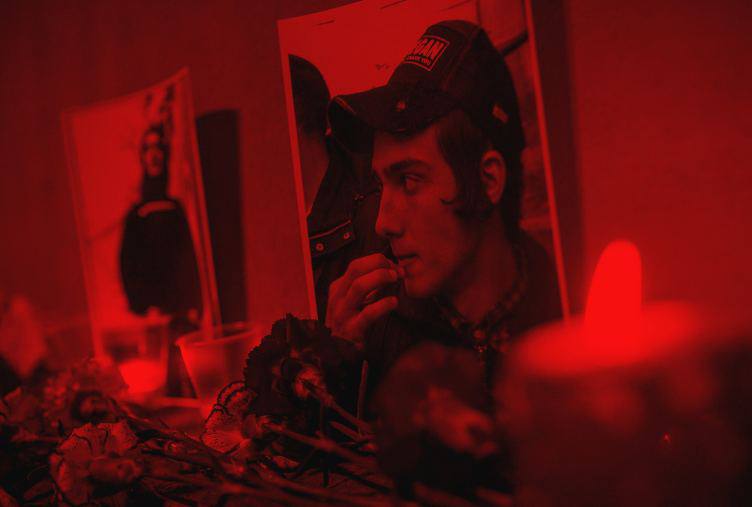
November carries two commemorative dates: November 13 and 16—days of remembrance for two anti-fascists. On November 13, we remember Timur Kacharava, a musician and activist killed in the center of Saint Petersburg, and on November 16—Ivan “Kostolom” Khutorskoy, a key figure in the post-Soviet anti-fascist movement, killed by a shot to the back of the head in the entryway of his own home.
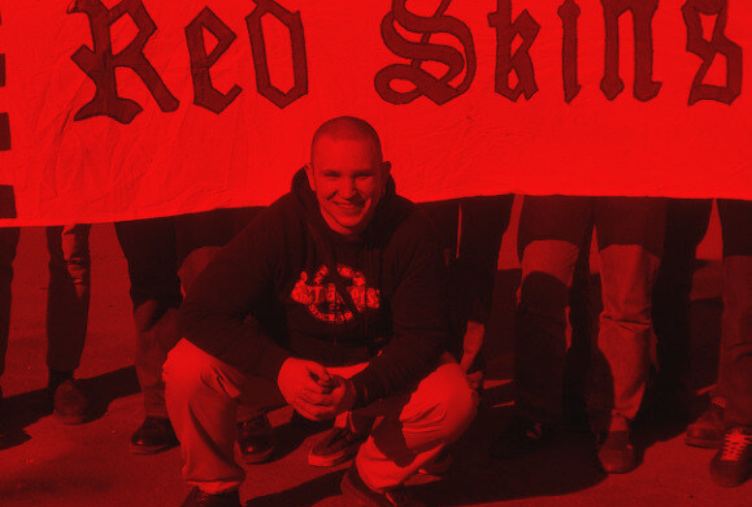
To mark these dates, Nottoday, a self-published initiative that stands in solidarity with anti-fascist ideas, is publishing an interview with the Telegram channel “Public Incitement” (Publichnye Zaklyvi)—an initiative that documents the history of 2000s anti-fascism and monitors how forms of resistance are changing today. In this conversation—what the movement was then, what it has become now, and how fascism manifests itself today.
In memory of Ivan “Kostolom” Khutorskoy and Timur Kacharava, we are also publishing a selection of tracks by Russian bands that openly declared their positions in the 2000s and were not afraid to speak out loud.
Personal Understanding of Anti-Fascism
— How is modern anti-fascism defined? What does it mean to you personally?
— For me, anti-fascism is not so much an organization or a movement as it is a habit of thinking and acting within the coordinates of solidarity, dignity, and opposition to violence. It is a system of reflexes that helps you not to look away when exclusion and dehumanization begin. Now I am more of an observer from the sidelines—I feel that much needs to be rebuilt from scratch, and the old forms no longer work the way they used to.
Comparison of Eras
— What distinguishes anti-fascism of the 2000s from the 2020s?
— In the 2000s, it was street energy, subculture, a clear “us versus them.” Today, there are more complex contexts, more political maturity, and an awareness of the systemic roots of the problem. But there is less drive, less of a sense of being on the frontier. People grow up, get tired, and lose their footing. I do too—I am gradually stepping away because I feel that to move forward, we need to rebuild the very foundation rather than just repeating old patterns.
— What challenges did activists face then versus now?
— Before, it was physical threats and constant police pressure. Now, it is exhaustion, digital vulnerability, emotional burnout, and the fragmentation of communities. We have scattered across countries, languages, and contexts. We need new meanings, new practices of connection. And that is not easy.
— Has the ideology of anti-fascism changed?
— Yes, it has become broader and deeper. If before the focus was on specific enemies, now it is on the structural causes of violence: militarism, imperialism, inequality, exploitation. In this sense, anti-fascism has become politically more mature, but also less straightforward. You have to learn to live with this diversity.
Forms of Struggle
— If before the emphasis was on street fighting, what does the struggle look like now?
— Today’s anti-fascism is work with memory, education, communities, and media. The struggle has become “internal” and less spectacular. It’s not about rallies, but about organizing life without hierarchies and violence. Perhaps that is why it is harder to see.
— How have forms of resistance changed?
— Before, everything was more direct—a rally, an action, a banner. Now, there are more hybrid forms: digital campaigns, mutual aid, educational networks, local media. But there are also more doubts: where does protest end and simple adaptation to the system begin?
— Who is the main enemy of anti-fascists today?
— Not street neo-Nazis, but apathy, cynicism, and systemic violence that has become “the norm.” Authoritarianism without swastikas is much more dangerous. It lives in institutions, algorithms, and habits.
— What does fascism look like today?
— It has become smart, polite, and managed. No shaved heads, but with ideas of “us” and “them,” “traditions,” and “security.” And often—in suits, not combat boots.
Influence of External Factors
— How have repressions, war, and emigration influenced the movement?
— It has all blown up the old structures. Those who were activists became migrants, and that greatly changed their motivation. Some are just tired, some burned out. I catch myself feeling this too: I am more of an observer than a participant. But perhaps that is normal—generations must change.
— Has the demography of anti-fascism changed?
— Yes, it has become older, more diverse, more reflective. Fewer punks, more people with experience in human rights, media, and education. This isn’t a negative—just a different stage.
Connection with Other Movements
— Is there currently a connection with feminism, LGBTQ+, and eco-defense?
— There is, and that’s great. Now these aren’t “allies” but part of the same field. Modern anti-fascism is impossible without understanding gender and social inequality.
Publicity and Digital Control
— How has the attitude toward publicity changed?
— Publicity has become a strategy—but a dangerous one. Some go into anonymity, while others bet on openness. I myself am tired of the public field—sometimes it’s important to just be quiet and watch how others do it their own way.
— How do Telegram and digital control influence things?
— They changed everything. They became the environment where the struggle takes place—but also a source of vulnerability. Therefore, digital security is now no less important than physical security.
The Legacy of 00s Anti-Fascism
— What did you inherit from 00s anti-fascism?
— The skill to act quickly, collectively, and not to wait for permission. But now I realize that isn’t enough. I want more sustainability and meaningfulness.
— How do you see the future of anti-fascism?
— To be honest—I don’t know yet. Everything needs to be rebuilt. There is a feeling that the old model has exhausted itself, and a new one hasn’t been born yet. I am stepping away from an active role, observing, thinking about how I can be useful, but no longer on the front lines. Maybe this is part of the movement maturing—learning to let go and give space to new people.