


Activism
Today, raves in Ukraine are about more than just music and dancing. They are fundraisers for the army, acts of remembrance for the fallen, and attempts to preserve freedom in a country where war takes literally everything. Raves have transformed into a form of resistance—a cultural movement uniting those who refuse to give up.
We spoke with Khrystyna and Serhiy—people who have been part of this scene for many years. They shared insights into the origins of the Ukrainian rave, its uniqueness, and how the war has reshaped the entire culture.
Additionally, in this piece, you will hear tracks by contemporary Ukrainian DJs who are shaping the sound of a new era—a sound born out of pain, hope, and the will to live.
How would you like to introduce yourselves—would you like to use your names or describe your roles in the scene?
Khrystyna: I don’t assign myself any special role in this scene, because I am just a person who goes to parties, is interested in techno, and generally loves this culture.
Serhiy: I’ve been in the rave culture for over ten years, and if you count earlier experiences—all fifteen. I am, let’s say, an amateur, a DJ, and simply a person who loves being at parties. I love people, especially those who attend underground events—all sorts of genres, all sorts of places.
How did you get into rave culture? Where did it all begin?
Khrystyna: My entry into this culture began after the Revolution of Dignity. At that time, in my opinion, techno in Ukraine started reaching a new level and becoming noticeable. And at some point, a part of the underground crowd—especially the “rocker” side—seemed to re-evaluate electronic music as something more: as a full-fledged part of techno culture.
I was among those people who used to hang out with goths and then switched to raves—because it was something new, fresh, and quite massive. I was living in Lviv at the time, and we were interested in attending parties of a new format—not traditional rock concerts, but electronic gatherings with a completely different vibe and different messages. In 2014–2015, this culture was only just beginning to form in Lviv. There wasn’t a strong scene or the groundwork yet on which everything could grow—unlike in other cities. It seems to me that elsewhere it looked more profound and structured, while in Lviv, everything was starting from scratch. But we were curious, and we became part of this movement—because part of the underground went into techno, and we followed.
Serhiy: I was exploring the Kyiv underground and, you could say, I was following that very Kyiv “groundwork”—the vibe that prevailed there at the time. You could call it a subculture, but truth be told, it’s something bigger than just a social circle.
And how did I get there? It happened naturally. Since 2008, various clubs and spaces had existed in Kyiv—everything was revolving there. Through communicating with friends, you just flow in. Then you meet people, start to understand how everything works, and your own slang and codes emerge.
It all came on its own—primarily through an interest in the music.
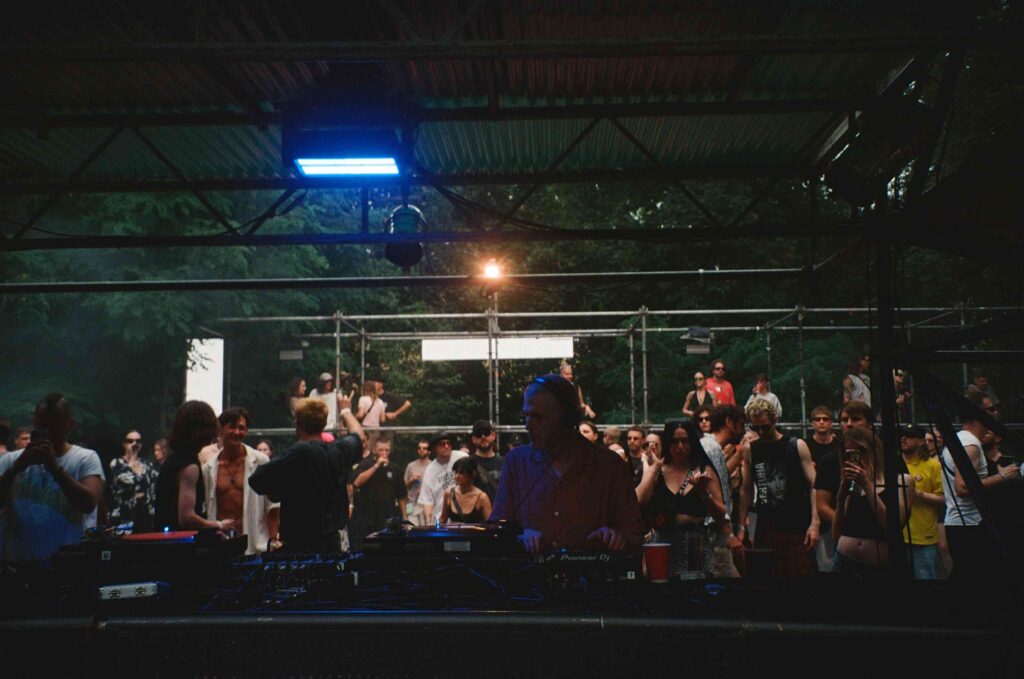
What does rave mean to you—before and after 2022? Is it just music, a community, a protest?
Khrystyna: For me, rave culture has always been about protest. In my view, without this element of protest, it might not have gained such a scale in Ukraine.
Techno appears where there is a social basis for it. This was the case after the Revolution of Dignity, and it became even stronger after the full-scale invasion.
This culture has always been inclusive. It supported the LGBTQ+ community, it was open to women, and to various social groups. It is an anti-system culture that is not about exclusion, but about acceptance. And that is its strength.
I moved to Kyiv in 2019. My arrival coincided with the opening of one of the most famous techno clubs in the city—the club at Kyrylivska 41. Before the war, the club gained popularity quickly. Famous DJs from Europe came here, especially during COVID-19 when Berlin clubs were closed. Kyiv became a center for techno—you didn’t have to go to Berlin to feel a real rave atmosphere. But the war, of course, changed everything. It affected all spheres of life in Ukraine—the techno scene included. But it didn’t destroy it. The culture transformed and found a new niche. Now, every party is both a musical event and a volunteer initiative. Fundraising for the army has become an integral part of the rave. No party happens without donations to the Armed Forces of Ukraine (AFU).
All events are held during the day because the country is under a curfew. For the first six months after the full-scale invasion, there were almost no parties. The venues, like all of us, were empty, cold, and deserted. But gradually they began to fill with new meaning. People who stayed began to return, including soldiers who come to raves during their leave.
This culture is woven into the context of war. It is not isolated, it hasn’t fled—it is here. It is about volunteering, supporting the front, and remembering those who went to fight—and, unfortunately, those who are no longer with us.
On days of mourning, parties are canceled. This is a living, sensitive community that lives through reality alongside the country. Yes, significantly fewer world-class artists come now. They are harder to bring in, and overall there are fewer parties. There is no longer that variety where every weekend brings a new choice or a new DJ. Mostly local artists remain. Has this had a critical impact? Perhaps. But in every other sense, the community is alive. It is searching, adapting, and finding itself in new conditions.
Serhiy: It’s worth adding that many good DJs have left. Because of the war, the threat of mobilization, and danger, they chose safety and went to Europe or left the country. Because of this, a lot of space opened up on the scene. A good half of the artists left, but for others, new opportunities emerged. The scene isn’t standing still—new names are appearing and already working offline. This is only the beginning.
How do you see the history of the Ukrainian rave scene? Where are its roots—and what stages would you highlight?
Khrystyna: You know, that’s an expert question—one would need to delve deeper into the history of this culture. I can’t highlight any global trends or say exactly how everything developed and what it came to. Because I didn’t come there for the music as much as for the crowd, for the underground. My story is a bit different. For me, it was about protest. Yes, it was always a protest. And that is what attracted me the most.
Serhiy: After the Revolution of Dignity, more freedom and rights appeared in Ukraine. More rave parties began to happen without interference, although the police sometimes tried to detain people or plant things. We repeatedly gathered in front of the Cabinet of Ministers and police stations to defend our rights. People began to feel more free; they could go to parties without fear of being detained or accused. It wasn’t like that before.
Khrystyna: The community actively protests when someone is stopped or accused without grounds. They went to the police station—and it was stopped. There was a protest against building on the green area near the club on Kyrylivska. The community doesn’t just want to party; they want to preserve the city and make a social contribution. Our favorite club on Kyrylivska is an important spot. Photos and videos are banned there, there are no mirrors, and people express themselves freely. It’s a true “safe place.”
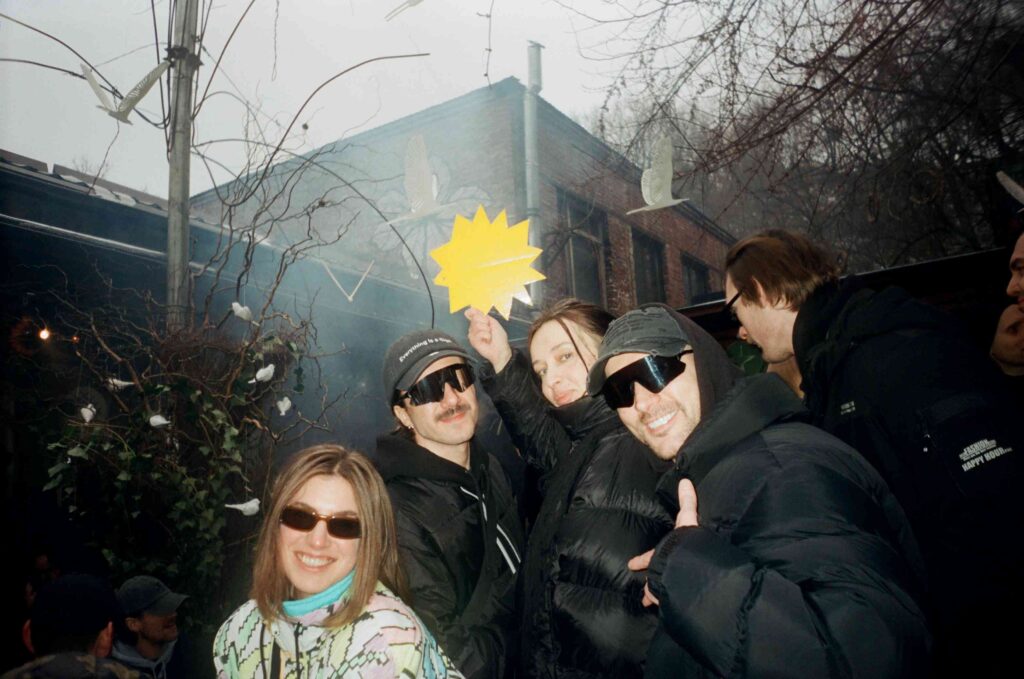
In your opinion, how did Ukrainian techno/rave culture differ from the European one before the war? What was its uniqueness—in the socio-political context or otherwise?
Khrystyna: I would summarize that social protest has always been in this culture. Why specifically Kyiv and Tbilisi? Because in both cities, there is strong ground for techno as a form of protest. The Georgians have a story similar to ours. Techno in our cities developed thanks to open-minded people who want to be part of the global world but simultaneously bring something of their own. And they succeed.
As for Berlin—to be honest, I haven’t been there since the start of the war, so it’s hard to judge what the parties are like there now. If I were offered to go to Berlin for a party right now, I would refuse—I don’t have that inner joy I had before the war. Back then, we could truly relax, dress openly, and feel free.
Now I can only party here, in Ukraine, because here people understand and live in our context. In Berlin or Britain, I would feel uncomfortable. There isn’t that unconditional joy of the rave when there is a war in your country.
What iconic places, parties, or names influenced the development of the scene? Which clubs or spaces were the centers of rave culture?
Serhiy: Before the war, some of the first important clubs were Cinema and The Most—connected to the rave scene but with a slightly different audience. After Cinema closed, Closer opened, which organized the Brave Factory festival—well known in Europe—attracting more guests from abroad than from Ukraine. There was also the club on Kyrylivska—a true point of attraction for the scene.
Khrystyna: Two main clubs—Closer, more oriented toward house, and Kyrylivska—techno and underground. There are also smaller locations and collectives with regular parties and festivals. Since the war began, these clubs have remained, which is a big victory. In November 2022, Kyrylivska was cold and empty, but over time the energy returned. Now, all ticket money goes to support the Armed Forces, which is very important.