


Activism
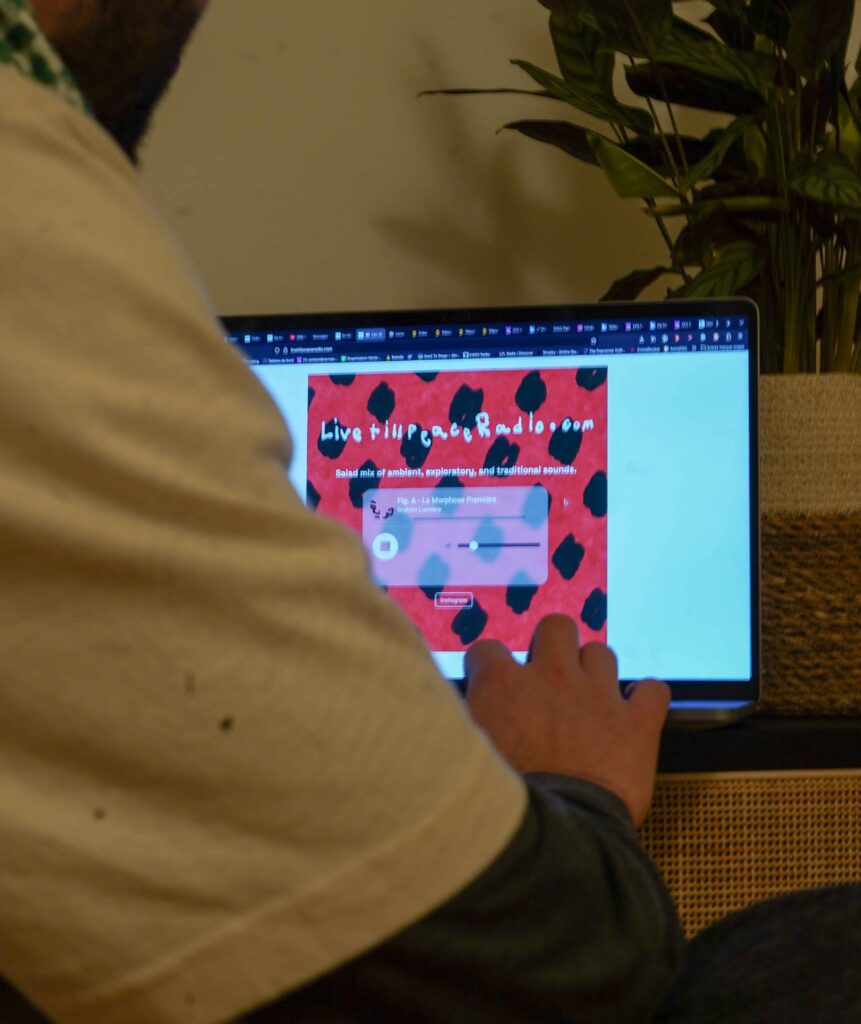
While streaming giants keep feeding us sterile playlists, the project Live Till Peace turns music into an act of political expression. We spoke with the founder of a radio station born out of existential anxiety — and transformed into a refuge for Palestinian artists and for anyone exhausted by the noise of war and social media censorship.
Why launch yet another radio station?
— The name “Live Till Peace” sounds incredibly powerful. What exactly stands behind this phrase? What message do you want to convey to your listeners?
— We needed a clear phrase that would gain its full meaning in today’s global context of endless wars. “Live Till Peace” is not just a name — it’s an intention. Through this project, we wanted to convey a message of peace in a world marked by violence. We also wanted to support artists who deserve to be heard, especially at a time when censorship and shadow banning affect those who dare to speak out for peace and against colonization.
An essential part of the radio is providing space for Palestinian artists, as well as for those who have clearly taken a stance against the genocide unfolding right now. For us, it is crucial to give these people a voice. At the same time, the radio aims to offer moments of calm and serenity to those who need it. Through a mostly relaxing musical selection and a soothing sonic universe, we try to create a peaceful space. We see this project as part of a collective effort. In this context, every form of struggle and every action matters.
How one sleepless night turned into a radio station
— Can you recall a specific moment when you thought: “I need to create exactly this kind of radio station”? What was the final push?
— The idea came to me one night while I was lying in bed, unable to sleep. I kept thinking about what actions I could take in the context of global violence — and specifically what is happening in Palestine. The name and the concept became very clear. It was almost a mystical feeling. I immediately knew I had to launch this project. I woke up the next morning and started working on it right away.
For those who need calm — and for those who refuse to stay silent
— There are many radio stations out there. What makes Live Till Peace Radio different? What is its unique vibe, and how do you create it?
— The existence of many other radio stations is not a bad thing for us. On the contrary, it shows that people and artists feel a need for connection and self-expression. Creating our own radio is a way to become more independent from major platforms. It allows us to maintain control over our choices and our message, while protecting freedom of speech. The atmosphere of Live Till Peace emerges naturally from this approach. It is a calm and conscious space, built outside of trends and algorithms, where peace and resistance can coexist through sound.
Radio beyond algorithms and corporate platforms
— Who is your ideal listener? Did you create this station for a specific person or a particular state of mind?
— We really want people to get into the habit of visiting the website whenever they want to listen to music, discover new artists, or simply unwind. We aim to convey a sense of serenity through our musical selection. All the music on the radio is legally purchased, mostly on Bandcamp, and we pay all broadcasting rights. We also encourage listeners to support artists directly by buying the tracks they like — especially on Bandcamp, which pays musicians more fairly and feels more ethical.
Music that doesn’t try to outshout the world
— How do you curate the playlist? Is it an automated selection or a manual process? What is the main criterion for a track to make it on air?
— I’ve been collecting and searching for music for several years now. At first, I did it only for myself. Over time, I realized that all those hours spent listening and digging could be shared with others. The playlists are entirely curated by hand. It’s a time-consuming process. The selection constantly evolves and grows richer over time. At the moment, there are around 500 different tracks available on air.
The main criterion is intuition. I usually feel whether a track fits the radio or not. Overall, the music is either explicitly engaged (socially and politically conscious) or carries a calming atmosphere. I try to avoid music that is too aggressive or too fast, so the radio can be listened to in the morning or at night, across a wide range of emotional states.
An anti-war sound without genre boundaries
— Are there genres or artists that definitely have no place on your airwaves? And conversely, what defines the “standard” Live Till Peace sound?
— It’s not always a simple process. We mainly try to highlight artists with a clear anti-war and anti-colonial stance. Sometimes a track may end up on the radio even though it shouldn’t be there, and in such cases we rely on our listeners. They can easily contact us through the website.
As for the sound, we don’t impose strict genre rules. We often choose ambient, alternative music, as well as more traditional music from different parts of the world. What matters most is the energy the music carries and the emotional state it creates. We try not to play music that is too dark, simply because the radio is oriented toward inner peace. That said, some darker sounds do make sense in the context of anti-colonial struggle. Expressing pain through art can be a conscious and healthy way of dealing with it.
Those others won’t play — and why we do
— Describe the emotion or state you hope a listener will experience when tuning into Live Till Peace Radio. Is it background noise for work, meditation, or something else?
— We do almost everything intuitively. The radio needs to remain a free space. It all depends on the person and the moment. The music can be listened to actively, as a space for discovery, or more passively during work or rest. Most of the tracks are instrumental and without vocals, which allows them to naturally adapt to different situations.
— Do you support emerging or lesser-known artists? Do you have segments dedicated to discovering new sounds?
— Yes, supporting emerging and lesser-known artists is a central part of the radio. A large portion of the music comes from creators who don’t have wide recognition, but whose work feels honest and meaningful. The discovery process is very instinctive. I spend a lot of time on Bandcamp, without following trends or algorithms. I’m more interested in sincerity and intention than in reach or numbers. We don’t yet have fixed segments dedicated to new releases, but in a way the entire radio is built as a space for discovering new sounds and voices that struggle to find a place elsewhere.
Between an audio sanctuary and a quiet call to action
— In an era filled with noise and anxiety, how does your radio help people “live till peace”? Do you see it more as a refuge or as a call to action?
— We live in a very fast and stressful society, and Live Till Peace was created to move in the opposite direction. We deliberately offer slower, more contemplative music. The radio can be seen as a timeless sonic sanctuary, where sounds from the past and present meet with the intention of bringing peace and calm.
At the same time, it is also a call to action. The way we choose to consume music, support engaged artists, and step away from unethical platforms are peaceful but powerful acts. Boycotts and conscious choices can challenge systems when they become collective and widespread.
From streaming to real-life gatherings
— Do you plan to add original shows, podcasts, or perhaps host live events under the Live Till Peace name?
— Yes. We plan to add recorded audio poetry that will play between tracks. We also want to create special moments such as live conversations, podcasts, and themed ambient mixes on specific days. In the long term, we would like to organize physical events and move beyond the digital space, creating real moments of connection between artists and listeners.
— Which musicians or media projects would you like to collaborate with one day?
— We’ve already started collaborating with artists whose music is played on the radio, mainly through our social media. This helps create a real sense of connection. We try to maintain a balance between supporting small, emerging artists and working with more established ones — as long as their work and values resonate with the spirit of Live Till Peace. For us, specific names matter less than collaborating with collectives and projects that share values of peace, anti-colonial struggle, and cultural independence.
Roots, silence, and music as a way of being
— Which record or artist best represents your personal “vibe” within this project?
— I don’t want to single out just one artist. Every track has its place, even the quietest one. Together, they form something larger. On a personal level, I grew up with Algerian roots, and it’s important for me to highlight artists and sounds from North Africa and the Middle East. These sounds are part of my sensitivity and personal history, and they naturally influence the direction of the radio.
What it means to run a radio alone
— What has been the most difficult part of launching and sustaining the radio station?
— The hardest part was doing everything alone. When you work on a project by yourself, you have to think about every aspect and be a bit of everything at once. The most difficult part for me was the administrative and legal side — all the steps required before launching. It’s definitely not my favorite part of the process.
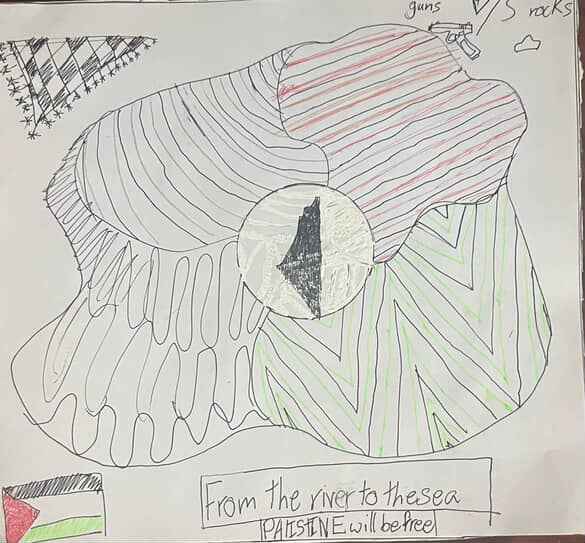
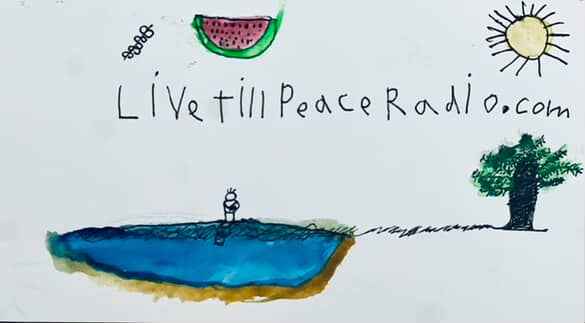
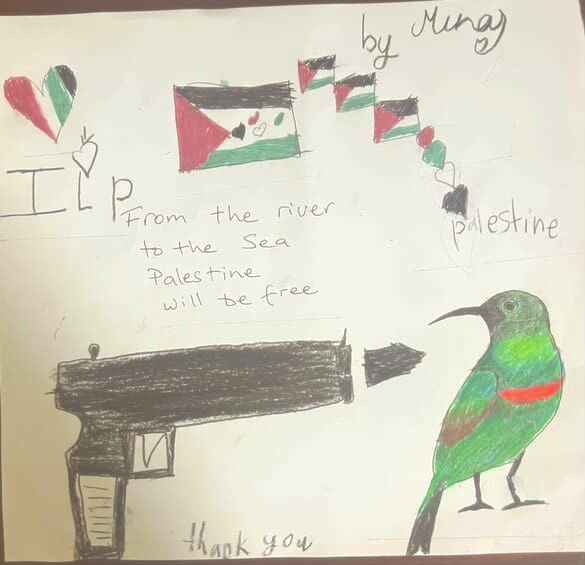
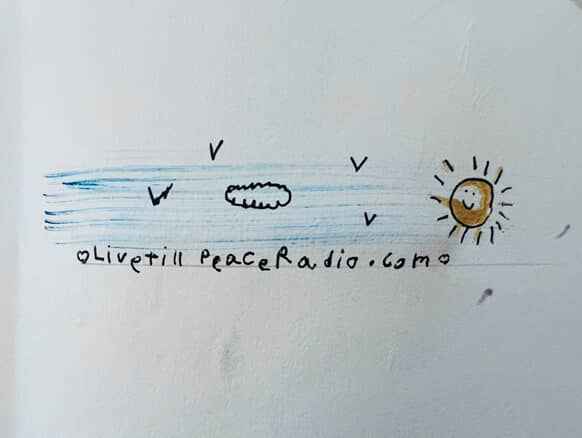
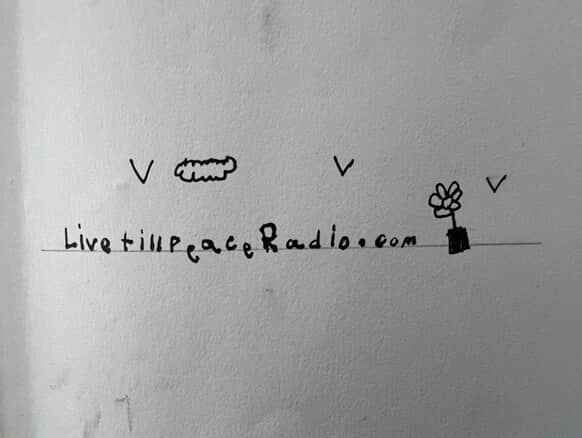
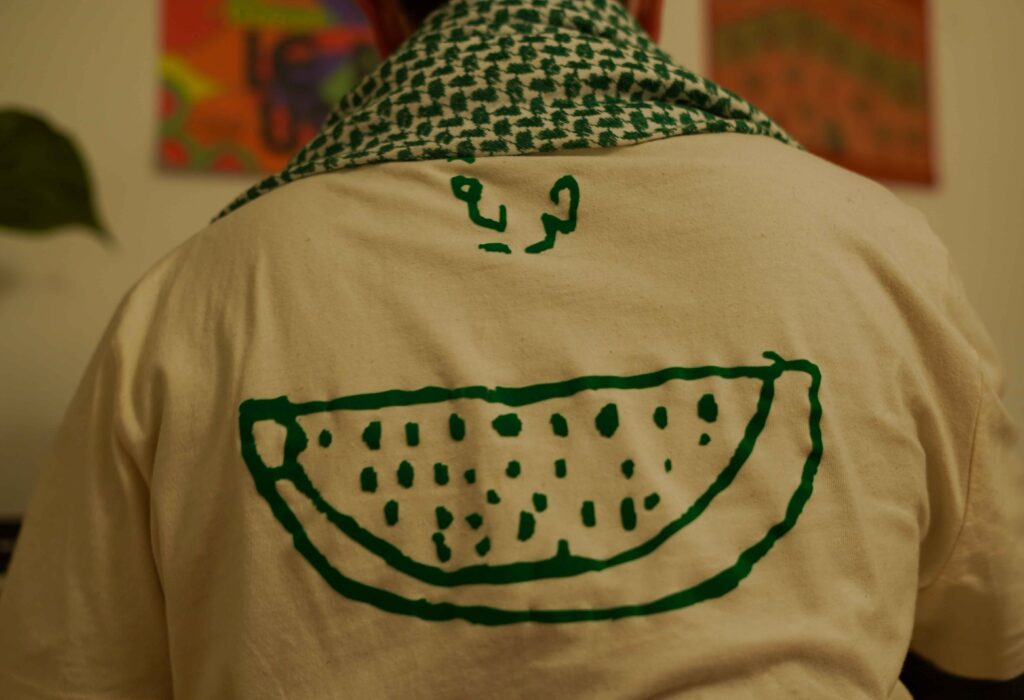
The project is entirely non-profit and runs on a volunteer basis. I don’t earn anything from it and have invested a lot of personal funds: music purchases, servers, broadcasting rights, and the website. Soon, we will release T-shirts to help cover part of the costs. Their design was drawn by Palestinian children, just like our current logo. You can follow our Instagram page to stay updated on their release.
Monday morning motivation
— What keeps you going with a project that carries peace? What is your personal reward?
— I’m deeply motivated by the growth of the radio and by knowing it’s being listened to in different parts of the world. Being able to take a stand and contribute to the cause of peace, even on a small scale, means a lot to me. I try to do everything from the heart and with sincere intentions. I don’t expect anything in return, except perhaps to offer listeners a moment of serenity or to give more visibility to emerging artists.
Music has always been my passion. I can spend hours with it without noticing time passing. I’m also an artist myself, currently finishing several projects under the name Reddor Armor, and I hope to share some of my own work on the radio as well.
A message in a bottle
— If you could send one short message to everyone listening to your radio right now, what would you say?
— I would simply say: don’t lose hope. I deeply believe in the power of collective thought. It needs to be conscious, but also positive — because without enthusiasm, we can’t move forward. I also encourage people to continue boycotting Zionist products, as well as large corporations that act against people or destroy nature. The way we consume art matters too, so we all need to be more responsible. Try to stay true to your values. I know it’s not always easy, but every small action has a huge impact on a collective level.
Peace. Freedom for Palestine — and for all other countries suffering from war and colonization in all its forms.