


Psychology
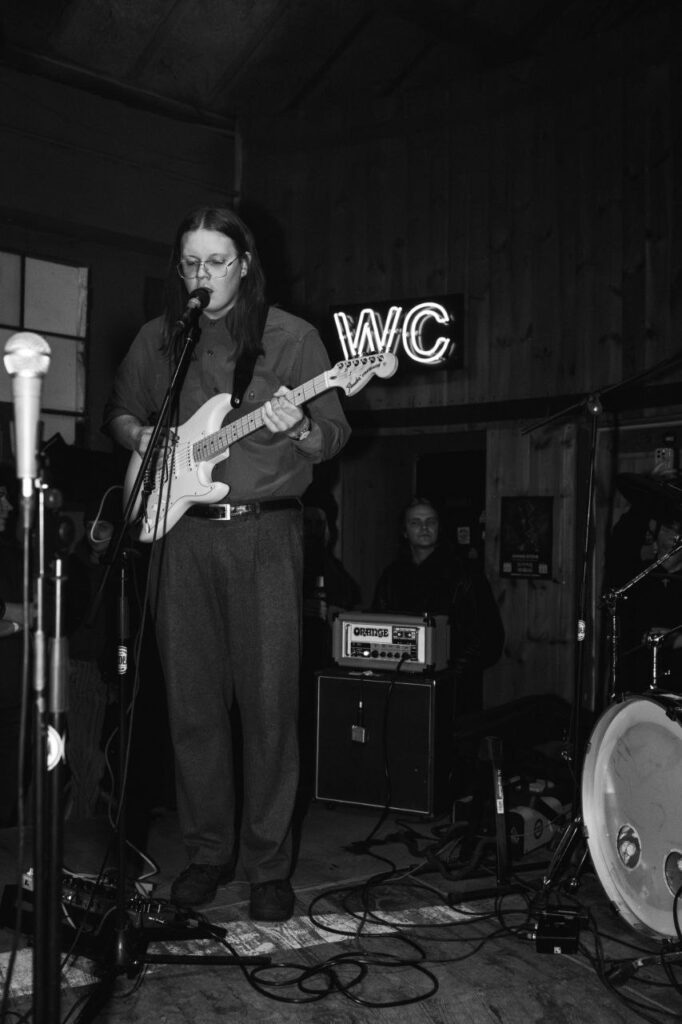
Where does the protection of citizens end, and state terror begin? Why is modern imprisonment more effective than medieval execution, and how did colonial wars of the past shape the methods of today’s police? In this extensive interview, Mikhail, guitarist of the band “Serbski Nozh”, reflects on the political philosophy of Max Weber and Michel Foucault. From the evolution of medieval feudal conflicts to the digital control of the 21st century — we analyze why the state is impossible without coercion, and how violence becomes the foundation for some regimes while being the curse for others.
The Nature of Power and the “Monopoly on Violence”
— Max Weber defined the state as an institution that holds the “monopoly on legitimate physical violence.” How, in your opinion, has this definition transformed from the era of medieval feudal conflicts to modern centralized states?
— I’ll start with two theses. First: Power is the ability to subjugate others to your will. Second: Politics begins where there are at least two people. Recall the Futurama episode where two nearly identical politicians argue over a three-cent tax on titanium. Even small issues provoke conflict, and the solution is the imposition of one’s will over the other.
As for the transformation:
Feudal state: This is a decentralized system. There are boundaries, but within them, land is controlled by various people (the feudal lords). The power structure is hierarchical: the king is “the first among equals.” The principle of “the vassal of my vassal is not my vassal” applies. The king has no direct authority over the subjects of his vassal. The monopoly on violence is diluted: each area has its own laws and taxes.
Modern state: This is a sovereign institution that unites the entire territory within defined borders. It holds full authority and a strict monopoly on coercion. Before the industrial revolution, society was not subject; it had no right to define its interests. Now, the state is the result of an unspoken contract.
— Can we claim that the very emergence of the first states (for example, in Mesopotamia or Egypt) was an act of organized violence against agricultural communities?
— I think, to a large extent, this is true. The state is constantly fighting for its existence. Ancient economies (agriculture, livestock) were unstable — a few years of drought meant collapse. To survive and protect itself from neighbors, the state had to expand extensively by conquering new lands.
The state could not have arisen without violence. The transition to productive economies accelerated and amplified economic inequality within communities, making slavery effective and profitable. Therefore, in order to grow and strengthen, communities needed to capture new territories and have more cheap labor.
— At what point in history does violence by the state stop being perceived as “sacred” or “necessary” and begin to be seen as criminal?
— There is no clear historical point. Society may tolerate injustice for years, or it may rebel over trivial matters. The state exists as long as people believe in it. Once people stop believing that violence is used for their protection (within the framework of an unspoken contract), it loses legitimacy, and a period of political turbulence begins.
Violence as a Tool of Expansion and Control
— How did the colonial experience of empires in the 18th–19th centuries change the methods of state violence within the metropoles themselves?
— Colonies became a “grey zone” for experiments with violence. Initially, Europeans pursued only economic goals there. But with the arrival of modernity, it became clear: a skilled worker is more valuable than a slave under the lash. Assimilation began.
This influenced the metropoles in two ways:
Expansion of the coercive apparatus: To control overseas territories, a powerful army was needed.
Militarization of the police: In the colonies, the military performed police functions. Over time, this structure moved to the metropoles. For example, our ranks like “colonel of the militia” are remnants of that system. Special units that disperse protests using military methods are a direct result of the colonial experience.
— Was mass violence in totalitarian regimes a byproduct of ideology or the foundation of the system?
— It was the foundation. In such regimes (USSR, Germany), charismatic legitimacy, belonging to the leader or party, is often used. The ruler uses force to intimidate both society and his own allies. Lenin wrote in “State and Revolution” that communism in one country is impossible due to aggressive neighbors. Therefore, the idea must be imposed on the whole world — and that again involves violence, both physical and psychological. Violence here is an essential condition for functioning.
— How did inventions — from gunpowder to surveillance systems — change the balance of power between the coercive apparatus and the individual?
— Progress shifts the balance of power in favor of the state. It is quicker to master and implement technology. Gunpowder allowed the state to dominate over physically strong individuals. Photography and cheap printing in the 19th century helped identify and register citizens.
The individual is always in a position of catching up. There are “islands of freedom,” like the early 2000s internet, where there was no control or attachment to passports. But the state quickly closes these grey zones. Today, the individual is completely transparent to the state.

Resistance and Legitimacy
— Where is the line between terrorism and liberation struggle? Are there examples of states completely renouncing violence?
— The line is subjective and depends on state interests and societal approval. If an act of violence aligns with the state’s interests, it is a struggle; if not, it’s a rebellion. History is written by the victors. Take France in World War II: the Vichy government was official (puppet), while de Gaulle was in exile. If the Nazis had won, de Gaulle’s resistance would now be considered terrorism. But since they lost, it is viewed as a great liberation struggle.
As for states without violence — I don’t know of any examples. Even taxes are an act of coercion. A state without political violence is a utopia.
— How did public executions and corporal punishments of the past, which served as instruments of intimidation, transform into modern forms of “disciplinary” violence (prisons, fines, surveillance), as Michel Foucault wrote about?
— Here we return to Max Weber. He identified three types of legitimacy: charismatic, traditional, and rational. The latter is based on what is beneficial, useful, and efficient. Modern Western states develop according to this model.
The transformation of punishments occurred for reasons of efficiency:
Ineffectiveness of execution: Killing someone or maiming them deprives society of a resource. A dead person or cripple cannot contribute to the economy.
Fines: From a rational standpoint, this is the ideal form of punishment, as it directly benefits the state.
Prison: It was conceived as an attempt to “re-educate” the person, to set them on the right path so that they could once again become a useful member of society in the future. Although we understand that in practice this doesn’t always work, the logic of the system shifted from physical destruction to disciplinary control.
Lessons of History
— Do you think the level of state violence in the world is steadily decreasing (according to Steven Pinker’s theory), or is it simply becoming more hidden and technological?
— I believe the level of violence is not decreasing; it is just becoming less visible. The state is shifting from physical suppression to total surveillance and predicting behavior. Overt violence (beatings, torture) is becoming the “last resort.” Instead, more subtle tools are used: personal data control, tracking locations, and digital surveillance. This is a more complex scheme, where violence still exists, but it manifests as invisible control that precedes any physical act.
— What historical event, in your opinion, is the most striking example of how state violence led to the complete collapse of the state system itself?
— I will give three examples where the attempt to hold onto power by force or to distract attention with violence led to disaster for the regime:
Argentina (1982): The military junta was failing to handle the economy. To distract the public, they initiated the “small victorious war” for the Falkland Islands. The defeat in this war triggered a powerful wave of discontent, leading to the downfall of the junta and the transition to democracy under Raúl Alfonsín.
Portugal (Carnation Revolution, 1974): The Salazar regime and its successor, Marcelo Caetano, stubbornly refused decolonization in Africa (Angola, Mozambique, Guinea-Bissau). Portugal spent huge resources suppressing uprisings in its colonies. Eventually, the army, exhausted by meaningless wars, overthrew the dictatorship. This is a rare case where the military took power not for itself, but to transfer it to political parties and adopt a new constitution.
Romania (Nicolae Ceaușescu, 1989): Ceaușescu maneuvered between the West and the USSR for a long time. But in the 1980s, he became irrelevant on the international stage. Trying to pay off external debts, he brought the people to poverty (for example, they saved on food and heating). When violence against protesters crossed all boundaries in 1989, both the people, the army, and even part of the security service (Securitate) rebelled against him. The finale was the execution of Ceaușescu and his wife by a firing squad at a soldier’s toilet wall, after which the construction of a new system began.