


Emigration
At age 18, Sergey left Kazakhstan to change his life and see the world. During his journey, he spent 1.5 years living on the street in various countries — from Hungary to Germany and France. Without money or connections, he went through a school of survival in the modern EU: from sleeping in high-tech pods in Germany to clashes with neo-Nazis in Slovakia. Sergey told us why a phone charger on the street is more important than the phone itself, how to “hack” the social assistance system, and where the boundaries of humanity actually lie in today’s Europe.
Housing and Lodging (Squats and “Couchsurfing”)
— Where is it easier to “squat” a building? Compare Berlin (Germany) with Bratislava (Slovakia) — where is the police more loyal to the occupation of empty spaces?
— If you compare Berlin and Bratislava specifically, I can say unequivocally — Berlin. Even though the “golden age” of squatting in Berlin is long gone (that was the 90s, when people mass-occupied buildings, especially in the Kreuzberg district), the chances of squatting something there are higher. Kreuzberg hasn’t been the same for a long time—it has been gentrified and “bourgeoisified”—but there are still some squats in the city. Take Kesselberg, for example: even though it’s legalized and located in a forest near Berlin rather than in the capital itself, it still exists.
In Bratislava, however, there are no squats at all. There was only one in the early 2000s — it was called “Lodná,” named after the street where it stood. It was an old house near the National Theater—a monumental building in the Austrian Imperial style. They evicted everyone after a few months, and since then — silence. In this regard, Bratislava, like all of Slovakia, is a very provincial and conservative place. Even left-wing activists prefer to leave for neighboring Prague. This is partly due to the regional inequality of the former Czechoslovakia: in the recent past, Slovakia’s economy was only a small fraction of the Czech one. Fish seek deeper water, and people seek better conditions, so all progressive initiatives flowed to Prague. Activists still go there to “stir things up.” In Bratislava, everything is very difficult, so Berlin is much more promising in this regard.
— Safe parks: In which cities (for example, Vienna or Prague) can you safely sleep in a sleeping bag under the open sky without fear of being robbed?
— Generally, in both Prague and Vienna, you can sleep relatively safely — whether in parks or other quiet places. But there’s a nuance: parks in most European cities are closed at night. However, this doesn’t stop homeless people from living there for years. It’s much better if you pitch a tent or lie in a sleeping bag deep in the bushes or under trees, away from the paths where security patrols.
In France (Paris, Nice), people live for years hiding in the bushes; there are entire tent cities. Security walks along the main paths and pretends not to see anything. But if you step out with your belongings right onto the path where the “ACAB” (police) walk, they will start taking an interest in you. Specifically, I slept in the parks of Vienna, especially during the day, and it was very comfortable — on the grass, under trees, or on a bench. Once I slept there for an entire day, exhausted after all my trials, and no one disturbed me once.
In Prague, the situation is more complicated. There is the main station (Praha hlavní nádraží), surrounded by a large park. Locals call it “Sherwood Forest.” Many homeless people gather in the park, and volunteers bring them food. But the police are constantly there: they wake people up, harass them, and kick them out. This place is very chaotic and uncomfortable; it’s better not to stay there. In terms of parks, Vienna is much more pleasant.
As for crime: if you look like a homeless person — you have the appropriate look and the “doomed,” slow gait of a flâneur who has nowhere to rush — you are a “prospectless victim” for criminals. There is nothing to take from you, so they won’t touch you. Robbers are primarily looking for profit. Tourists are another matter; in Munich, a tourist in a park might have a knife held to their stomach and be asked: “The contents of your wallet or the contents of your gut?”, but they avoid the homeless by a wide margin.
— Shelters: Where are the most humane conditions in official shelters, and which ones should be avoided?
— Personally, my opinion is that conditions in shelters are bad everywhere. They save a lot on them; the budget and spaces are always limited. In the south of France (Nice, Cannes, Marseille), there are very few shelters, and they are all packed. To get a spot even for a night, you literally have to sleep on the doorstep of the shelter for several days until you are noticed and they find a spare cot. In Paris, it’s slightly better, but due to the massive scale of homelessness, the problems are the same.
Conditions become “resort-like” if you end up in a hospital. For example, if after a long life on the street a crisis or intoxication happens. In countries like Spain, Italy, or France, after the hospital, you might be sent to a rehabilitation center with a private room, a pool, and treatments.
There is an interesting thing in Germany — the so-called “Ulm Nests.” This is a project by the Ulm city hall and local left-wing activists. These are airtight capsules the size of a human, designed to help the homeless in winter. A homeless person climbs inside, closes the door, and due to thermal insulation and air circulation, the temperature inside rises above human body heat. You can wait out the night there in the warmth, and in the morning volunteers bring you food and coffee and ask what other help is needed. But for now, this only works in Ulm.
Food and Resources (Foodsharing and Dumpster Diving)
— Dumpster culture: In which of these countries (maybe Belgium?) do supermarkets throw out the best food and not lock the bins?
— Definitely Germany, Belgium, and France. You can find many interesting things in the trash. Some people in Paris completely furnish their homes this way: a sofa from one dumpster, a mattress from another, and excellent shoes from a third. You can dress yourself quite well. With food, it’s a bit more difficult because, by law in France, supermarkets are required to donate unsold products to social organizations. But in Brussels, Vienna, and German cities, they throw out a lot; you can find excellent products right in the trash bins.
— Free meals: Where are the best food distribution points (like “Food Not Bombs”) and where is it easiest to get a hot bowl of soup without being asked questions?
— One hundred percent — France. I lived there on the street for two months and can say that foodsharing in this country works at the highest level. Since 1985, an organization called Restos du Cœur (“Restaurants of the Heart”) has existed. It was opened by the famous comedian Coluche. He died a year after it opened, but this is perhaps his greatest contribution to the history of France.
They have vans that go to various points in every city in the country. A van arrives at the homeless assembly point, and volunteers set the table: they pour soup, give out cheese, sweets, meat, and bread. The number of servings is unlimited — you can eat ten if you want. In Paris, the most active spot is between the North (Gare du Nord) and East (Gare de l’Est) stations. Within three hours, vans from different associations arrive; you can try dozens of dishes and eat enough for a week ahead. Volunteers there also hand out city maps with food distribution points, and some RdC offices also have toilets and showers.
— Markets: At which markets (for example, in Budapest or Paris) is it easiest to negotiate with vendors for unsellable goods at the end of the day?
— In Bratislava, there are no large markets, so there’s no one to negotiate with. In Budapest, there is a large, high-quality market with farm products; once they gave me apples, oranges, and bananas there. But I had the most experience like this in Paris, in the Clichy and Barbès-Rochechouart districts. There is also a huge flea market in the suburb of Saint-Ouen. You can find everything there: from antique cameras to cheap imported cigarettes. For example, you can bargain for a carton of cigarettes for 10 euros from Moroccans, which is impossible in a regular shop. And it’s also easy to negotiate for food there at the end of the day.

Clothing and Hygiene
— Where to wash? In which cities are there accessible social showers or where is it easiest to discretely use a shower in gyms/pools?
— It varies by city, but the most developed infrastructure I saw was in Paris. I already mentioned that Restos du Coeur has social showers (bains-douches municipaux) in some offices. But they are usually only open in the morning for a couple of hours. You get 15, at best 30 minutes to wash. And it’s absolutely free. Some showers let you in if you show some document with a name (passport, asylum seeker certificate, ID, or even a medical card), others — with no documents at all.
If you can get a pool pass for medical reasons — and insurance for illegals in France (AME) is absolutely free and everyone has it — then that’s an excellent option. You can live on the street, but you’ll have insurance. Through it, you can get a doctor to prescribe a pool membership as a mandatory procedure — something like a medical program. You can either get a membership very cheaply or go to a public pool for free and wash in the shower there. There is also the Basic Fit gym chain across the country: a membership costs 20 euros a month, and you can use the shower unlimitedly — you keep yourself in shape and get to wash.
In Hungary, Slovakia, and Austria, I often used gas stations. Especially large ones on motorways and major interchanges with many visitors. They usually have huge public toilets, and each stall usually has its own sink. If you go in there looking like a regular visitor, you can both wash and change. The main thing is to do it quickly and not show why you came.
As a last resort in Paris, there are automatic toilets on every corner. On the outside, there is a built-in sink with soap and drinking water. You can fill a container with soap from the tap, then water in a bottle, go inside, press the button — the door closes like a shutter. Until you press the button yourself, no one will enter or disturb you. Inside, you can quietly wash from the bottle using that same free soap.
— Laundry: Where is the cheapest place to wash clothes, and are there places where it can be done for free for people in difficult situations?
— Regarding laundry — you can ask for this service in any city: Bratislava, Vienna, Budapest, or in France. This is mainly handled by the Red Cross. In Bratislava, there is an organization called “Vagus” — they give out clothes on certain days, but not entirely for free, though the prices are purely symbolic: 50 cents for outerwear, 10 cents for socks, underwear, and t-shirts. On other days, you can also wash your things there.
— Wardrobe: In which of the countries is it easiest to find high-quality clothing in “free boxes” or through charitable organizations?
In France, Germany, and Belgium, there are many clothing collection boxes right on the streets. Some of them aren’t even locked: you can just stick your arm in or make a hook out of wire (or a rope with a hook) and pull clothes from the bottom like a winch, choosing what fits you. The ones that are locked are often simple enough to break into, but many are open anyway. Just walk up and take.
In France, clothes and especially shoes often lie near trash bins — you don’t even have to climb into a box. You can also contact the Red Cross, Emmaüs organizations, or Secours Catholique. The latter has been operating since 1954. In Slovakia, besides “Vagus,” there is Caritas (Slovenská katolícka charita).
Additionally, in Slovakia, there are many shelters and small lodgings at monasteries and churches. Unlike the Czech Republic, Slovakia is a very religious country. About 30% of the population consider themselves devout Catholics and attend church regularly. If social services cannot help you, you can go to religious organizations — in Slovakia, this works.
I myself worked at the Slovak Red Cross and the League for Human Rights, and in 2022 — I tried to get a job at the organization “People in Need” (Človek v ohrození), sent my resume, but they didn’t call back.
Dangers and the Police
— Police attitude: Where is the police most aggressive towards those sleeping on the street, and where do they just walk past?
— The worst attitude I encountered was in Hungary. I’ll explain why. Firstly, in 2013, Hungary passed a terrible anti-homeless law, and then in 2018, they tightened it even further. The law effectively bans homeless people from being in public places, especially in Budapest. First, a list appeared of streets, squares, and landmarks around which it is either undesirable or forbidden for homeless people to be.
But in 2018, effectively all homelessness was criminalized. Many people were literally hauled out of Budapest in “nests” to the suburbs or outside the city — just like in Belarus, Kazakhstan, or the RF. In this respect, Hungary is not far from them. Being homeless there is illegal, but nevertheless, there are a hell of a lot of homeless people there. In Budapest alone, there are up to 10,000 homeless people, of whom about two thousand sleep right on the street (mostly at Keleti station and the Népliget metro station).
Why doesn’t the law work? Because Hungary is a place where the law is written, but often not mandatory to execute. Formally, such a law exists, but many police officers treat their duties poorly. Plus, they have massive underfunding, just like in Slovakia. They think something like: “They don’t pay me for this, so I won’t even patrol.” So, although by law you are a violator, it is far from certain that you will be prosecuted.
And I’ll add regarding Hungary and Slovakia: if you don’t have light skin, if you don’t look like a conventionally white person, and especially if you are black — you will face bad treatment from commoners and indifference from the police. In the summer of 2023, a local refugee crisis happened in Slovakia (a wave from the Middle East, Sri Lanka, Myanmar). People were traveling through Bratislava to rest before Austria or the Czech Republic. They stayed in parks, tried to hide from the eyes of townspeople, but they were still noticeable. And what did I see? The police would come and just chase these unfortunate people, weakened by the long journey, back and forth. They see a person sleeping behind a bush on a small mat, they go and pull that mat out from under them right before my eyes! They’d drag someone off a bench by the scruff of the neck like a cat. I was an illegal myself by then and living a semi-homeless lifestyle, but I wasn’t afraid — I brought them food (bread, horns, rolls). The police treated them like garbage, but they never approached me once because I have the appearance of a white person.
So where is it better? The best attitude of the police towards you when you are homeless is non-involvement. So that they don’t touch you unnecessarily and ideally just don’t notice you. Like in France or Belgium. There I encountered mostly indifference. The police see you, but you aren’t interesting to them. Apparently, they’ve long been used to the sight of homeless people.
— Taboo districts: In which cities (for example, Brussels or Marseille) are there zones where an underground traveler shouldn’t go at night?
— Regarding “ghettos,” I lived in many such districts. Both in Saint-Denis and Aubervilliers — these are suburbs of Paris. I lived in Stalingrad (a district in Paris), spent a lot of time in the Barbès district in the north — it’s considered very criminal, tourists don’t go there. What did I understand? Even the most dangerous districts are divided internally. There are individual points of “chaos” where gangs operate, but the rest of the district can be perfectly normal. It has its own social life, cafes, restaurants.
Arabs live on one street, Sri Lankans on another — each has its own vibe. When you tune into their wave, they no longer seem dangerous. Can you say a whole district is bad if only one street should be feared? Most often, districts around large train stations are not recommended for visiting. In Brussels, it’s Gare du Midi — it’s really unsettled there, noisy, lots of “dead” people and petty criminals. In Paris — the districts between the North and East stations. Suburbs are a different matter, and this applies even to the famous Saint-Denis. In Aubervilliers and Pantin, there are specific “crack quarters” where it’s better not to stick your nose, but everything else is quite tolerable.
— Local crime: Who do conflicts arise with most often — local gangs, other homeless people, or neo-Nazis?
— Most often — with other homeless people. According to statistics, 30 to 50% of homeless people suffer from mental illness in an advanced stage. Conflicts can arise if someone wants to take something. When I was sleeping in Paris on a bench near the Arc de Triomphe, a homeless person tried to rob me at night. It was funny and sad: he wanted to steal not a phone or headphones, but a bag of food that I was given at Restos du Cœur. I woke up when he was pulling the bag. He immediately looked guilty: “Give me food.” I gave him a bit and told him to go where he was going.
By the way, your phone probably won’t be stolen — everyone has one. But a charger or a cable — definitely. They are in deficit. Friends of mine would fall asleep at stations where there are built-in sockets, wake up — the phone is there, but the cable is gone.
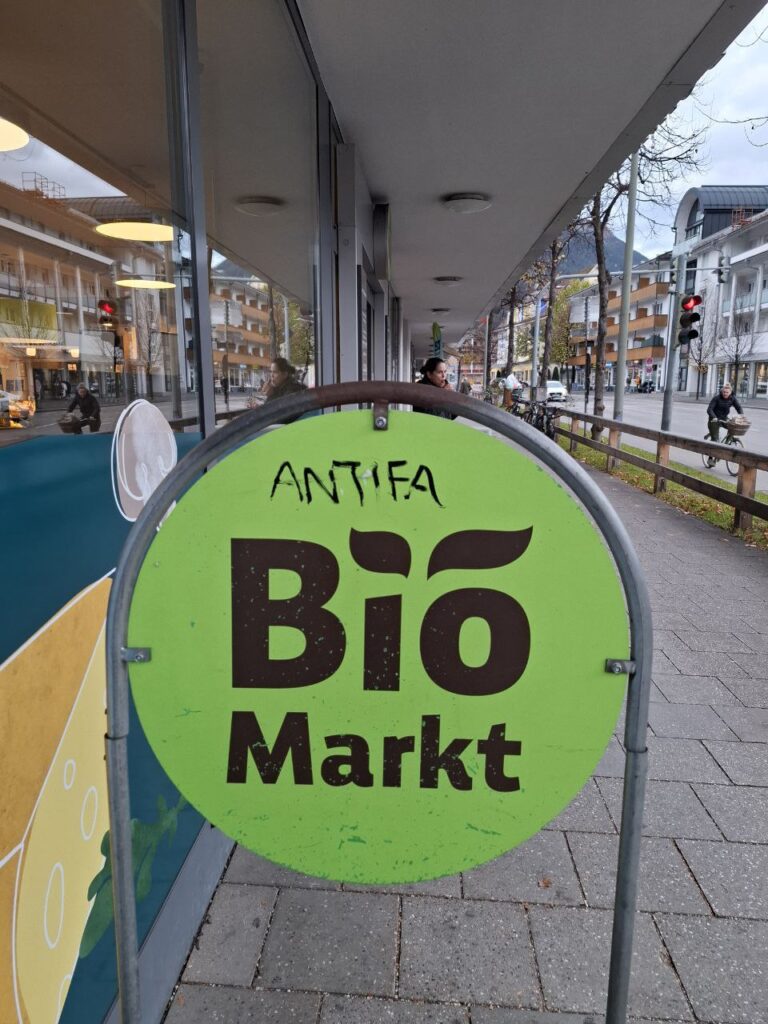
But east of the Elbe (Czech Republic, Slovakia, Hungary), another danger appears — neo-Nazis. There are a hell of a lot of them there. In Bratislava, I encountered both Nazi rallies with flags and just people on transport with Stone Island patches, spiderwebs on their elbows, or Celtic crosses on their wrists. And Budapest — that’s Bratislava multiplied by a hundred. Every year they hold neo-Nazi marches; Nazis from all over Europe gather there. If you aren’t white or look “wrong” — the probability of getting beaten up is very high.
I’ll tell you a case. In Slovakia, I lived in a student hostel in Mlyny. There was a local celebrity — a black homeless man named Zombo Antonin Ricardo. A cool name, really — Zombo. He was from Angola, came to Czechoslovakia in the 70s to study as a builder, got documents, but couldn’t integrate. He spoke Slovak fluently. He slept on a chair under the awning of a closed kebab shop. I talked to him, brought him bread, sausage, kebabs; sometimes we drank wine together. The students loved him, but in 2018 a group of Nazis attacked him. They beat him up, knocked out all his teeth, stripped him naked, tore up his documents, and shouted: “Black monkey, get back to your home.” The police didn’t give a f***. Local activists announced a fundraiser for his treatment on the Ďakujeme website (a Kickstarter analogue); only 2500 euros were needed, but they raised less than a thousand. This goes to the question of how they help black homeless people in Slovakia. In December ’21, he died on the street. Students came to the cremation; many knew him, but society never accepted Zombo. So in Eastern Europe, they might not just beat you up, but also film it and post it online.
Atmosphere and Mentality
— Where do people give more? Compare the generosity of passers-by in wealthy Austria and more modest Hungary.
— It depends on how you look. To live on the street, you have to be very communicative. If you look like a stereotypical bum — dirty, drunk, smelling of alcohol — no one will give you anything, especially in Hungary or Slovakia.
But if you look like a “lost tourist” or a student who ran out of money for fare — they give better. In ’22 in Budapest, my card was blocked and I had no cash. I didn’t look homeless; I looked neat. I approached people, told them I was robbed, and showed my ISIC card. People helped — some a euro, some five. The most was given by an Italian grandfather tourist: I went up to him, told the story, and he immediately gave me 10 euros. Overnight, I “scrounged” 20 euros and left on the train to Bratislava.
It all depends on personal contact. But in Eastern Europe, the concept of “homeless” is so demonized and mixed with dirt that they don’t want to help stereotypical vagrants at all.
— Language barrier: How critical is knowledge of the local language for survival on the street in the Czech Republic compared to Germany?
— In Germany, Belgium, and France, volunteers in Caritas or other organizations usually know English well. In large German cities, you’ll be understood everywhere. In France, English is a bit worse — the French aren’t very fond of it.
But the further east you go, the harder it gets. In Prague, young people will understand English, but in Slovakia and Hungary, even social workers don’t speak it. The local language is most needed there. In Hungary, it’s hellishly difficult; without it, it will be very tough. If you are a Russian speaker, then in the Czech Republic and Slovakia you’ll get by on a mix of Russian and basic English (the Slavic substrate helps), but in Hungary, without the Magyar language, you are simply lost.