


Emigration
Yahorsho — aka Yegor Babov — is a familiar project and a familiar person in many criminal places in Warsaw. A participant in the projects kovelskie psy and peresadka v stambule, ZAO “Doubtful Initiatives”. But this conversation is not about the musical projects he plays in, and not about things like: “where in Warsaw the cleanest sound or the best shawarma is.” We also won’t touch on the questions: “why did he emigrate to Warsaw and not to Hanoi?” and “what is the hardest thing about emigration?”.
We will talk about the existence of something I always knew about, but never put into words — marginal disco, and the project yahorsho as a representative of this genre. What kind of genre it is, what traits and roots it has — we tried to figure all this out. And I have no doubt that when asked “what is disco?”, Yegor’s answer won’t differ much from mine, with the same names, dates, and necessary references. But marginality — that’s exactly the second corpse we’ll be poking with sticks in between conversations about music, trying to understand who it is and who killed it. We also suggest you listen to a playlist by Yegor and several yahorsho recordings.
Yegor Babov, project yahorsho / nottoday media— marginal disco: are you just someone who loves the chic of cocaine parties but has no money for cocaine, or a crack smoker in an abandoned house where someone forgot a disco ball?
Yegor Babov (yahorsho)
— For those who are hearing about yahorsho for the first time. I specifically tried to find information about you online — and was surprised that there’s almost none. What is the yahorsho project? How did it appear?
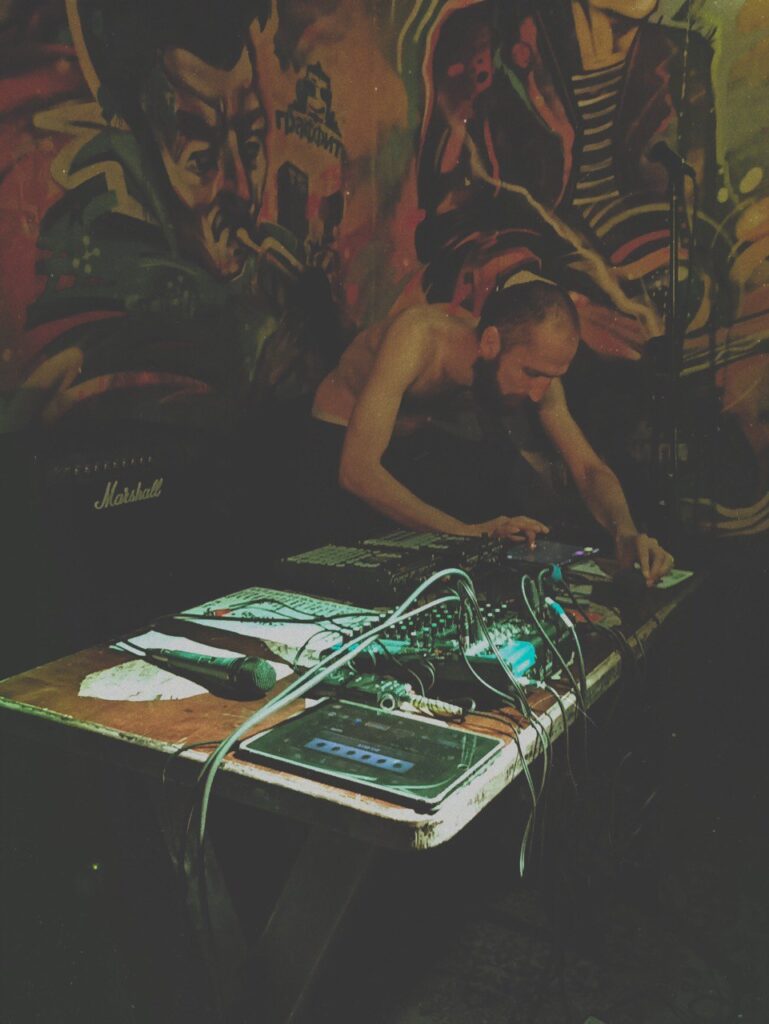
— I wanted to write songs and was slowly making music. For about two years. Then I thought: enough making music, it’s time to make songs. I bought three grams of weed and a couple boxes of pizza. Locked myself in a rented apartment in Moscow for three days and made the first album. That’s how it all appeared. I wrote the album completely solo, and it was mixed by Denchik from kovelskie psy.
— On Bandcamp you describe your music as marginal-disco, passive aggressive darkwave, hangover synthpop. Are these full-fledged genres or a joke that unexpectedly became true?
— These tags kind of stuck gradually along the way, mostly not on my initiative. But it seems I invented marginal disco myself, because I had to label all of this somehow.
But first there was hangover synthpop. When I made the first album, I decided this style would be called hangover synthpop, because that’s what it was. Not that I seriously invented it — it was more an attempt to describe what I had done. And marginal disco — later I listened and realized it’s danceable, easily accessible music, not raging punk or hardcore, but it still retains a sort of backyard vibe. That’s how marginal disco appeared.
— Did you know there’s a term “subcultural nomination” — when genres are born from jokes, memes, and image-words? If marginal disco is a joke, why did it work better than “serious” styles?
— Probably because people understand what you mean when you say marginal disco or hangover synthpop. And you don’t have to explain every time what you play. условно, when a person sees this tag somewhere, they’re like: “Oh! Marginal disco. I’m a marginal too, I’ll listen.” That’s probably how it works.
As for other tags, like passive aggressive darkwave — that was slapped on me when some outlet posted my second EP. I just liked it, because I realized they described that release spot on. Sometimes someone just says something, and I’m like: “Oh yeah, that fits!”.
Or I think about how to name something myself, then I name it — marginal disco. Because disco, fuck. Because disco is about how cool it is to drink beer at 7 a.m. and not rush anywhere.
— Right now tons of genres are born from memes: witch house, dumpster techno, ketapop, gopnitsa-wave. Does marginal disco stand in the same row with them, or does it have a different logic of emergence?
— I didn’t rely on other genres when I invented this one. I just needed to call what I write somehow. You could say marginal disco will form as a genre when another five artists appear who tag themselves the same way — then we could talk more seriously about it. For now, I just blurted it out and put it on the internet, here you go.
— What of this have you actually heard — witch house, dumpster techno, ketapop, gopnitsa-wave? Are these words familiar to you?
— I’ve heard witch house. Ketapop — I haven’t heard that, though maybe I did but didn’t know it was ketapop. Gopnitsa-wave — I can even imagine what that is. Probably the band “Pozory” is gopnitsa-wave. I don’t know how they tag themselves, but if I imagine a band by that tag — I imagine “Pozory”.
— How do you feel about genres being born from jokes — and either remaining memes or turning into full-fledged scenes?
— I feel fucking great about it. Because back when I was hanging out at 20 in some metalcore-hardcore scene, everyone tried to invent a new genre based solely on musical currents. Jazz-fuck-core or something… Or tried to combine something?
It seems to me that when you’re too obsessed with some music — and for me music is actually pretty simple and banal — you should look for other things too. Music doesn’t just carry music, it carries some kind of message. Either you want to say something, show something, or just share a mood. And for a genre to form, there has to be something else in it besides music.
And in this particular case, I’m positive about it, because awesome things are born from memes.
— Let’s talk about marginal disco as a separate genre, and along the way discuss the rest. In your view, does marginal disco have its own philosophy? If yes — what is it?
— First of all, it’s egoism — to live with pleasure for yourself, so that no fucking nightmare happens around you. Marginal disco is about loving yourself.
— Wait, it’s important to clarify whether we’re talking about the same thing. Disco raises no questions, but what do you put into the concept of marginality? Is it: a socio-cultural state? A political position? An aesthetic pose? An inner mindset?
— From what you listed — probably a socio-cultural state. But I emphasize living with pleasure. Fighting for that possibility for yourself, in a rather cruel and stupid world.
— I thought marginality was more about exclusion from generally accepted circles?
— Maybe, but I definitely don’t intend to enter those circles anyway — I don’t like them. For a long time in my life they were imposed on me as the only correct choice — I never thought so. At some point it seemed to me that it was all true and I was the idiot, and then I thought: “No, it’s fine, I made this up”.
I just want to show that, guys, it’s actually cool to live like this. That is, marginality for me doesn’t have any negative context, in most cases when I use this word.
And about exclusion — I think if someone excludes someone else from somewhere, then for me that’s generally a bad person. You can distance yourself, but what does “you exclude” even mean? Who the fuck wants to do that? I’ll fucking exclude you from society if that’s how you want it. So I don’t think anyone should be excluded from anywhere. You can keep your distance from someone you don’t like — that’s normal, but not exclude them from society.
— Is marginality a conscious choice or a condition that overtakes you regardless of your will?
— I’ve seen a lot of people for whom this choice is conscious. But it happens differently: someone really got fucked over and can’t get out. Someone quite consciously chooses how to live their life. I probably walked toward this fairly systematically my whole life.
I can say that marginality is my conscious choice. I had nothing — there was no alternative I had to refuse. There was the option to go to work. But I never seriously considered it. No one from above dropped me a real opportunity to go into another life. The fact that I’m here now, where I am — that’s also a coincidence of circumstances.
— Now many people call themselves marginals for the sake of a pose. Do you see a difference between aesthetic marginality and real social marginality?
— I do, it exists. First of all, beautiful things can attract people who love with their eyes. Some people genuinely like that lifestyle — they see beauty in it.
I also see a certain beauty in it. A person does what they want. They like vibing on marginal aesthetics — what’s wrong with that? But of course, I’ve seen many broken people because of this, who got too carried away but didn’t survive, or seriously harmed themselves — mentally and not only. Not everyone can handle it. I myself am not always sure I can handle it. I’ve seen examples of people who completely lost their shit because of all this. So take care of yourselves.
— Could you call yourself a marginal?
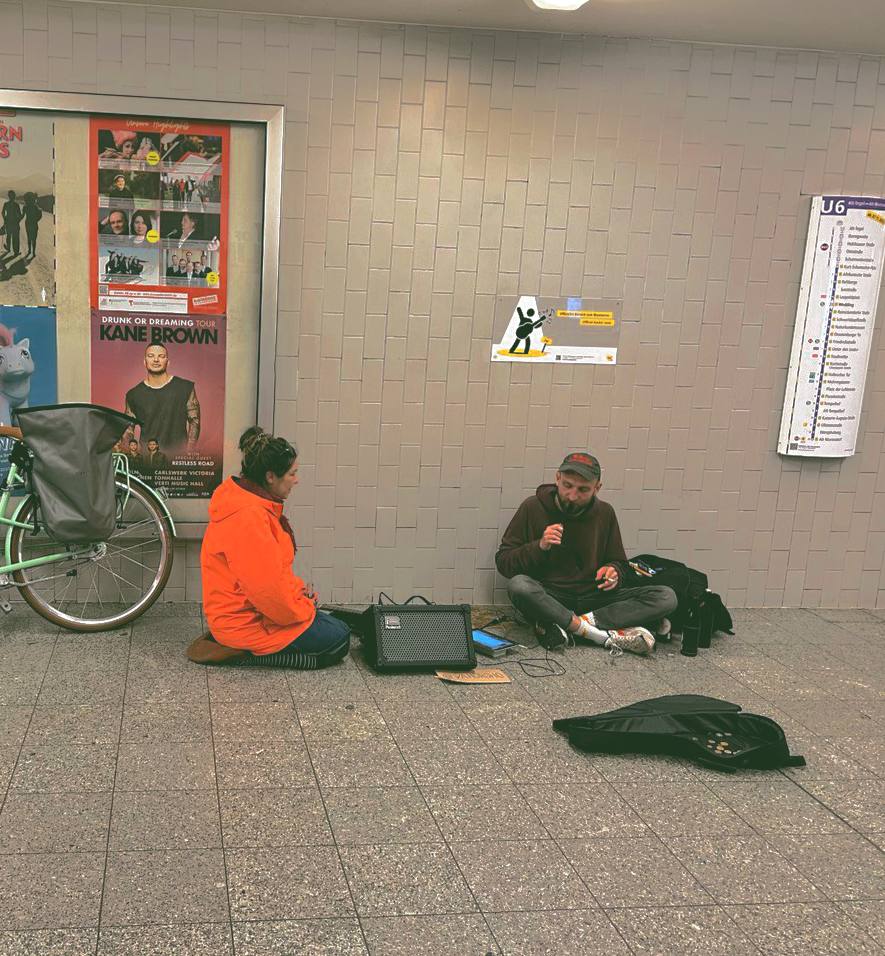
— Yes, I could. Because by the standards of this society, from which people like to exclude others, I’m definitely a marginal. I don’t have a job, I walk through train cars singing songs. What else…? I wander the streets, do random shit. Basically, the street is a very homely thing for me. I spend a lot of time on it. And I can consider it my home.

— When I hear marginal disco, I immediately imagine a certain kind of music — something closer to the No Wave sound. What sound do you yourself see in this style? What distinguishes it from others?
— For me it’s accessibility… Essentially it’s the technique of bard songs, just in electronic form. I take a danceable base and just pour something over it — whatever I feel like at the moment. And that’s exactly what I put into marginal disco — accessible marginal music.
— A question about the yahorsho project. Tell us about the sound. You write it alone — how did you find your sound?
— At first, when I made the first album, I wanted a cold sound, but still danceable. That’s roughly how I searched for it. Technically — the Caustic 3 program. It has 12 synths inside, and you can find anything. In general, when I write music, I search for a lot of things.
Now I understand that on the next album I’d like to slightly change the musical vector. But I haven’t fully figured out how yet. The albums that already exist are like this, and I understand that I won’t manage a fourth album in the same musical type. It’s gotten a bit boring. At the moment, I’ve come to playing in other bands. And I can only play concerts with old material — I’m not writing new stuff. But I’m slowly thinking about how to repackage all this.
But for that you need to live, walk around, do things, accumulate stories, so that you want to make an album. I didn’t want to make the third album in that sound, but at some point it just started pouring out of me. I spent a year roaming around Europe, living off couchsurfing, and things were happening to me — and all that somehow found reflection. Some texts were written, some music was written, and it was possible to do it.
— Is the text important for the genre?
— Yes, it is, because without text nothing will work. I have a lot of music that I’ve written. I also use it in other projects I participate in. But here (in yahorsho), if there’s a story that needs to sound somehow in a song, then the song will exist — that’s important.
— Back to yahorsho. Judging by the lyrics, you’re close to bleak, depressive poetry. Is this dictated by the project’s aesthetics, or is it an attempt to record stories life shared with you?
— Over the last five years I often felt like shit. And that’s why such lyrics appeared, because when I feel good, I’m doing pleasant things, not writing songs. And it’s not that music is an unpleasant thing for me — on the contrary, music is pleasant. But for yahorsho, something has to happen for a song to appear. Something maybe even unpleasant… In any case, whatever happens, it turns into some kind of laughter — laughter through pain.
For example, I wrote the first album when I just felt like shit — I was living in Moscow. I wrote the second album in Lviv, when the war had just started — and it’s more reactionary, there are things connected to that. The third I wrote just wandering around Europe alone…
— So you don’t write from joyful emotions?
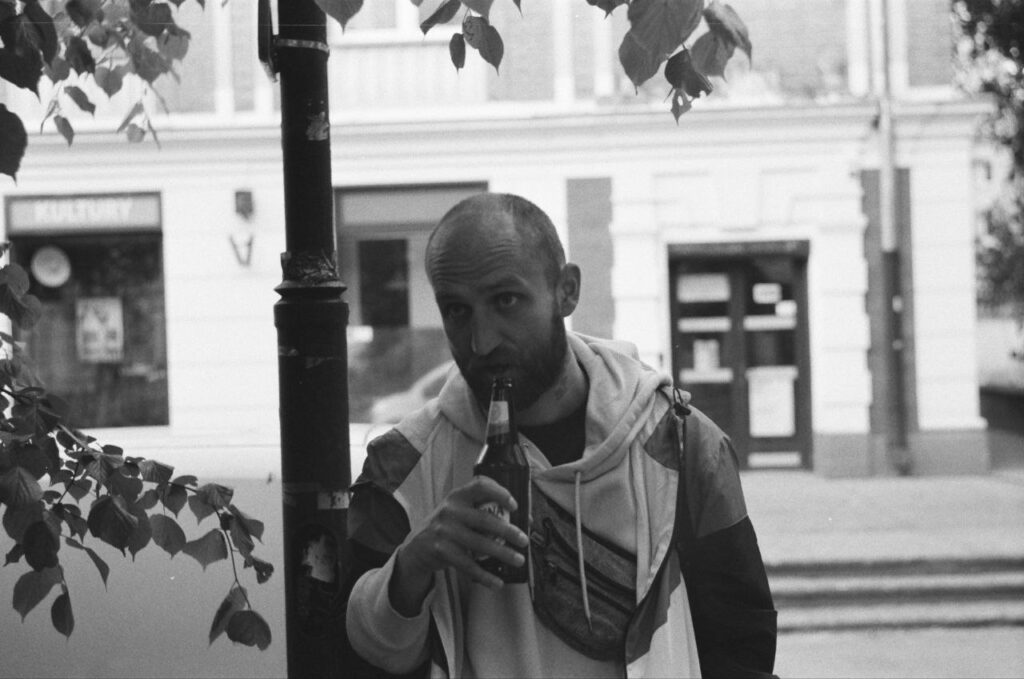
— When I wrote the second verse of the song “The Drunkard’s Dream”, I was maximally happy. I was just sitting drunk under a hostel in Berlin, drinking beer alone, smoking a joint, listening to the demo on my phone without vocals yet. And I was like: that’s it, fuck — it’s happening, it’s happening. And I realized how fucking great my life was right then. That was happiness, actually.
Although the song is about a love that’s almost dead. And it seems like everything was bad. So it turns out: I started writing it in absolute depressive shit, and finished it happy.
— Where does the genre come from? Who, in your opinion, could be proto–marginal disco?
— Nothing comes to mind except bards. Bards… you know, you’re walking and some guy is sitting on the street — a bum with a guitar. “Pour me a glass of vodka, I’ll sing you a song.” That’s bards. I don’t know their names… If I associate myself with someone, it’s with these unknown heroes. As the host of the TV show “Come Dine With Me” once said when I was on it: “You’re a wandering philosopher.” So proto–marginal disco are wandering philosophers.
Although I usually try to find comfortable places with people who will potentially understand what I do — though people appear on their own. But it still remains in harsh underground conditions.
Once I played a concert in a museum, and they asked me to stop. But I didn’t deny myself the pleasure of saying between songs: “With friends like these, straight to the museum by the dick.” It was a great concert: six or ten people, absolutely shitty sound, columns, high ceilings. And I’m heavily drunk on beer, already sweaty, walking around, slowly reciting my songs. A good picture. But again — what was the result? I got kicked the fuck out. Well… asked to stop.
— And who among contemporary artists could be adepts of marginal disco?
— I’d include the band “Vitebsk Flex”. But unfortunately, they have no recordings. Look for them somewhere in Warsaw. They crawl out sometimes and perform.
— And one more question about yahorsho. You already have three albums — Utvisning, “Intellectual Superiority” and “Excesses”. From the titles it’s clear you approached this very seriously. What do these words mean to you? Why them — each sounds like a diagnosis of the era, not a release title?
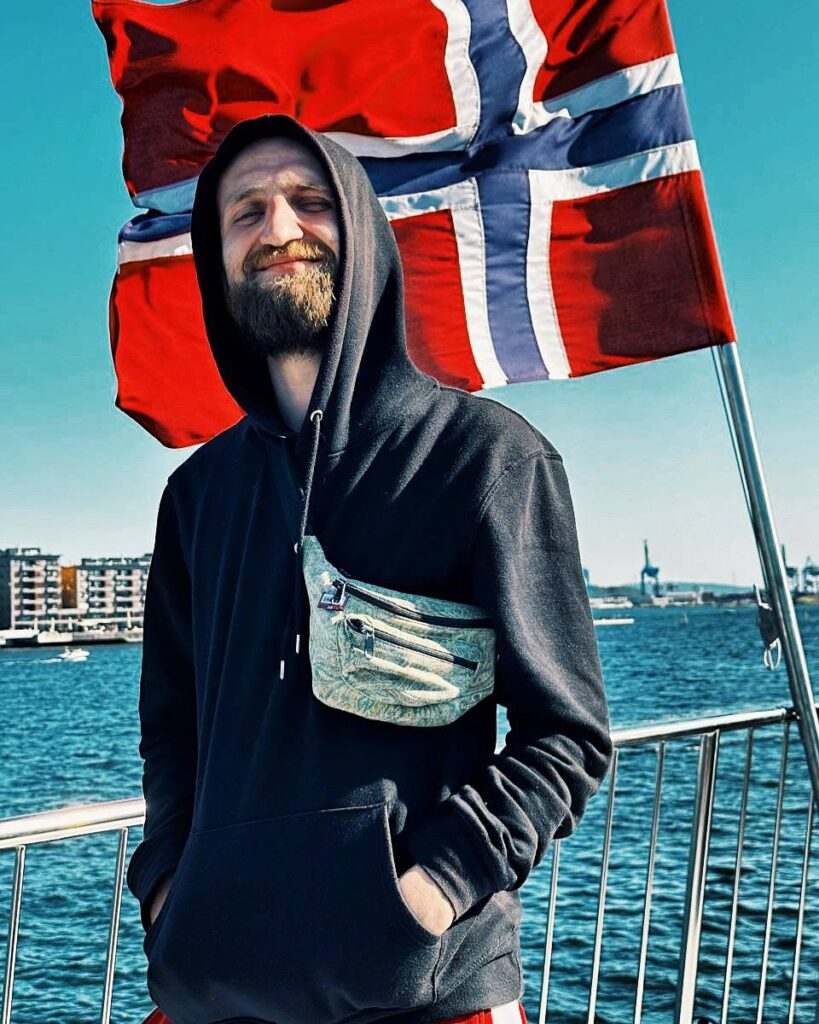
— Utvisning translates from Norwegian as either “expulsion” or “banishment”. The title appeared because at the moment I was working on this album I ended up in Norway and was performing my marginal disco literally on the street. At some point an immigration police officer came up to me and said: “Dude, you’re working in Norway, but according to your documents you have no right to work here. So come tomorrow — we’ll take your passport and you’ll get acquainted with your case.”
And in the end, after a week of having my brain fucked and very fun parties in Oslo, I came — and they gave me a paper saying I had to leave Norway on my own by a certain date. And I thought: fuck, everything happening is exactly this expulsion. I was nowhere at that time. I couldn’t find any place. And on top of that, somewhere I even got kicked in the ass. That’s why — Utvisning.
“Intellectual Superiority” is such an idiotic phrase. Like: “Oh yeah? And who the fuck are you?” I heard it from a guy in conversation. And when I was making this album I was angry — the war had started. At first I had the feeling: “What the fuck is music at all?” But then I snapped out of it quickly, literally in a week or two, and the songs appeared very fast. And most importantly, I didn’t care at all. There were no concerts, nothing. I just wrote the songs and realized they needed to be released — and named somehow. I remembered that conversation and thought: “This will be ‘Intellectual Superiority’,” here you go.
And “Excesses” — that was a moment when it seemed to me I was living like… I probably hadn’t yet accepted this marginal component of life. Everyone around me was fussing about something, and I thought: “Maybe I should fuss too.” And from that fuss only strange entanglements and funny stories happened — excesses.
There was also a proto-EP to that. You can find it on VK, it’s called “Troubles”. There are two songs there that ended up on the album, and one that didn’t. But I might be mistaken — I barely remember what was there.
— If we imagine that marginal disco someday becomes a mass genre — what absolutely cannot be lost? Or is it like grunge: awesome in a garage and a tragedy in a stadium?
— In a stadium it would definitely be a tragedy. The only possible form of mass appeal is some kind of total, collective madness somewhere in a forest. A big semi-crazy festival under pine trees.
Marginal disco is unlikely to exist by the rules of modern society. And I categorically refuse to believe it will become popular. What can’t be lost?.. The personally lived story of the bard.
You need to remain a bard. You can probably find templates for how to “correctly” write lyrics — I’m sure such masters exist. But I’m not like that: I can write only when I’ve actually lived it. Until it’s lived — the song doesn’t exist.
— If disco in the 80s was decoded as:
D — Distinctive, I — Intelligent, S — Sexy, C — Charming, O — Outstanding,
then what could marginal disco mean in 2025? Which option is closer to you:
D — dirty, I — immigrant, S — synth, C — chaos, O — outcast,
D — dizzy, I — inside, S — static, C — concrete, O — overdose,
D — disco, I — is, S — self, C — consuming, O — organism?
— I’ll combine them: D — dirty, I — immigrant, S — synth, C — chaos, O — overdose. But I don’t recommend overdose to anyone.
— Great, we figured out what marginal disco is. We talked about your yahorsho project, and there’s one last question: “If we look broader — what makes a genre viable, and what leaves it just a joke?”.
— Releases and concerts — that’s what makes a genre alive. If there are artists in a genre who release music and go on stage, then the genre lives.
Without concerts and releases — it’s probably all just a joke.